How to Prevent Low Energy Density During High-Altitude Disaster Response Missions?
The thin air whips against the carbon fiber frame as the drone ascends. Below, a disaster zone stretches out, inaccessible to ground teams. Above, the oxygen levels plummet. For rescue squads relying on UAVs to deliver supplies or scout terrain, this scenario presents a brutal paradox: the moment you need maximum power, the physics of flight conspire against you.
High-altitude disaster response is not just about flying higher; it is about fighting an invisible enemy—low air density. As your drone climbs, the rotors must spin faster to generate the same lift, draining the battery at an alarming rate. Combine this with freezing temperatures and the risk of “low energy density” becomes a mission-killer. If the battery cannot deliver sustained power, the drone becomes a paperweight in the sky.
This guide is not just theory; it is a tactical manual for engineers and rescue coordinators. We will dissect the science of high-altitude power loss and provide a concrete roadmap to ensure your drone batteries perform when human lives are on the line.
The Physics of Power Loss: Why Batteries Fail at High Altitudes
To understand how to prevent low energy density, we must first understand the “Double Whammy” effect that occurs during high-altitude missions.
1. The Aerodynamic Tax
As altitude increases, air density decreases. For a drone to hover, it must displace air mass. When the air is thin, the motors must work exponentially harder. This means:
- Increased RPM: Motors spin faster to maintain thrust.
- Higher Current Draw: This spike in RPM pulls more current (Amps) from the battery.
- Voltage Sag: The sudden demand causes the battery voltage to drop, a phenomenon known as “voltage sag.”
2. The Thermal Trap
High-altitude environments are notoriously cold. While some might think cold is good for electronics, lithium-based batteries hate sub-zero temperatures. When a battery gets cold:
- Internal Resistance Rises: The chemical reactions inside the cells slow down.
- Capacity Plummets: A battery that reads 100% at sea level might only deliver 60-70% of its rated capacity in freezing, high-altitude conditions.
If your battery lacks the energy density to counteract these forces, your drone will face a forced landing—often before the mission is complete.
The Solution: High Energy Density Battery Technology
The antidote to high-altitude power loss is Energy Density. This is the amount of energy stored in a given system or space. In drone batteries, it is measured in Watt-hours per kilogram (Wh/kg). To prevent failure, you need a battery that delivers more “punch” without adding weight.
Based on the latest advancements in battery technology, here is how to engineer a solution:
1. Upgrade to Semi-Solid State Chemistry
Traditional Lithium Polymer (LiPo) batteries often struggle with the voltage sag mentioned earlier. The solution lies in Semi-Solid State technology.
- Higher Wh/kg: Advanced semi-solid state batteries can achieve energy densities of up to 380 Wh/kg.
- Stable Voltage Curve: Unlike standard LiPos, these batteries maintain a flatter voltage curve under heavy load. This means consistent power delivery even when the motors are screaming for juice at 5,000 meters.
2. The 4.45V Ultra-High Voltage Advantage
Standard drone batteries operate at 4.20V per cell. However, specialized high-altitude batteries utilize a 4.45V Ultra-High Voltage design.
- More Joules per Cell: This higher voltage threshold allows the battery to pack more energy into the same physical space.
- Faster Recharge: Coupled with a 1C-3C charging rate, these batteries minimize downtime between critical missions.
3. Intelligent Heat Management
To combat the cold, the best high-altitude batteries feature an optimized heat dissipation design. This isn’t just about cooling; it is about retaining the heat generated by the cells during high-discharge operation to keep the core temperature within the optimal chemical reaction range.
Tactical Implementation: Building Your High-Altitude Power System
You cannot simply buy a “high-altitude” sticker; you must build a system. Here is a step-by-step checklist for your next procurement cycle:
- Audit Your Current Wh/kg: Calculate the energy density of your current fleet. If it is below 250 Wh/kg, you are likely losing valuable flight time.
- Demand the “Plus” Series: Look for battery lines specifically designed for endurance, such as the “Plus 1.0” or “Neo” series, which are engineered for long-endurance mapping and heavy payload scenarios.
- Inspect the BMS (Battery Management System): A robust BMS is non-negotiable. It must monitor individual cell voltages in real-time to prevent over-discharge during the high-current draw of high-altitude hovering.
- Test for Cold Cranking: Before deployment, simulate cold conditions. The battery should support a continuous discharge rate of at least 3C at -30°C to be considered reliable.
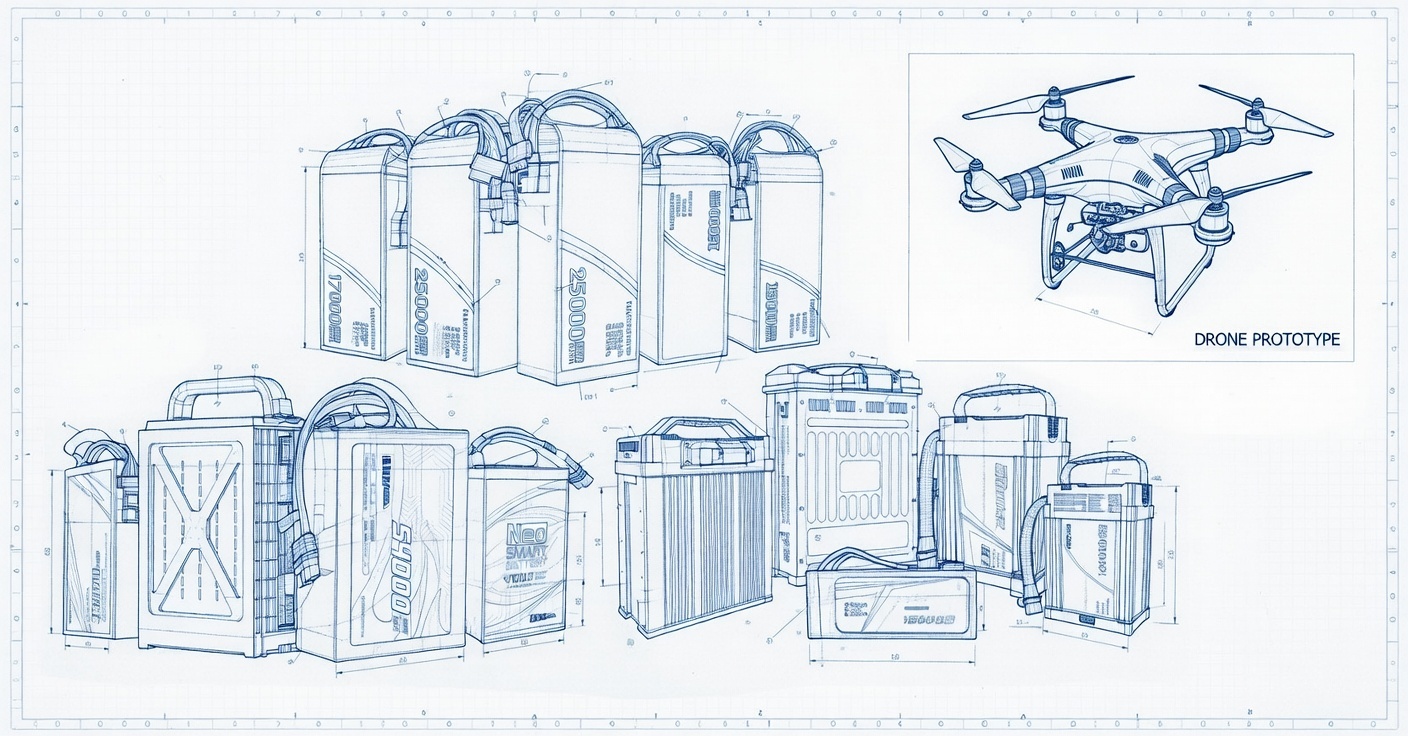
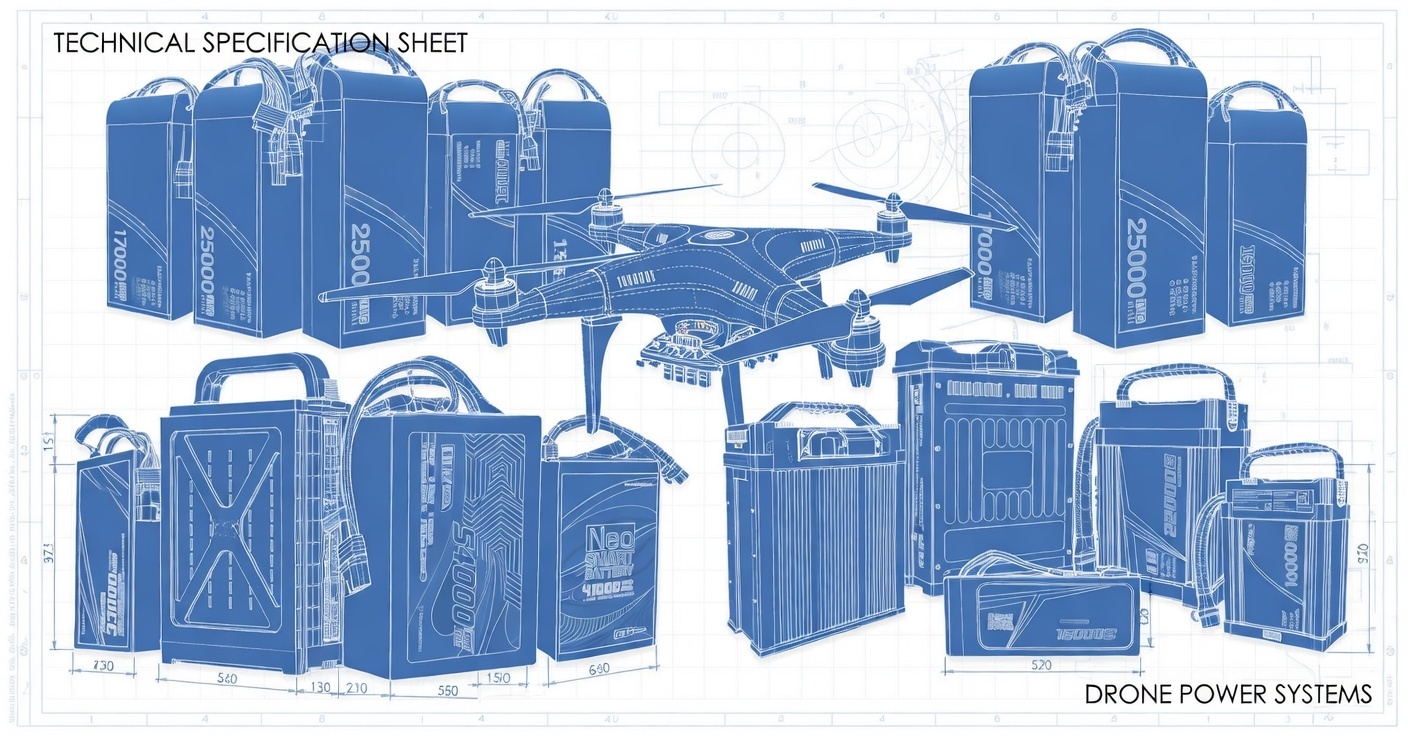
Key Specification: For disaster response, prioritize batteries with a capacity range of 16Ah to 41Ah and a voltage configuration of 12S to 24S to handle heavy payloads like thermal cameras or medical supplies.
Case Study: Overcoming the “Voltage Sag” in Mountain Rescue
Let us look at a hypothetical, yet realistic, scenario based on standard industry challenges.
- The Mission: A search and rescue team needs to deliver an Automated External Defibrillator (AED) to a hiker stranded at 4,500 meters.
- The Challenge: The rescue drone, equipped with a standard 6S 22.2V LiPo battery (220 Wh/kg), attempts the climb. At 3,000 meters, the pilot notices the voltage dropping rapidly. The motors are drawing 30% more current than usual. The drone makes it to the target but has zero margin for error on the return trip. It crashes on the descent due to “Low Battery,” failing the mission.
The Fix:
The team switches to a 6S 23.7V Ultra-High Voltage battery with a 330 Wh/kg semi-solid state core.
- Result: The higher voltage provides the necessary “headroom” to prevent voltage sag.
- Result: The lighter, denser core offsets the weight of the AED.
- Outcome: The drone completes the round trip with 15% battery remaining, proving that energy density is the difference between life and death.
Action Plan: Secure Your High-Altitude Power Supply
Disaster response waits for no one. If your current fleet is grounded by the altitude, it is time to upgrade to technology designed for the extremes.
Do not let low energy density compromise your mission. Explore the cutting-edge solutions designed for high-altitude performance.
- Explore Our Industrial Specs: Visit our product page to see the exact specifications for high-discharge, high-energy-density batteries.
- Get Expert Advice: If you are unsure which voltage or capacity suits your specific rescue drone, our engineers are standing by.
Power your rescue missions with confidence.