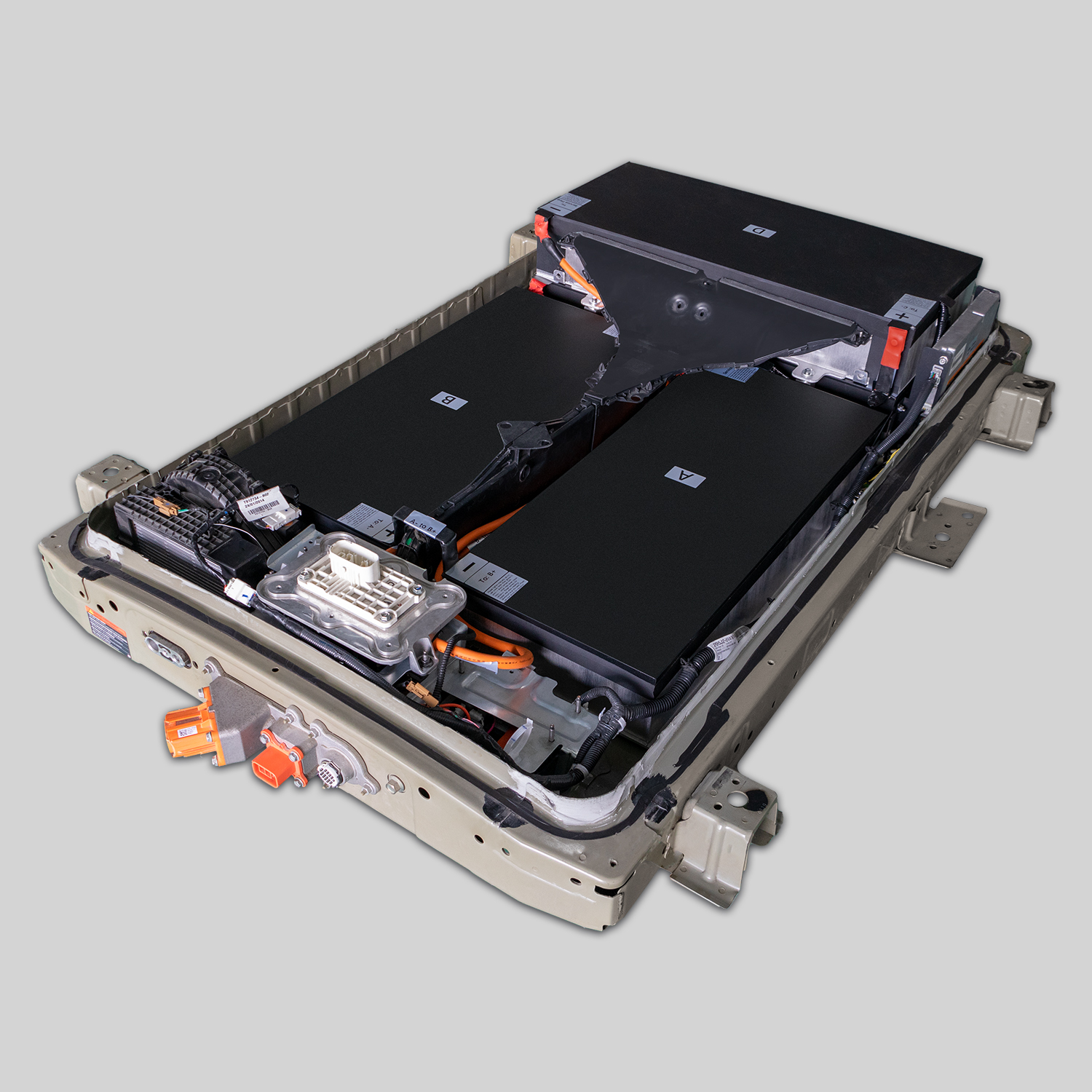
How to Perform BMW i3 Battery EOS Test (Shop Protocol) – The Final Verdict on a Dead Pack
A 2015 BMW i3 sits in your bay, towed in after refusing to charge or hold a range estimate. The customer is desperate: “The dealer said the battery is at ‘End of Service’ (EOS). Can’t you just run a test to see if it’s really dead? Maybe it’s just a sensor error? I don’t want to spend thousands if a $200 fix will work.”
As a professional EV technician in 2026, you know that “End of Service” (EOS) is not a suggestion; it is a critical safety designation. When a BMW i3 battery reaches EOS, it means the State of Health (SOH) has dropped below a safe threshold (typically <60-70%), internal resistance has spiked to dangerous levels, or cell deviation is so severe that the pack poses a fire risk.
Running a superficial scan tool check is insufficient. To confirm EOS and justify a major replacement investment to a skeptical customer, you must perform a rigorous, data-driven EOS Validation Protocol. This isn’t just about reading a code; it’s about proving through physics that the battery can no longer safely store or deliver energy.
What specific metrics definitively prove a battery has reached End of Service?
Why do standard “State of Health” percentages often lie to technicians?
And once you have irrefutable proof of EOS, how do you pivot from a hopeless diagnosis to a high-margin, range-restoring upgrade?
At CNS BATTERY, we believe in data over guesswork. We know that confirming EOS requires more than a glance at a scanner; it demands a forensic analysis of capacity, resistance, and stability. This guide details the professional shop protocol for performing a definitive EOS test on the BMW i3, exposes the limitations of software estimates, and reveals why replacing the system is the only ethical solution.
The Myth of the “Software SOS”
Many technicians rely solely on the BMS-reported State of Health (SOH) percentage.
- The Problem: The BMS calculates SOH based on historical algorithms that can lag behind reality or be skewed by temporary conditions. A pack might report “72% SOH” (barely above EOS) while physically possessing only 50% usable capacity due to massive internal resistance.
- The Risk: Trusting the software can lead to recommending a “wait and see” approach for a pack that could fail catastrophically next week.
- The Solution: You must ignore the estimated percentage and measure the physical reality.
The Professional EOS Validation Protocol
To definitively declare a BMW i3 battery at End of Service, you must pass it through this three-stage gauntlet. If it fails any of these stages, the verdict is final.
Stage 1: Static Cell Deviation Analysis
Connect a bidirectional scan tool (BMW ISTA, Autel, Launch) and view individual module voltages after the car has sat for at least 4 hours.
- The Metric: Calculate the difference between the highest and lowest module voltage.
- The EOS Threshold:
- < 0.10V: Acceptable.
- 0.10V – 0.15V: Warning zone. Monitor closely.
- > 0.15V: FAIL. This indicates severe imbalance. The weak modules will hit limits long before the rest of the pack, rendering a significant portion of the battery unusable. This is a primary indicator of EOS.
Stage 2: Internal Resistance (IR) Stress Test
This is the most critical differentiator. Voltage tells you the charge; IR tells you the health.
- The Tool: Use a specialized AC impedance meter or an advanced scan tool capable of reading calculated IR per module.
- The Test: Measure the resistance of every module.
- The EOS Threshold:
- Healthy: 1–3 mΩ.
- Degraded: 4–8 mΩ.
- EOS FAIL: > 10 mΩ or significant variance (>50% difference between modules).
- The Verdict: High IR means the battery generates excessive heat under load and suffers massive voltage sag. It cannot deliver power efficiently. This is a definitive EOS condition.
Stage 3: True Capacity Load Test (The Gold Standard)
This is the undeniable proof. You must measure exactly how much energy the pack can hold and deliver.
- The Process:
- Full Charge: Charge to 100% using a metered charger. Record total kWh input (adjusting for ~10% loss).
- Controlled Discharge: Perform a standardized drive cycle or dyno run until the vehicle enters “Turtle Mode” or limits power significantly. Record total kWh delivered.
- Calculation: Compare actual usable kWh to the factory specification for that model year (e.g., ~27.2 kWh usable for a 94Ah pack).
- The EOS Threshold:
- > 80% of Original: Healthy.
- 60% – 80%: Degraded but usable for city driving.
- < 60% of Original: FAIL (EOS).
- Example: If a 94Ah pack delivers only 14 kWh, its True SOH is ~51%. It is officially at End of Service. No amount of resetting will restore those missing kilowatt-hours.
Interpreting the Results: The Final Verdict
Once you have completed the protocol, the path is clear.
- If the pack passes all three: It is not at EOS. The issue may be a sensor, 12V battery, or calibration.
- If the pack fails ANY stage: The battery is chemically exhausted.
- High Deviation: The pack is unstable.
- High IR: The pack is inefficient and dangerous under load.
- Low Capacity: The pack simply cannot hold enough energy to be useful.
The Hard Truth: There is no repair for EOS. You cannot replace individual modules in a 10-year-old pack to restore balance (the new module will just degrade to match the old ones). You cannot “code” away internal resistance. The only solution is total replacement.
The CNS BATTERY Solution: Turning EOS into a New Beginning
When you present the customer with the hard data—graphs showing voltage cliffs, IR spikes, and capacity loss—they will understand that their battery is truly dead. But then comes the fear of the dealer’s $20,000+ quote for a remanufactured pack that might only have 85% capacity itself.
This is your moment to shine. Offer the CNS BATTERY High-Capacity Upgrade—the solution that doesn’t just restore the car to “serviceable,” but makes it better than new.
Why Upgrading Beats OEM Replacement
- Verified Capacity: Our 120 Ah to 180 Ah upgrades are tested before shipping. You get exactly what we promise: 130–200+ miles of real-world range. No guessing, no “estimated” SOH.
- Brand-New Chemistry: Unlike dealer “remanufactured” packs made from used modules, our units use 100% new Grade-A cells. They start at 100% SOH with near-zero internal resistance.
- Superior Performance: Lower IR means better acceleration, faster charging, and less heat generation compared to even a “good” OEM pack.
- Cost Efficiency:
- EOS Diagnostic Test: $150–$300 (Billable service!).
- Dealership Replacement: $20,000+ (for less range than new).
- CNS BATTERY Upgrade: $8,000 – $14,000 USD. You get double the range of the original car for half the dealer price.
- Warranty Confidence: Backed by our 3–5 Year Warranty, eliminating the fear of premature failure.
Real Story: From “EOS Verdict” to “Range Renaissance”
“Precision EV Diagnostics” recently performed our full EOS protocol on a 2016 i3. The scanner said “68% SOH,” teasing the owner with hope. But our load test revealed a True SOH of only 48% (11 kWh usable), and IR testing showed two modules spiking to 15 mΩ.
“We showed the customer the graphs,” says the lead tech. “The software was optimistic, but the physics were brutal. We explained that the car was officially at End of Service and unsafe for long trips.” They installed a CNS BATTERY 150 Ah upgrade. “The next day, the customer drove 160 miles on a single charge. He called us laughing, saying he forgot what it felt like to actually trust his car. That EOS test didn’t just condemn a battery; it sold a solution.”
Stop Guessing, Start Proving
Performing a BMW i3 Battery EOS Test requires more than a scan tool. It demands a rigorous, physics-based approach that reveals the undeniable truth. Don’t let your customers drive with false confidence or waste money on futile repairs.
Equip your shop with the right protocols. Trust the data. And when the data confirms EOS, offer the only solution that guarantees real range and reliability.
Ready to offer professional EOS testing?
Don’t leave your customers in the dark. Contact CNS BATTERY today to become a certified partner. Get access to our testing templates, wholesale pricing, and training. Turn every EOS diagnosis into a trusted consultation and a profitable upgrade.
👉 Become a Certified Diagnostic Partner Today
Frequently Asked Questions (FAQ) for Shops
1. What is the official definition of “End of Service” (EOS) for a BMW i3?
While BMW does not publish a single public number, industry standard and dealer guidelines generally consider a pack at EOS when True Capacity falls below 60-70% of original specifications, or when cell deviation exceeds 0.15V consistently. At this point, the pack is deemed unreliable and potentially unsafe.
2. Can I determine EOS with just an OBDII scanner?
No. Scanners only read the BMS’s estimated State of Health, which is often inaccurate. To confirm EOS, you must perform a physical load test to measure true capacity and an Internal Resistance (IR) test to check cell health.
3. Is it worth trying to balance an EOS battery?
No. Balancing can only correct minor voltage drifts in healthy cells. If a battery has reached EOS due to capacity loss or high internal resistance, balancing is temporary and ineffective. The chemical degradation is permanent.
4. How long does a professional EOS test take?
A full protocol (static check, IR mapping, and load test) typically takes 4 to 8 hours, depending on charger speed and test depth. It is a billable diagnostic service that provides invaluable data.
5. Does CNS BATTERY provide capacity data for their upgrades?
Yes. Every CNS BATTERY upgrade comes with verified specifications and test data confirming its exact capacity and internal resistance, giving you and your customer 100% confidence that the new pack is far superior to the old EOS unit.
6. Can an EOS battery catch fire?
The risk increases significantly. High internal resistance leads to excessive heat generation during charging or driving. Combined with potential cell instability, an EOS pack is more prone to thermal events than a healthy one. Replacement is a safety imperative.
7. What is the cost benefit of upgrading vs. replacing with OEM?
An OEM remanufactured replacement costs $20,000+ and often provides less range than the car had when new. A CNS BATTERY upgrade costs $8,000–$14,000 and provides double the original range with brand-new chemistry, offering vastly superior value.