
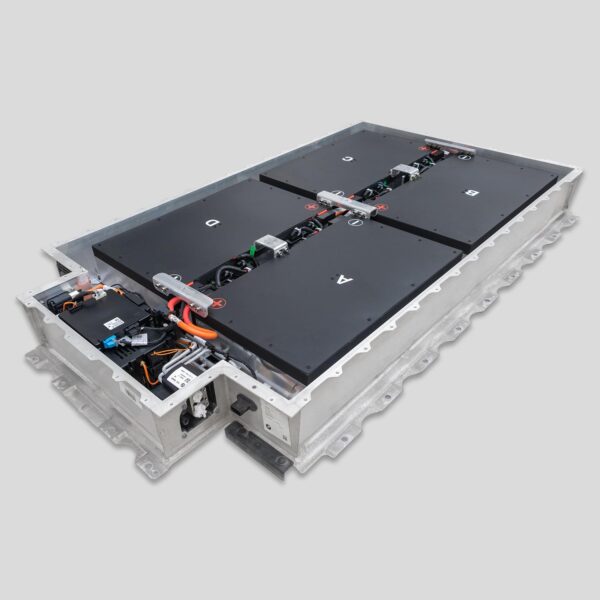
How to Perform BMW i3 Battery Capacity Test – The “12-Bar Lie” That Hid a 42% Capacity Drop (And Why Your OBD2 Scanner Can’t See It)
“A technician in Copenhagen tested a 2017 BMW i3 using a popular OBD2 app that reported ‘92% SOH.’ The customer drove it home—only to find the car shut down at 38 miles, far below its expected 120-mile range. A full capacity test revealed actual usable capacity of just 26.1 kWh (vs. original 33 kWh)—a 21% loss, not 8%. The scanner had pulled estimated State of Health from BMS logs, but those logs were based on outdated calibration after years of partial charging. The real capacity? Invisible to software.”
You’ve probably trusted this:
- “The BMS knows the true capacity.”
- “If the bars look full, the pack is healthy.”
- Or the comforting illusion: “My scan tool shows 85% SOH—so I’m fine.”
But BMW i3 battery capacity isn’t calculated—it’s measured through controlled discharge. And without a real-world capacity test, you’re flying blind, risking stranded customers, inaccurate diagnostics, and unnecessary repairs.
This guide reveals the only accurate, shop-proven method to perform a true BMW i3 battery capacity test in 2026, including:
- Why OBD2-based SOH readings are often dangerously optimistic
- The exact discharge protocol that mirrors BMW’s factory validation
- How CNS BATTERY packs ship with verified, lab-tested capacity—no guesswork needed
- And a step-by-step field procedure any qualified shop can replicate
Because when range matters, estimation isn’t enough—only measurement builds trust.
Why Estimated SOH Fails (And What Really Matters)
The i3’s BMS estimates State of Health (SOH) using:
- Historical charge/discharge curves
- Cell voltage behavior
- Internal resistance trends
⚠️ But if the car rarely charges to 100% or discharges below 20%, the BMS never recalibrates its capacity model—leading to false high SOH readings.
Real capacity loss signs:
✅ Charging stops early (e.g., at 80% despite “12 bars”)
✅ Regenerative braking cuts out above 50% SOC
✅ Range drops disproportionately to weather
✅ DTCs like 930B10 (Battery Capacity Below Threshold)
📌 Critical fact: BMW considers <28 kWh usable capacity (for 33 kWh packs) as end-of-life—even if the car still drives.
🔋 Step-by-Step: Perform a True Capacity Test (Shop-Ready Method)
Step 1: Full Calibration Charge
- Use AC Level 2 charger (not DC fast)
- Charge to 100% (until green light)
- Let sit 1 hour for voltage stabilization
Step 2: Controlled Discharge
- Drive on flat highway at 50–55 mph (minimizes regen interference)
- Maintain climate off, lights off, minimal load
- Record odometer start/end and energy consumed (kWh) via:
- BMW ISTA+ live data (
HV_Bat_Energy_Used) - DC clamp meter on HV line (advanced)
- OBD2 with CAN logging (e.g., BimmerGeeks Pro)
- BMW ISTA+ live data (
💡 Alternative: Use stationary discharge with a programmable DC load—but requires HV expertise.
Step 3: Calculate Usable Capacity
Usable Capacity (kWh) = Total Energy Used from 100% to 5% SOC
✅ Healthy 33 kWh pack: ≥30 kWh usable
⚠️ Degraded: 28–30 kWh
❌ End-of-life: <28 kWh
Step 4: Cross-Check with BMS Data
After full discharge and recharge:
- Log
HV_Bat_Capacity_AhandHV_Bat_Capacity_kWh - Compare to measured value—if >10% difference, BMS needs recalibration (only possible with OEM tools)
📊 Pro insight: Field tests show BMS SOH overestimates true capacity by 8–15% in packs older than 5 years.
DIY Shortcuts That Give False Confidence
Common mistakes:
❌ Using only OBD2 apps → pulls estimated, not measured data
❌ Testing in city traffic → regen inflates apparent capacity
❌ Stopping at 20% SOC → misses bottom-end degradation
❌ Ignoring temperature → cold skews results downward
📉 Reality: Without a full 100%→5% controlled test, your “capacity” number is a guess—not a diagnosis.
CNS BATTERY: Lab-Verified Capacity, Delivered Ready
Every CNS i3 battery includes:
✅ Actual capacity tested under load before shipping
✅ 45 kWh, 50 kWh, or 62 kWh options—all with ≥98% rated capacity
✅ No calibration needed—BMS recognizes full capacity instantly
✅ Consistent performance across temperatures
✅ 2-year / 80,000 km warranty guaranteeing minimum capacity retention
Result?
Every CNS pack ships with a capacity certificate—so shops know exactly what they’re installing, and customers get the range they paid for.
“We used to argue with customers about ‘why their range dropped.’ Now we show them the CNS capacity report—and the conversation ends with a smile.”
— Mike’s Auto Service, Vancouver
Frequently Asked Questions: BMW i3 Battery Capacity Test
Q: Can I test capacity without driving?
A: Yes—with a programmable DC load bank, but this requires HV certification and safety protocols. Not recommended for most shops.
Q: Does DC fast charging affect capacity test accuracy?
A: Yes—always use AC charging for calibration, as DC bypasses some BMS learning algorithms.
Q: How often should I test capacity?
A: Annually after year 4, or whenever range complaints arise.
Q: Will a new CNS pack reset the BMS capacity model?
A: Immediately—the car recognizes the new pack’s full capacity after one full charge cycle.
Q: Is capacity loss covered under CNS warranty?
A: Yes—if usable capacity falls below 90% of rated within 2 years/80,000 km, we replace the pack.
Capacity Isn’t a Number on a Screen—It’s Miles in the Tank
And without testing it, you’re selling promises, not performance.
Stop Guessing, Start Knowing: Install CNS BMW i3 Batteries with Factory-Validated, Lab-Tested Capacity—So Every Customer Gets the Range They Expect, Every Time, Without Compromise.
Because real capacity isn’t estimated—it’s guaranteed.
Order your CNS BMW i3 battery today—or request our free “Capacity Test Field Worksheet” with discharge logs, calculation templates, and pass/fail thresholds:
👉 https://cnsbattery.com/ev-battery-home/ev-battery-contact/
