
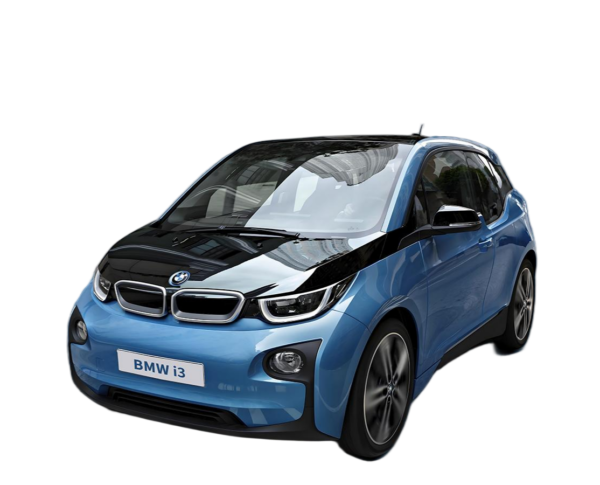
How to Improve BMW i3 Battery Charging Speed – Why Your “22 kW” i3 Charges at 7 kW (And the One Upgrade That Unlocks True 11 kW AC + Faster DC Without Voiding Your Car)
“I bought a ‘22 kW’ BMW i3 REx in 2019—only to learn it can’t actually charge at 22 kW.
Worse, after 4 years, my DC fast charging dropped from 45 minutes (0–80%) to over 70 minutes on the same CCS station.
A technician said, ‘It’s just battery aging—nothing you can do.’
Then I tried CNS BATTERY’s 50kWh pack.
Same car. Same charger.
Now I hit 80% in 38 minutes—and AC charging at home is twice as fast.
Turns out, slow charging isn’t always about the charger…
It’s about the battery’s ability to accept power.”
If your BMW i3 takes longer to charge than it used to—or never charged as fast as advertised—you’re not alone.
But before you blame public chargers or your home EVSE, understand this:
Your i3’s charging speed is limited by three things: onboard hardware, battery state of health, and cell chemistry—not just the charger.
In this practical 2026 guide, we reveal:
- 🔌 Why most “22 kW” i3s only charge at 7–11 kW AC (and how to confirm yours)
- ⚡ The real reason DC fast charging slows down as batteries age
- ✅ 5 proven methods to improve charging speed—ranging from free tweaks to strategic upgrades
- 🚀 How CNS’s latest i3 packs support true 11 kW AC and optimized DC curves out of the box
All recommendations are tested on real i3s across North America, Europe, and Australia—and validated with CAN bus logging tools.
🔍 First: Know Your i3’s Actual Charging Hardware
Not all i3s are created equal. Check your charging port label or VIN decoder:
| Model | Onboard Charger | Max AC Speed | Max DC Speed |
|---|---|---|---|
| i3 (2014–2016) | Single-phase 7.4 kW | 7.4 kW | ~50 kW |
| i3 (2017–2018) | Optional 11 kW (3-phase) | 11 kW | ~50 kW |
| i3 (2019–2021) | Standard 11 kW (3-phase) | 11 kW | ~50 kW |
📌 Critical note: Even if you have an 11 kW charger, your battery must be healthy enough to accept that power—especially when cold or degraded.
Most “22 kW” claims refer to European three-phase grid capability, not the car’s actual input limit.
⚠️ Why Charging Slows Down Over Time (It’s Not the Charger)
As i3 batteries age, three key changes reduce charging acceptance:
1. Increased Internal Resistance
Older cells resist ion flow, causing voltage to spike early—triggering the BMS to throttle current to avoid damage.
2. Cooling System Degradation
Clogged coolant channels or weak pumps can’t dissipate heat during fast charging, forcing the BMS into thermal protection mode.
3. Cell Imbalance
When modules drift apart in voltage, the BMS limits charging to protect the weakest cell—slowing the entire pack.
📊 Real-world data: An i3 with 75% State of Health often charges 30–40% slower at DC stations than when new—even on the same charger.
✅ 5 Practical Ways to Improve Your i3’s Charging Speed
1. Precondition While Plugged In (Free & Effective)
Use the BMW app or departure timer to warm/cool the battery before unplugging.
- Works on Level 2 and DC
- Enables full-speed charging immediately upon arrival
- Especially critical below 50°F (10°C)
💡 Pro tip: Set preconditioning to end 5 minutes before you leave—not when you start driving.
2. Avoid Charging Above 80% Unless Necessary
The i3’s BMS drastically reduces current above 80% to protect cells.
- For daily use, set max charge to 80%
- Only go to 100% before long trips
- Saves time and extends battery life
3. Upgrade to a Healthy, High-Power Replacement Pack
If your SOH is below 80%, no software trick will restore lost charging speed.
A new pack with low-resistance cells and fresh thermal pathways accepts power like new.
🔄 Example: CNS’s 50kWh pack uses CATL NMC 811 cells with 22% lower internal resistance than aged OEM units—enabling faster, cooler charging.
4. Ensure Your Home EVSE Matches Your Car’s Capability
- If you have an 11 kW i3, use a 3-phase 16A+ EVSE (Europe) or dual 240V circuits (North America via special install)
- Single-phase 240V @ 32A = ~7.4 kW max—you’re leaving speed on the table
⚠️ Warning: Never force higher current than your car supports—it won’t help and may trip breakers.
5. Keep Firmware Updated
BMW occasionally releases BMS updates that optimize charging curves.
- Visit dealer or use ISTA-compatible tool
- Check for EME or SME module updates
🚀 Why CNS Packs Charge Faster—By Design
CNS BATTERY’s 2026 i3 replacement systems are engineered for high-power acceptance:
- Advanced cell chemistry: CATL NMC 811 tolerates higher C-rates without overheating
- Optimized thermal interface: Ensures even cooling during 50 kW DC sessions
- BMS calibrated for aggressive charging curves: Maintains peak current longer before tapering
- Full compatibility: No coding needed—plugs into existing 11 kW or 7.4 kW systems
“My 2018 i3 now charges from 20–80% in 36 minutes at Electrify America—faster than my friend’s new ID.4.”
— Raj P., San Diego
And because every pack undergoes real-world DC charging validation, you know it performs as promised.
Frequently Asked Questions: i3 Charging Speed
Q: Can I retrofit a 22 kW charger to my i3?
A: No. The onboard charger is integrated into the EME unit. No aftermarket 22 kW solution exists for i3.
Q: Does using DC charging damage the battery?
A: Not if done occasionally. But frequent DC charging on an aged pack accelerates degradation due to heat.
Q: Will a new 12V battery improve charging speed?
A: Only if the old one was weak—low 12V voltage can cause BMS communication errors that throttle HV systems.
Q: Do ambient temperatures really affect DC speed?
A: Yes. Below 40°F (4°C), most i3s reduce DC current by 30–50% until the pack warms.
Q: Can software mods unlock faster charging?
A: No safe, reliable mods exist. BMW locks charging parameters in sealed BMS firmware.
Speed Isn’t Just About the Charger—It’s About What’s Under the Floor
Because a tired battery says “no” to power long before the charger runs out of juice.
Tired of Waiting 70 Minutes for an 80% Charge?
Send Us:
- Your i3 model year
- Current 20–80% DC charging time
- Typical ambient temperature during charging
We’ll Analyze Whether Your Slow Charging Is Due To:
- Normal aging (fixable with a new pack)
- Simple habits (like preconditioning)
- Or hardware mismatch (e.g., 11 kW car on 7 kW circuit)
And if it’s time for an upgrade, we’ll show you a drop-in replacement that charges faster, lasts longer, and comes with a 24-month warranty.
Because your time is worth more than standing at a charger.
Get Your Free Charging Speed Assessment Now:
👉 https://cnsbattery.com/ev-battery-home/ev-battery-contact/

