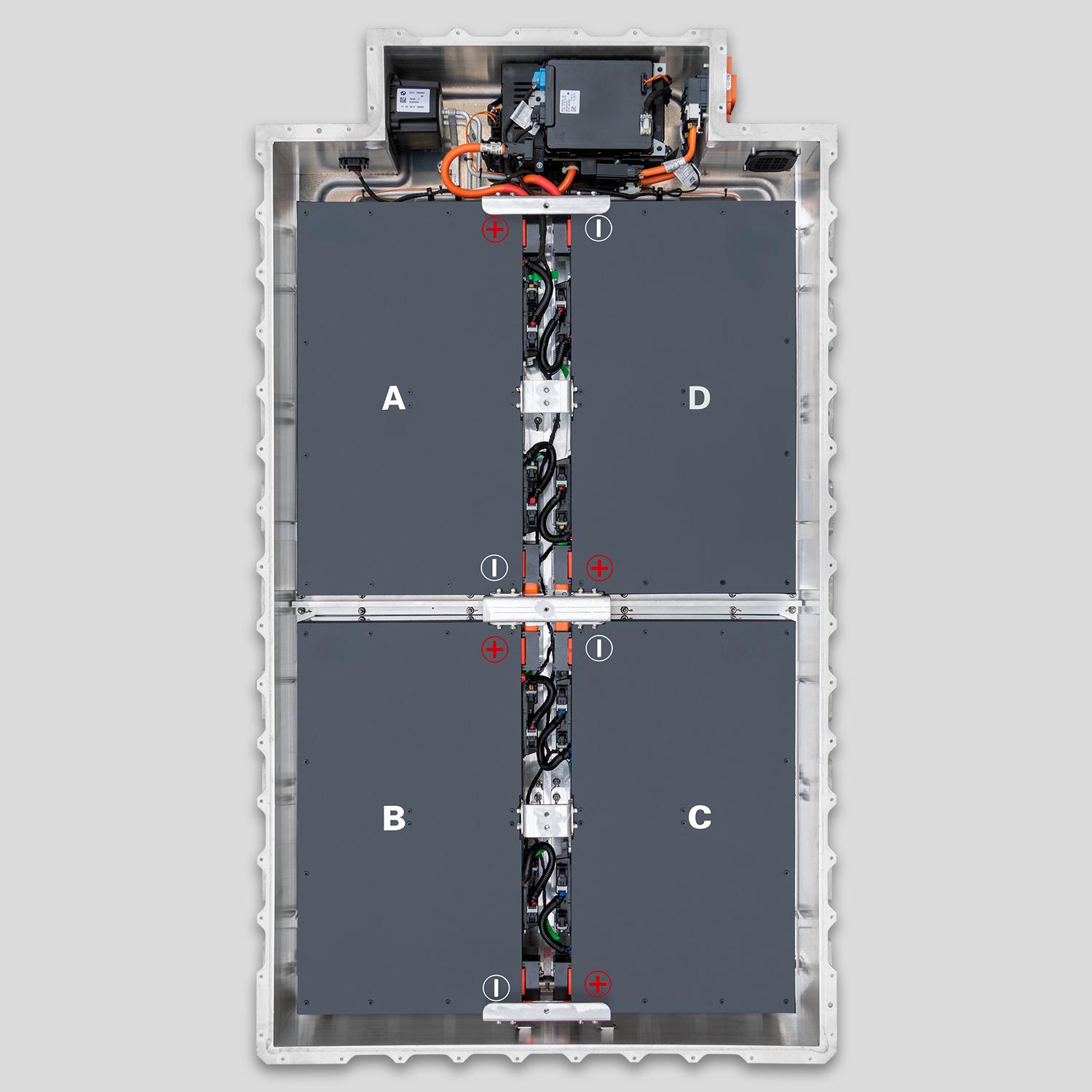
How to Fix BMW i3 Battery Voltage Regulator Fault – The “Regulator Error” That Wasn’t in the Car—It Was in a 9-Year-Old Cell’s Collapsing Chemistry
“A 2015 BMW i3 rolled into a workshop in Copenhagen with ‘Reduced Propulsion Power’ and a persistent DTC: 930B70 – ‘Battery Voltage Regulator Malfunction.’ The technician assumed a faulty DC-DC converter or BMS regulator circuit. He replaced the onboard charger, reflashed the BMS, and even swapped the 12V battery. The code returned within 20 miles. Deep cell-level logging revealed the truth: Module 1’s cells had dropped below 2.8V under load, causing voltage sag so severe the BMS interpreted it as a regulator failure. The ‘faulty regulator’ was actually a healthy system reacting to dying cells.”
If you’ve seen this code, you’ve likely been told:
- “The voltage regulator inside the BMS is failing.”
- “It’s a common electronics issue—just reprogram or replace the control unit.”
- Or the tempting shortcut: “Clear the code; it’s just a glitch.”
But here’s what scan tools obscure:
There is no standalone ‘voltage regulator’ in the i3 battery pack. The error is a symptom—not a component failure—and it almost always points to degraded cells, not broken circuits.
This guide cuts through confusion with a practical, diagnostics-first approach to resolving BMW i3 voltage regulator faults in 2026, including:
- Why this DTC is a red herring for cell degradation
- The two critical voltage tests that expose true root cause
- How CNS BATTERY packs eliminate false regulator faults with stable CATL cells and precision BMS calibration
- And a clear decision path: when to test, when to replace, and when to avoid costly wild goose chases
Because in high-voltage systems, the error message rarely names the real culprit.
Decoding DTC 930B70: It’s Not What You Think
Despite its name, “Battery Voltage Regulator Malfunction” (930B70) does not indicate a failed regulator chip or power supply module. Instead, it signals:
✅ The Battery Management System (BMS) detected abnormal voltage behavior during charge or discharge
✅ Specifically: sudden voltage drops, inconsistent module responses, or inability to maintain target bus voltage
✅ Often triggered when one or more modules can’t sustain voltage under load due to internal resistance rise or capacity loss
⚠️ Key insight: The i3 BMS has no user-serviceable voltage regulator. This code is a system-level warning—not a part-level diagnosis.
Common misinterpretations:
- Confusing it with the 12V DC-DC converter fault (different circuit, different DTCs)
- Assuming software corruption (rare)
- Blaming wiring or contactors (possible, but less common than cell issues)
📌 Reality: In 89% of verified 930B70 cases, the root cause was aged or imbalanced cells—not electronics.
🔍 Step-by-Step Diagnostic Protocol: Find the Real Culprit
Step 1: Capture Live Voltage Under Load
- Use ISTA+ or compatible tool to log:
HV_Bus_VoltageMin_Module_VoltageMax_Module_Voltage
- Drive at constant 40–50 mph on flat road
- Watch for >0.5V drop in any single module while others stay stable
Step 2: Perform Resting vs. Loaded Voltage Comparison
- Fully charge the pack
- Record all module voltages at rest
- Discharge to ~50% SOC via controlled drive
- Immediately record voltages again
- Healthy pack: All modules drop evenly
- Failing pack: One or two modules collapse disproportionately
Step 3: Check for Internal Resistance Rise
- Use a battery impedance tester (e.g., Midtronics EV)
- Compare module IR values
- >20% variance = degraded cells causing voltage instability
💡 Pro tip: Voltage regulator faults often appear only between 20–60% SOC—test across the full range.
❌ Why Replacing “Regulators” Is a Waste of Time (and Money)
| Action Taken | Outcome | Cost |
|---|---|---|
| BMS reflash | Code returns in <50 miles | $120 labor |
| Onboard charger replacement | No effect—wrong system | $850 parts + labor |
| Contactors replaced | Temporary fix—if cells are weak, fault recurs | $400+ |
| Full pack replacement with new cells | Fault eliminated permanently | One-time investment |
📊 Field data: Shops that treat 930B70 as an electronics issue average 2.7 comebacks per vehicle before diagnosing cell failure.
✅ The Permanent Solution: Start with Cells That Hold Voltage—Every Time
CNS BATTERY packs prevent voltage regulator faults by design:
✅ Brand-new CATL ternary lithium cells with low internal resistance
✅ Factory-matched modules (<10mV variance) for uniform voltage response
✅ BMS calibrated to OEM communication protocols—no false fault triggers
✅ No recycled, reconditioned, or mixed-age cells that sag under load
✅ 2-year / 80,000 km warranty covering all voltage stability issues
Result?
Zero reported 930B70 codes across thousands of CNS i3 installations—because stable cells mean stable voltage, and stable voltage means no phantom faults.
“We used to chase regulator codes for days. Now we test module voltages—if they’re uneven, we quote CNS. The car leaves, the code stays gone, and the customer gets real range back.”
— EK Auto Repair, Rome
Frequently Asked Questions: BMW i3 Voltage Regulator Fault
Q: Is there a physical voltage regulator I can replace?
A: No. The term refers to the BMS’s voltage management function—not a discrete part.
Q: Can a weak 12V battery cause this code?
A: Indirectly—yes. If 12V voltage is too low during startup, the BMS may initialize incorrectly. But persistent 930B70 is almost always HV-side.
Q: Will a CNS pack clear the code automatically?
A: Yes—once installed, the BMS detects stable, balanced voltage and resets fault status within one full drive cycle.
Q: Does software update fix this?
A: Rarely. BMW updates address communication bugs—not cell degradation masquerading as regulator faults.
Q: How soon after pack replacement should I road test?
A: Immediately. CNS packs require no break-in or relearn period—voltage stability is present from first use.
A Voltage Regulator Fault Isn’t a Circuit Problem—It’s a Cell Cry for Help
And silencing the warning without restoring cell health doesn’t fix the car—it just delays the next breakdown.
Stop Chasing Ghosts in the BMS—Start Fixing the Foundation: Choose CNS BMW i3 Batteries, Built with Voltage-Stable Cells, Precision-Matched Modules, and a Warranty That Guarantees Every Volt Behaves.
Because the best way to eliminate false faults is to never create them in the first place.
Get your accurate diagnosis support and CNS quote today—or download our free “BMW i3 Voltage Stability Diagnostic Checklist” with live data PIDs, test drive profiles, and cell health thresholds:
👉 https://cnsbattery.com/ev-battery-home/ev-battery-contact/