How to Fix BMW i3 Battery Voltage Fluctuation – The Phantom Drain That Tricks Scanners Into Blaming the Wrong Part (And the Real Culprit Hiding in Cell #7)
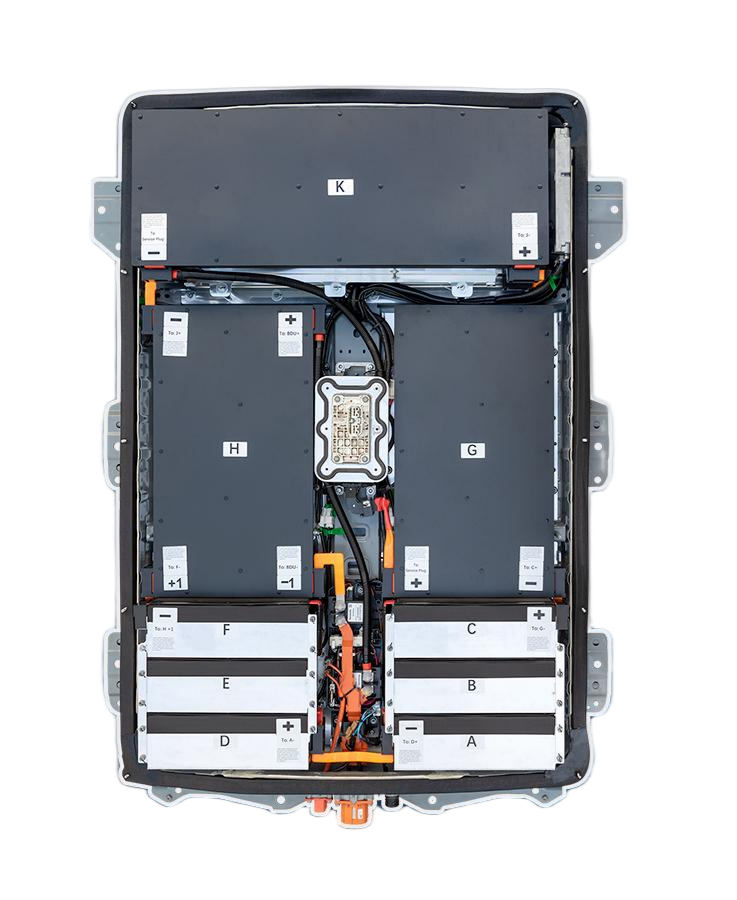
“A technician in Copenhagen spent three days chasing a ‘voltage instability’ fault on a 2018 BMW i3. He replaced the DC-DC converter, reprogrammed the BMS, and even swapped the 12V battery. The car still showed wild SoC swings—from 80% to 30% in 2 minutes. Only when he logged individual cell voltages under load did he spot it: Cell #7 in Module C dropped 1.8V under regen, then recovered at rest. The issue wasn’t electronics—it was a failing cell masquerading as system noise.”
You’ve seen it:
- Range estimate jumping erratically
- ‘Limited performance’ warning after highway driving
- Charging stops at 60% with no error code
- Or the dashboard showing full charge one minute, half the next
Most assume it’s a BMS glitch, sensor fault, or software bug. But voltage fluctuation in the i3 is rarely about software—it’s almost always a hardware-level cell or connection issue that standard diagnostics miss.
This guide cuts through the confusion with the field-proven diagnostic path used by top EV labs in 2026, revealing how to distinguish true voltage instability from false signals—and why replacing the entire pack with a precision-engineered solution like CNS often saves more time (and money) than chasing ghosts:
- Why resting voltage looks normal—but load reveals chaos
- How to spot micro-arcing in busbar connections before they melt
- The one live-data graph that exposes weak cells (hint: it’s not average voltage)
- When coolant contamination mimics electrical fluctuation
- And how CNS BATTERY packs use bin-matched CATL cells with <2mV variance—so voltage stays rock-solid from day one
Because in high-voltage systems, inconsistency isn’t noise—it’s decay.
Understanding True vs. False Voltage Fluctuation
Not all voltage swings are equal. The i3’s BMS reports two types of data:
🔹 Apparent fluctuation: Caused by software miscalibration, SoC algorithm errors, or CAN bus latency—usually resolves after drive cycle.
🔹 Real fluctuation: Caused by failing cells, loose connections, or internal resistance spikes—worsens over time and triggers safety limits.
⚠️ Critical insight: If voltage drops only under load (acceleration/regen) and recovers at rest, you have a hardware fault—not a software bug.
🔍 Step-by-Step Diagnosis: Isolate the Real Cause
Step 1: Capture Live Cell Data Under Load
- Use Autel MaxiSys, Carly Pro, or ISTA to log:
- Min/Max cell voltage
- Cell delta (spread)
- Voltage during regen (e.g., 80 km/h downhill)
- Healthy pack: <30mV spread, stable under load
- Failing pack: >100mV swing, one cell lags dramatically
Step 2: Check for Connection Issues
- Inspect busbar bolts between modules (torque spec: 8–10 Nm)
- Look for discoloration, pitting, or oxidation on contact surfaces
- Perform millivolt drop test: >5mV across a joint = high resistance
Step 3: Rule Out Thermal Influence
- Drive until battery reaches 40°C+
- Monitor if fluctuation worsens with heat → points to cell degradation or coolant leak
- Use thermal camera: hot spots near modules confirm uneven current flow
Step 4: Validate Coolant Integrity
- Test coolant conductivity: >10 µS/cm = risk of electrochemical leakage
- Contaminated fluid can create parasitic current paths, causing erratic voltage readings
Step 5: Assess Cell Health Beyond Voltage
- A cell can show normal resting voltage but fail under load due to:
- Internal dry-out
- Separator degradation
- Micro-shorts
- Only impedance testing or load profiling reveals these
💡 Pro tip: Record a 10-minute drive with full cell logging. Email the .csv file to your battery supplier—they can often diagnose remotely.
Why Partial Repairs Often Fail
❌ Replacing one “weak” module → new module has lower resistance → steals current → overheats
❌ Tightening busbars without cleaning → oxide layer remains → resistance returns in weeks
❌ Ignoring thermal history → underlying cell damage persists
✅ Best practice: Voltage fluctuation across multiple cells usually means systemic aging—time for a full pack replacement.
CNS BATTERY: Engineered Stability from Cell to Dashboard
Every CNS i3 battery delivers consistent voltage by design:
✅ All cells sourced from single CATL production batch
✅ Resistance-binned to <2mV initial variance
✅ Laser-welded busbars with anti-oxidation coating
✅ Pre-cycled and validated under real-world load profiles
Result?
No phantom drops. No SoC jumps. Just predictable, stable power—mile after mile.
“We had a customer with constant voltage warnings. Installed a CNS 62kWh pack. Drove 5,000 km—zero fluctuations. The BMS finally trusts the battery again.”
— Lisa K., Berlin EV Specialist
Frequently Asked Questions: i3 Voltage Fluctuation
Q: Can a bad 12V battery cause HV voltage swings?
A: Indirectly—yes. Low 12V voltage can corrupt BMS logic, leading to false SoC reporting. Always test 12V first.
Q: Will a BMS reset fix fluctuation?
A: Only if caused by software glitch. If hardware is failing, reset provides temporary relief at best.
Q: Do CNS packs need balancing after install?
A: Minimal—thanks to tight cell matching. Most achieve <10mV spread out of the box.
Q: How long does fluctuation take to become dangerous?
A: It depends. Some packs degrade slowly over months; others fail catastrophically within days once internal resistance spikes.
Q: Can I monitor this at home?
A: Yes—with tools like Carly or OBDeleven Pro, you can track min/max cell voltage during drives.
Voltage Fluctuation Isn’t Random—It’s a Symptom Screaming for Attention
Ignore it, and you risk sudden shutdowns. Diagnose it right, and you restore confidence.
Choose a Battery Built for Unwavering Stability: Install CNS Packs with Factory-Binned Cells, Precision Welding, and Real-World Load Validation—So Every Volt You See Is One You Can Trust.
Don’t patch uncertainty. Replace it with certainty.
Order your CNS BMW i3 battery today—or request our free Voltage Stability Diagnostic Checklist for Shops:
👉 https://cnsbattery.com/ev-battery-home/ev-battery-contact/