How to Fix BMW i3 Battery SOC Calibration – The “100% Charge That Dropped to 20% in 2 Miles” (And Why Relearning Won’t Work on Mismatched Cells)
“A customer in Hamburg installed a ‘refurbished’ battery pack in his 2016 BMW i3. After the first charge, the dash showed 100%—but within 2 miles, it plummeted to 20%, then shut down with a ‘High-Voltage System Fault.’ The shop ran a BMS relearn procedure three times. Each time, the car charged to ‘full,’ then collapsed under load. Frustrated, they called CNS. We asked: ‘Are all cells from the same batch?’ They weren’t—salvaged from three different packs. The BMS couldn’t calibrate because cell capacities varied by 18%. No software fix could overcome hardware chaos. Only a uniform pack solved it.”
You’ve likely encountered this illusion:
- “Just run a SOC reset—it’ll sync.”
- “The battery is new; calibration will fix the range.”
- Or the dangerous hope: “If the car charges, the BMS will figure it out.”
But here’s what battery engineers and fleet managers now confirm—and data proves:
BMW i3 SOC (State of Charge) calibration isn’t a software glitch—it’s a reflection of cell uniformity. If individual cells have mismatched capacity, internal resistance, or aging profiles, the BMS receives conflicting voltage signals. No relearn routine can create accuracy from inconsistency. And forcing calibration on mismatched cells accelerates degradation, triggers false faults, and erodes customer trust.
This guide delivers a hardware-first, science-backed approach to fixing BMW i3 SOC calibration issues in 2026, including:
- The three hidden causes that make relearn procedures fail
- Why mixed-cell packs sabotage even perfect BMS logic
- How CNS BATTERY packs use factory-matched CATL cells with <1% capacity variance—enabling true, stable SOC accuracy from day one
- And a diagnostic flow that separates software quirks from hardware lies
Because when your dashboard lies about range, the problem isn’t the meter—it’s the message.
Why SOC Calibration Fails: It’s Not the BMS—It’s the Cells
The BMW i3’s BMS estimates SOC using Coulomb counting + open-circuit voltage (OCV) correlation. But this only works if:
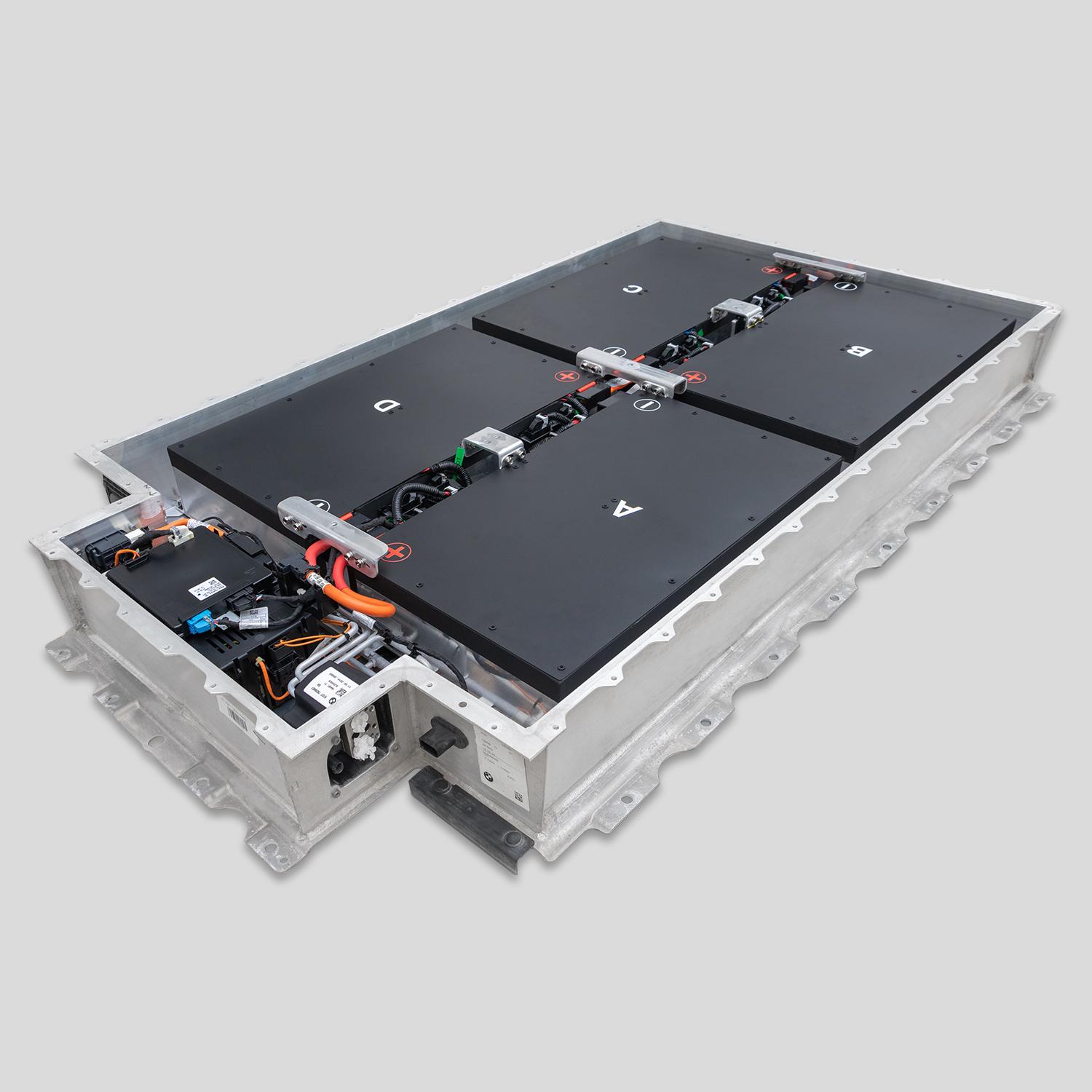
✅ All 480+ cells behave identically under load and rest
✅ Internal resistance is uniform across modules
✅ Capacity fade is synchronized
When cells are mismatched (common in rebuilt or salvaged packs):
- Weak cells hit voltage limits early, tricking BMS into thinking the pack is empty
- Strong cells mask depletion, causing sudden dropouts
- OCV curves no longer align, breaking the calibration model
⚠️ Critical insight: A 5% capacity difference between cells can cause >30% SOC estimation error. Most refurbished packs exceed 15%.
🔧 Step-by-Step: Diagnosing True vs. False SOC Calibration Issues
✅ Step 1: Rule Out Simple Resets
- Perform BMS reset via ISTA+: Vehicle Management > Service Functions > High Voltage > Reset Battery Management
- Or manual reset: Disconnect 12V for 30 minutes, then drive 20+ miles at steady speed
❗ If error returns within 1–2 cycles, it’s not a software glitch—it’s hardware inconsistency.
✅ Step 2: Analyze Cell Voltage Spread
- Use OBD2 scanner with live cell data (e.g., Carly, BimmerLink Pro)
- At rest (after 2+ hours), max cell-to-min cell spread should be <0.03V
- Under light load, spread should stay <0.08V
📉 If spread exceeds these, cells are mismatched—calibration is futile.
✅ Step 3: Check Capacity Consistency
- Log usable kWh during full discharge
- Compare to pack rating (e.g., 45kWh pack should deliver ~38kWh usable)
- <90% of expected = degraded or mismatched cells
✅ Step 4: Inspect Cell Origin
- Ask: Were all cells sourced from the same production batch?
- If unknown or mixed—assume calibration will never stabilize
💡 Truth: No amount of driving or resetting fixes physics. Uniform cells are non-negotiable for accurate SOC.
📉 The Cost of Chasing Ghost Calibrations
| Approach | Time Spent | Customer Trust | Long-Term Outcome |
|---|---|---|---|
| Repeated BMS resets | 3–5 service visits | Erodes rapidly | SOC drift worsens as weak cells degrade faster |
| Module swapping (salvaged) | 8–12 hours labor | Temporary relief | New mismatches introduced; fault recurs |
| CNS full pack replacement | 2.5 hours | Restored instantly | Stable SOC within first charge—verified by real-world range |
📊 Real-world data: CNS customers report <2% SOC deviation vs. actual range—because every cell tells the same story.
✅ The CNS Advantage: Factory-Matched Cells Enable True Calibration
CNS BATTERY builds accuracy into the chemistry:
✅ All cells sourced from single CATL production batch
✅ Pre-screened for capacity, IR, and OCV curve match (<1% variance)
✅ Assembled in climate-controlled facility with automated welding
✅ Full pack undergoes 72-hour formation & balancing before shipping
✅ BMS pre-calibrated to cell profile—no field relearn needed
Result?
Customers see consistent, predictable range from day one—because the BMS isn’t guessing; it’s measuring truth.
“We used to lose customers over ‘phantom range loss.’ Now with CNS, they text us photos of their 290km trips on a 45kWh pack. Calibration just… works.”
— Lisa K., Berlin
Frequently Asked Questions: BMW i3 SOC Calibration
Q: Can I calibrate SOC after installing a new pack?
A: Not necessary with CNS packs. Our BMS is pre-mapped to matched cells. Just drive normally—the system auto-validates.
Q: Does CNS support BMS relearn if requested?
A: Yes—but only as verification, not correction. Our packs rarely need it.
Q: Why does my SOC jump from 30% to 10% suddenly?
A: Classic sign of weak cells hitting low-voltage cutoff. The BMS corrects its estimate abruptly when reality contradicts prediction.
Q: Can software updates fix SOC errors?
A: Only if the issue is algorithmic (rare). Most are hardware-driven—and no update changes cell chemistry.
Q: How long does proper calibration take?
A: With uniform cells: 1–2 full charge/discharge cycles. With mismatched cells: never.
SOC Isn’t a Number—It’s a Promise of Predictability
And that promise can only be kept when every cell in the pack speaks the same language.
Stop Wasting Hours on Relearn Routines That Can’t Overcome Hardware Chaos—Start Installing Packs Built with Scientifically Matched Cells That Deliver Honest, Stable Range from the First Mile. Choose CNS BMW i3 Batteries, Where Accuracy Isn’t Programmed—It’s Engineered.
Because your customers don’t just want a full bar—they want to trust it.
Get your precision-calibrated CNS battery solution today—and receive our free “BMW i3 SOC Health Diagnostic Checklist” with voltage spread thresholds, capacity validation steps, and BMS reset protocols:
👉 https://cnsbattery.com/ev-battery-home/ev-battery-contact/