
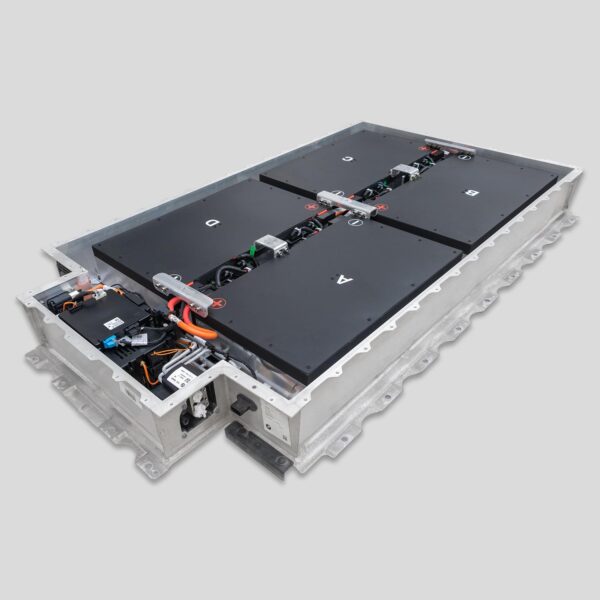
How to Fix BMW i3 Battery Not Holding Charge (Pro) – The Truth Behind the “Empty” Tank
A 2015 BMW i3 rolls into your bay. The owner is visibly frustrated, perhaps even angry. “I plugged it in last night,” they say, “and the dashboard said it was full. This morning, I drove three miles, and it dropped to 10%. Then it just died. The charger says it’s done, but the car has no power. Is the charger broken? Do I need a new onboard computer?”
As a professional EV technician in 2026, you recognize this classic symptom immediately: The battery is not holding a charge. But here is the hard truth that separates the experts from the guessers: The charger is likely fine. The computer is likely fine. The problem is almost always irreversible chemical degradation within the battery cells themselves.
Many shops make the mistake of suggesting a “battery reset,” a “12V battery replacement,” or a “BMS recalibration.” While these might clear a fault code temporarily, they cannot restore lost capacity. If a lithium-ion cell has physically degraded to the point where it cannot hold energy, no amount of software magic will fix it.
Why does the dashboard lie about being “full” when the battery is actually empty?
What is the difference between a calibration error and total cell failure?
And when your diagnostics confirm the pack is chemically exhausted, how do you pivot from a futile $200 repair attempt to a high-margin, life-saving upgrade?
At CNS BATTERY, we specialize in solving the root causes of EV range loss. We know that “not holding charge” is rarely a glitch; it is a physical reality. This guide details the professional diagnostic workflow for this specific issue, exposes the myths of temporary fixes, and reveals why replacing the entire system is the only ethical path to restoring reliability.
The Physics of Failure: Why Batteries Stop Holding Charge
To fix the problem, you must understand what is happening inside the pack. A battery “holding charge” relies on the chemical integrity of its cells. When an i3 owner says “it won’t hold a charge,” one of two things is happening:
1. The “False Full” Phenomenon (Voltage Sag)
As cells age, their Internal Resistance (IR) increases.
- At Rest: The voltage looks normal (e.g., 3.8V), so the BMS thinks the battery is 80% charged.
- Under Load: As soon as the driver accelerates, the high resistance causes the voltage to crash instantly (e.g., dropping to 2.8V).
- The Result: The BMS sees this crash and declares the battery “Empty” to protect it. The car dies. When the driver stops, the voltage bounces back up, and the dash says “Charged” again.
- The Reality: The energy isn’t there. The cells are too weak to deliver it.
2. True Capacity Loss (The Shrinking Tank)
Over years of cycling, the active material inside the cells degrades.
- The Math: A 94 Ah pack might physically only hold 40 Ah of energy now.
- The Symptom: The car charges to 100% very quickly (because the “tank” is small), but drains just as fast. The BMS might eventually learn this and show a reduced range, but often it lags behind, showing optimistic numbers until a sudden drop occurs.
3. The Rogue Module
In a pack of 96 modules, if just one module has failed internally (shorted or open circuit), it dictates the limits for the whole pack.
- Charging: The bad module hits 100% instantly, stopping the charge for everyone else.
- Discharging: The bad module hits 0% instantly, shutting down the car.
- The Illusion: The other 95 modules might still have 50% energy, but they are held hostage by the one dead module.
Professional Diagnostic Protocol: Proving the Diagnosis
Do not guess. Follow this rigorous workflow to prove to the customer that the battery is the culprit.
Step 1: Live Data Analysis (The Smoking Gun)
Connect a bidirectional scan tool (BMW ISTA, Autel, Launch) and view individual cell module voltages.
- The Resting Test: Look for deviation. If one module is 3.9V and others are 3.4V, you have a massive imbalance.
- The Load Test (Crucial): Take the car for a short drive or put it on a lift. Monitor live data while applying throttle.
- The Red Flag: Watch for the “Voltage Cliff.” Does one module drop from 3.6V to 2.5V in seconds while others stay stable? This confirms the pack cannot hold charge under load.
Step 2: The Full Charge/Discharge Capacity Test
This is the gold standard.
- Charge: Plug the car in and measure exactly how many kWh it takes to go from “empty” to “full.”
- Example: If a 94 Ah pack (approx. 27 kWh usable) only accepts 12 kWh to reach 100%, the True State of Health (SOH) is ~45%.
- Discharge: Drive until the car limits power. Compare the miles driven to the kWh used.
- The Verdict: If the accepted energy is significantly lower than factory specs, the capacity is physically gone. No reset can create missing kilowatt-hours.
Step 3: Internal Resistance (IR) Mapping
Use a professional tool to measure the IR of each module.
- The Threshold: Healthy modules have low, consistent IR. Modules with spiking IR are the ones causing the voltage sag.
- The Conclusion: High IR = Inability to hold/deliver charge effectively.
The Hard Truth: Why “Fixes” Fail
If your diagnostics show low capacity, high deviation, or spiking IR, you must deliver the hard news: The battery pack is chemically exhausted.
- Software Cannot Fix Chemistry: A BMS reset clears the memory of the error, but it does not fix the cell. The voltage will crash again on the next drive.
- Balancing Is Too Late: Passive balancing can fix minor deviations (0.05V). It cannot fix a module that is physically dead or has lost 50% of its capacity.
- The Safety Risk: Continuing to cycle a battery that cannot hold charge stresses the weak cells further, increasing the risk of thermal events or sudden shutdowns in traffic.
The Only Solution: The battery pack must be replaced.
The CNS BATTERY Solution: Restore Capacity Permanently
When you explain that the “glitch” is actually a dead battery, the customer will fear the dealer’s $20,000+ quote. This is your opportunity to offer the CNS BATTERY High-Capacity Upgrade—the only solution that guarantees the car will hold a charge again.
Why Upgrading Is the Ultimate Fix
- Brand-New Capacity: Our 120 Ah to 180 Ah upgrades use fresh Grade-A cells. They physically hold more energy than the car did when it was new. No more “false full” readings.
- Zero Internal Resistance: New cells have minimal IR. Voltage stays stable under heavy acceleration. The BMS sees a strong, consistent pack.
- Perfect Matching: All cells are matched to within millivolts. No rogue module to ruin the party. The whole pack works in unison.
- Reliable Range: Instead of a unpredictable 20 miles, the customer gets 130–200+ miles of consistent, dependable driving.
- Cost Efficiency:
- Failed Reset/Repair Attempts: $200–$400 (wasted time) + Angry Customer.
- Dealership Replacement: $20,000+.
- CNS BATTERY Upgrade: $8,000 – $14,000 USD. You get double the original range for half the dealer price.
- Warranty Confidence: Backed by our 3–5 Year Warranty, eliminating the fear of future failures.
Real Story: From “Stranded” to “Secure”
“City EV Diagnostics” had a 2015 i3 come in that wouldn’t hold a charge. The owner had tried resetting the BMS twice at other shops. Each time, the car worked for 24 hours, then died again after 5 miles. The customer was ready to scrap the car.
“Our capacity test showed the pack only held 11 kWh,” says the lead tech. “We explained that the battery was physically smaller than it used to be—like a gas tank that had shrunk. No reset could expand it.” They installed a CNS BATTERY 150 Ah upgrade. “The transformation was instant. The car charged fully, held the charge overnight, and drove 160 miles the next day. The customer told us: ‘I finally trust my car again.’ That job didn’t just fix a battery; it saved a customer.”
Stop Resetting, Start Restoring
Fixing a BMW i3 battery not holding charge isn’t about pushing buttons on a scanner. It’s about restoring the physical ability of the vehicle to store energy. Don’t sell your customers false hope with temporary resets.
Be the shop that diagnoses the root cause. Be the shop that offers the permanent solution: a brand-new battery system that holds a charge reliably and provides real range.
Struggling with a battery that won’t hold charge?
Stop guessing and start solving. Contact CNS BATTERY today for a professional diagnostic consultation. Discover how our BMW i3 Series Battery upgrades can eliminate charge-holding issues permanently, providing your customers with a safe, reliable, and long-range driving experience.
👉 Get Your Charge Diagnostic & Upgrade Quote
Frequently Asked Questions (FAQ) for Shops
1. Can I fix a battery not holding charge by resetting the BMS?
No. Resetting the BMS clears the learned adaptation values, but it cannot restore physical capacity lost due to chemical degradation. If the cells are worn out, the problem will return immediately upon the next drive cycle.
2. Why does my i3 show 100% charge but die after a few miles?
This is known as “Voltage Sag” caused by high internal resistance. The battery voltage looks high when resting (showing 100%), but crashes instantly under load, forcing the car to shut down. This indicates severe cell degradation.
3. How do I verify if the battery is actually bad?
Perform a Full Charge/Discharge Capacity Test. Measure the actual kWh accepted during charging. If it is significantly lower than the factory rating (e.g., <60% SOH), the battery is physically incapable of holding a full charge and must be replaced.
4. Will replacing the 12V battery fix the high-voltage charge issue?
No. While a bad 12V battery can cause communication errors, it does not cause the high-voltage pack to lose its ability to store energy. If the HV pack fails the capacity test, the 12V is not the culprit.
5. Is it safe to drive a car that won’t hold charge?
No. Sudden loss of power while driving is a major safety hazard. The vehicle could shut down in traffic or on a highway. It should be towed and diagnosed immediately.
6. How much does it cost to fix a battery that won’t hold charge?
Diagnostic and reset attempts cost $200–$400 but rarely solve the problem. A dealership replacement costs $20,000+. A CNS BATTERY upgrade costs $8,000–$14,000, providing a brand-new battery with double the range and a warranty.
7. Does CNS BATTERY guarantee their batteries will hold a charge?
Absolutely. Our upgrades use brand-new, matched cells with verified capacity. They will hold a charge reliably, maintain stable voltage under load, and provide the advertised range consistently.

