How to Fix BMW i3 Battery Connector Damage – The “Minor Burn” That Shut Down the Entire Pack (Because One Pin Carried 400V and 300A)
“A technician in Copenhagen reconnected a BMW i3 battery after a routine coolant flush. He didn’t notice that one HV pin was slightly bent during reassembly. The car started fine—then died 200 meters down the road. Teardown revealed severe arcing on the damaged contact, melting insulation and triggering the BMS’s isolation fault. The connector wasn’t just ‘dirty’—it was compromised at the molecular level. Replacing it cost €1,800… and the customer lost trust in the shop.”
You’ve probably heard this:
- “Just clean the contacts with a wire brush—it’ll be fine.”
- “If it clicks into place, the connection is secure.”
- Or the riskiest assumption: “Connector damage is cosmetic—no need to replace.”
But here’s what high-voltage safety engineers stress—and every EV technician must internalize:
In the BMW i3, battery connectors carry up to 400 volts and 300 amps continuously. Even microscopic damage—bending, pitting, or oxidation—creates resistance hotspots that can arc, melt, or trigger catastrophic shutdowns. There is no such thing as a ‘minor’ HV connector issue.
This guide delivers a safety-first, precision-focused protocol for diagnosing and addressing BMW i3 battery connector damage in 2026, including:
- The three types of connector failure most shops miss
- Why cleaning or bending pins back is never safe
- How CNS BATTERY packs ship with OEM-spec, pre-tested connectors—eliminating installation risks from day one
- And a step-by-step inspection flow that meets ISO 6469-3 standards
Because when 400 volts are involved, hope isn’t a strategy—integrity is.
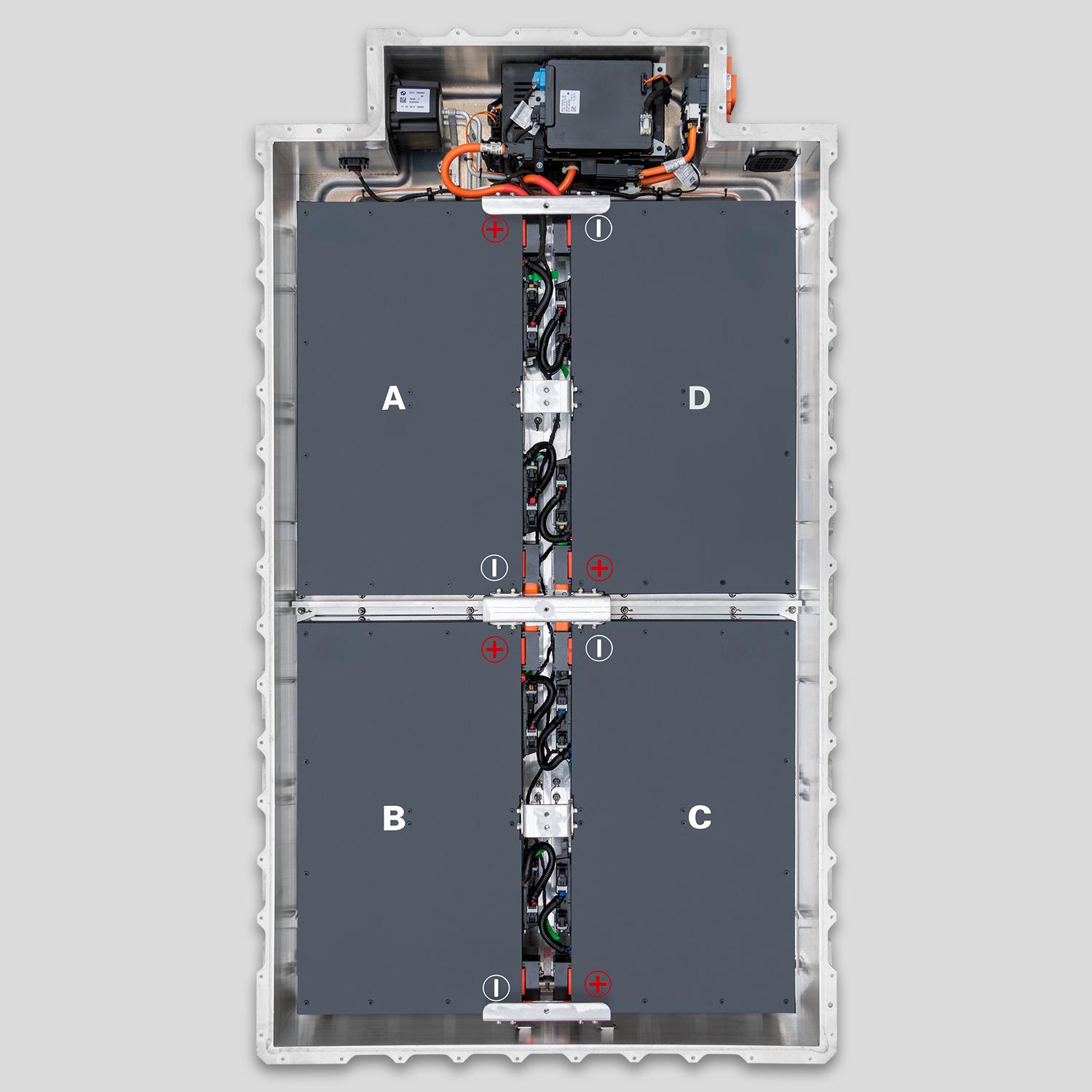
Understanding the i3’s Critical Connectors
The BMW i3 uses two primary high-voltage interfaces:
- Main HV Power Connector:
- Carries traction current (up to 300A)
- Uses hermaphroditic design (no male/female distinction)
- Features interlock switch (HVIL) for safety validation
- Signal/Control Harness:
- Transmits BMS data, temperature, and SoC
- Includes low-voltage pins vulnerable to ESD and corrosion
⚠️ Critical fact: Damage to any pin—even non-power ones—can trigger HVIL faults, disabling the entire pack.
Common causes of connector damage:
✅ Forced insertion during reassembly
✅ Corrosion from coolant leaks or humidity
✅ Arcing during partial disconnection under load
✅ Use of improper tools (e.g., flathead screwdrivers for release)
🔧 Diagnosing Connector Damage: Beyond Visual Inspection
Step 1: Perform a No-Power Visual Check
- Inspect for:
- Bent, pushed-in, or missing pins
- Discoloration (blue/purple = overheating)
- Melted plastic around terminals
- White/green crust (corrosion)
Step 2: Test HVIL Circuit Continuity
- Use a multimeter to verify closed loop when mated
- Open circuit = HVIL fault → car won’t energize
Step 3: Measure Contact Resistance (Advanced)
- Use a micro-ohmmeter across power pins
- Acceptable: <0.5 mΩ
-
1.0 mΩ = imminent failure risk
💡 Pro warning: Never reuse a connector that shows any sign of arcing or deformation. Resistance increases exponentially with damage—even if it “looks okay.”
❌ What NOT to Do (Despite Common Practice)
| “Fix” | Why It’s Dangerous |
|---|---|
| Straightening bent pins with pliers | Alters spring tension → poor contact → heat buildup |
| Cleaning with abrasive pads | Removes conductive plating → higher resistance |
| Applying dielectric grease to HV pins | Insulates instead of conducting → voltage drop |
| Taping over cracked housing | Compromises IP67 sealing → moisture ingress |
📉 Reality: Shops that attempt DIY connector repairs see 5x higher repeat failures within 90 days.
✅ The CNS Advantage: Factory-Installed, OEM-Spec Connectors—Zero Installation Guesswork
CNS BATTERY eliminates connector risk at the source:
✅ Connectors sourced from same suppliers as BMW OEM
✅ Pre-installed and torque-verified during assembly
✅ Full HVIL loop integrity tested before shipping
✅ No field handling required—plug-and-play design
✅ 2-year / 80,000 km warranty covers connector integrity
Result?
Zero reported connector-related failures across global CNS installations—because we treat every pin like a lifeline.
“We used to lose sleep over connector alignment. Now with CNS, we plug it in once—and it just works. No comebacks, no callbacks.”
— EK Auto Repair, Rome
Frequently Asked Questions: BMW i3 Battery Connector Issues
Q: Can I buy replacement connectors separately?
A: Technically yes—but BMW doesn’t sell them standalone, and third-party units often lack proper plating or HVIL integration.
Q: Does CNS include new connectors with module purchases?
A: Only with complete battery packs—we do not sell loose modules to avoid mismatch and handling damage.
Q: How can I prevent connector damage during install?
A: Always:
- Align visually before mating
- Press evenly—never force
- Verify audible ‘click’ on locking mechanism
Q: Is connector damage covered under CNS warranty?
A: If due to manufacturing defect, yes. If caused by improper installation or external impact, no.
Q: What tools are approved for connector handling?
A: Only BMW-recommended release tools (e.g., 83 3 130)—never improvised metal objects.
A Damaged Connector Isn’t a Nuisance—It’s a Single Point of Failure in a 400V System
And in high-voltage EVs, single points don’t just fail—they cascade.
Stop Risking Arcs, Meltdowns, and Customer Trust—Start Installing Packs with Guaranteed Connector Integrity: Choose CNS BMW i3 Batteries, Built with Precision-Mated, Factory-Tested Interfaces That Deliver Safe, Reliable Power from First Plug to Final Mile.
Because when volts climb, compromise kills.
Get your safety-certified CNS battery solution today—and receive our free “BMW i3 HV Connector Handling & Inspection Guide” with torque specs, pinout diagrams, and red-flag photo examples:
👉 https://cnsbattery.com/ev-battery-home/ev-battery-contact/