How to Fix BMW i3 Battery Charging Issues (Professional) – Beyond the “Bad Charger” Myth
A 2015 BMW i3 is plugged into a working Level 2 charger, but the dashboard flashes a frustrating error: “Charging Malfunction.” The customer is exasperated. “I tried three different charging stations,” they explain. “Two public fast chargers and my home wallbox. None of them work. The mechanic said my onboard charger is dead and quoted me $4,000 to replace it. Is that really the only option?”
As a professional EV technician in 2026, you know that blaming the onboard charger (OBC) or the external station is often a misdiagnosis. In the vast majority of aging BMW i3s, charging issues are not caused by the charger; they are caused by the battery pack itself rejecting the energy.
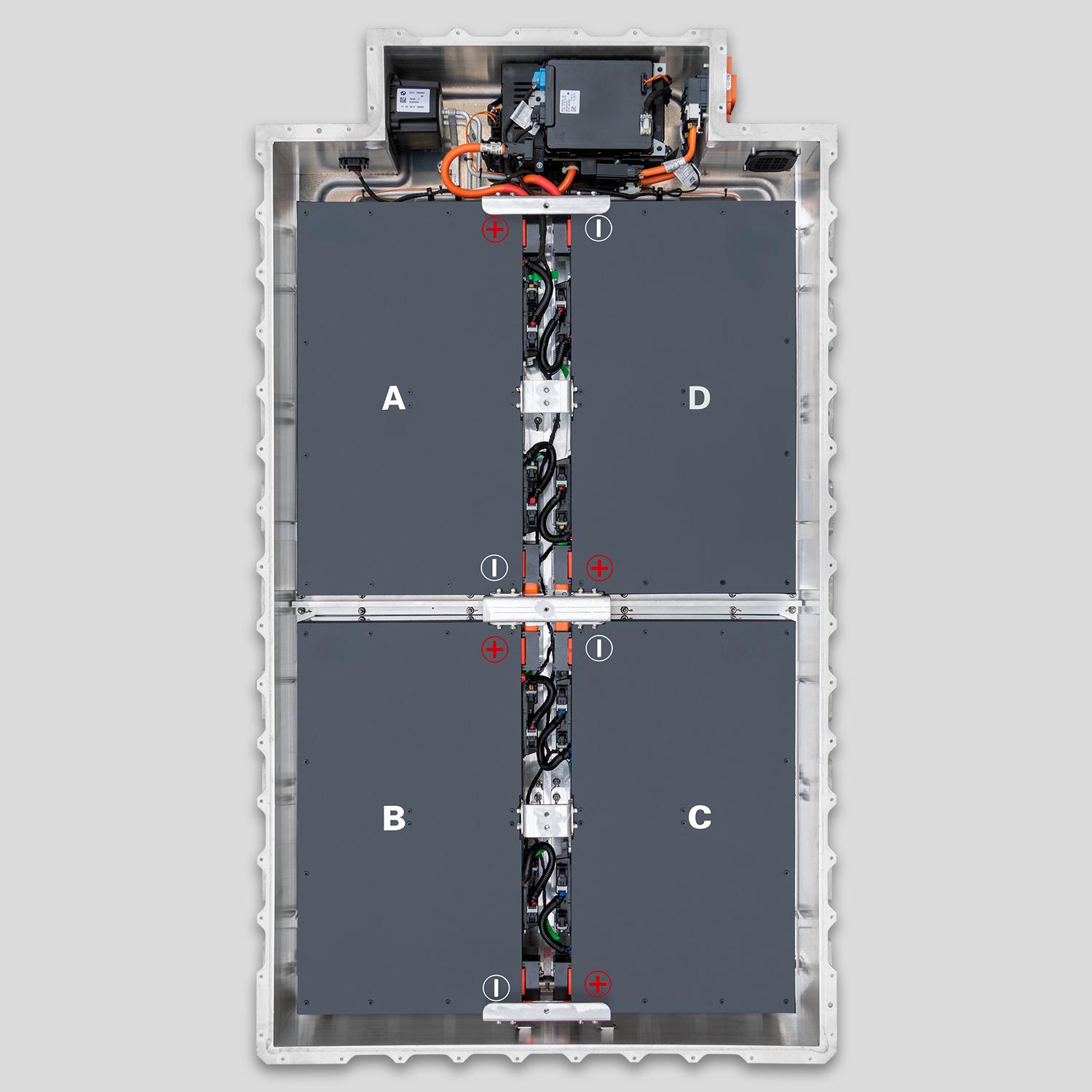
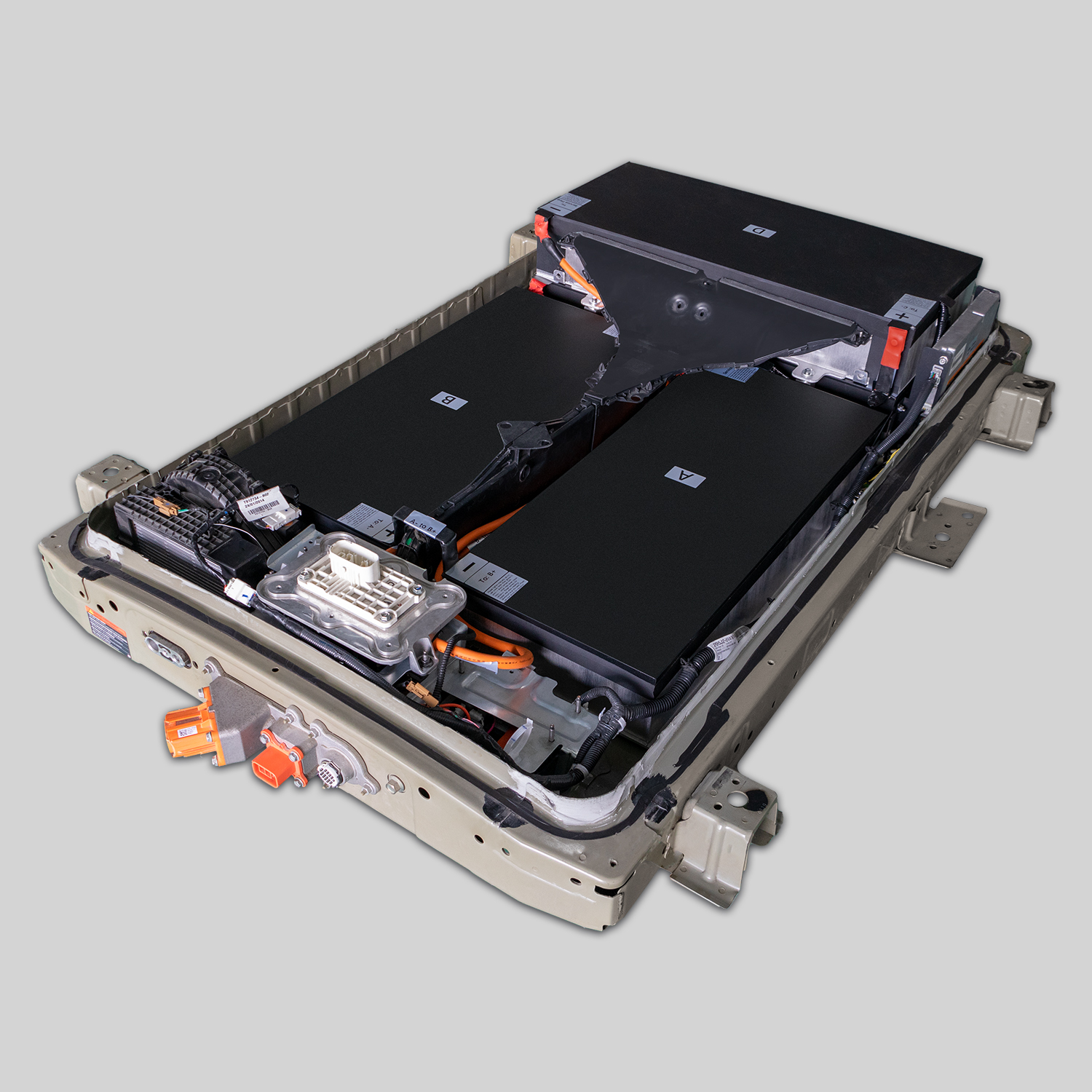
When lithium-ion cells degrade, their internal resistance spikes, and their voltage curves become unstable. The Battery Management System (BMS) detects these anomalies during the pre-charge handshake and immediately aborts the session to prevent thermal runaway or cell damage. The car isn’t “broken” in the traditional sense; it is protecting itself from a chemically exhausted battery.
Why do healthy chargers fail to charge an aging i3?
What specific cell-level failures trigger these charging rejections?
And when diagnostics confirm the battery is the bottleneck, how do you pivot from a costly OBC replacement to a high-margin, range-extending upgrade?
At CNS BATTERY, we specialize in resolving the root causes of EV charging failures. We know that swapping parts based on error codes is a gamble. This guide details the professional diagnostic workflow for charging issues, exposes the limitations of component replacement, and reveals why upgrading the entire battery system is the only permanent fix.
The Hidden Culprit: Why the Battery Says “No”
Customers (and some technicians) assume that if a charger works on other cars, the i3’s charging port or OBC must be faulty. While possible, this is rarely the case for 10-year-old i3s. The real issue lies in the electrochemical handshake.
1. Voltage Sag & Internal Resistance
During the initial phase of charging, the BMS monitors how the cell voltages respond to incoming current.
- The Failure: In a degraded pack, high internal resistance causes cell voltages to spike instantly upon connection. The BMS interprets this as a dangerous over-voltage condition and cuts power immediately.
- The Symptom: The car starts charging for 10 seconds, then stops with an error.
2. Cell Imbalance Limits
To charge safely, all modules in the pack must be within a tight voltage window.
- The Failure: If one module is significantly weaker (lower capacity) than the rest, it hits its maximum voltage limit almost instantly while the others are still low. The BMS halts the entire process to protect that single weak module.
- The Symptom: The car charges very slowly or stops at 60-70% SOC repeatedly.
3. Thermal Instability
Degraded cells generate excessive heat even at low charging currents.
- The Failure: Temperature sensors detect rapid heating in specific zones. The BMS triggers a thermal fault and disables charging to prevent fire.
- The Symptom: “Charging cancelled due to temperature” errors, even in cool weather.
Professional Diagnostic Protocol: Finding the Blockage
Do not replace the OBC until you have ruled out battery failure. Follow this rigorous workflow.
Step 1: Live Data Analysis (The Handshake)
Connect a bidirectional scan tool (BMW ISTA, Autel, Launch) and monitor live data while attempting to charge.
- Watch the Voltages: Observe individual module voltages the moment the charger connects.
- The Red Flag: Does one module jump from 3.6V to 4.1V instantly while others stay at 3.6V? This confirms a weak module causing early cutoff.
- Check Current Request vs. Actual: Is the BMS requesting 0 Amps despite the charger being ready? This indicates the BMS has internally blocked the session.
Step 2: Internal Resistance (IR) Mapping
Use a professional AC impedance meter or advanced diagnostic tool.
- The Test: Measure the IR of each module.
- The Verdict: Modules with IR values 2-3x higher than the average are the culprits. They cannot accept current safely. No new OBC can fix high internal resistance.
Step 3: The “Fake” OBC Test
If the BMS allows a brief charge window:
- Monitor Heat: Use a thermal camera on the battery casing. Are specific spots heating up rapidly? This confirms internal cell degradation, not an OBC fault.
- DC Fast Charging Test: Try a DC fast charger (which bypasses the onboard AC charger). If the car still rejects the charge or stops prematurely, the issue is 100% the battery pack, proving the OBC is irrelevant.
The Hard Truth: Why Replacing the Onboard Charger Fails
If your diagnostics show high IR, voltage spikes, or thermal instability, you must deliver the hard news: The battery pack is chemically incapable of accepting a charge.
- The BMS Gatekeeper: The BMS will reject energy from any source (AC or DC) if the cells are unsafe. A new OBC cannot override the BMS safety logic.
- Wasted Investment: Spending $3,000–$5,000 on a new OBC or charging port will result in the exact same error codes. The customer will be furious, and your shop will owe a refund.
- The Ticking Clock: Even if you force a charge (unsafe), the degraded cells will continue to deteriorate, leading to total failure or thermal events soon anyway.
The Only Solution: The battery pack must be replaced.
The CNS BATTERY Solution: Restore Charging Capability Permanently
When you explain that the “charging issue” is actually a dead battery, the customer will fear the dealer’s $20,000+ quote. This is your opportunity to offer the CNS BATTERY High-Capacity Upgrade—the only solution that guarantees reliable charging.
Why Upgrading Is the Ultimate Fix
- Low Internal Resistance: Our brand-new Grade-A cells have minimal IR. They accept current smoothly without voltage spikes. The BMS sees a healthy pack and allows full charging immediately.
- Perfect Balance: All cells are matched. No weak module stops the party. The pack charges evenly from 0% to 100%.
- Thermal Stability: New cells generate minimal heat during charging. No more thermal cancellations.
- Faster Charging: Our upgrades often support more efficient charging profiles, reducing time spent at the station.
- Double the Range: While fixing the charging issue, you upgrade the customer from a failing pack to a system offering 130–200+ miles of range.
- Cost Efficiency:
- Failed OBC Replacement: $4,000+ (wasted money) + Angry Customer.
- Dealership Replacement: $20,000+.
- CNS BATTERY Upgrade: $8,000 – $14,000 USD. You get a brand-new, charge-ready battery with double the range for half the dealer price.
- Warranty Confidence: Backed by our 3–5 Year Warranty, eliminating the fear of future charging failures.
Real Story: From “Charging Dead End” to “Full Power”
“City EV Diagnostics” had a 2015 i3 that wouldn’t charge on any station. The previous shop replaced the onboard charger for $4,200. Two days later, the car returned with the same error. The customer was ready to sue.
“Our scan data showed Module #8 spiking to 4.2V instantly,” says the lead tech. “We explained that the new OBC was fine; the battery just refused to take the power. We installed a CNS BATTERY 150 Ah upgrade. The car immediately accepted a full charge at max speed. The customer drove 160 miles the next day, completely relieved. We refunded the cost of the unnecessary OBC (partially) to build trust, but the upgrade job saved our reputation and made a great profit.”
Stop Guessing, Start Charging
Fixing BMW i3 battery charging issues isn’t about swapping chargers. It’s about restoring the chemical ability of the vehicle to store energy. Don’t sell your customers expensive parts that won’t fix the problem.
Be the shop that diagnoses the root cause. Be the shop that offers the permanent solution: a brand-new battery system that charges reliably and provides real range.
Struggling with charging errors?
Stop guessing and start solving. Contact CNS BATTERY today for a professional diagnostic consultation. Discover how our BMW i3 Series Battery upgrades can eliminate charging issues permanently, providing your customers with a safe, reliable, and long-range driving experience.
👉 Get Your Charging Diagnostic & Upgrade Quote
Frequently Asked Questions (FAQ) for Shops
1. Can a bad battery cause charging errors?
Yes. In fact, it is the most common cause. Degraded cells with high internal resistance or imbalance will cause the BMS to reject charging current to prevent damage, triggering “Charging Malfunction” errors even if the charger and OBC are perfect.
2. Why does my i3 start charging then stop after a few seconds?
This is a classic sign of voltage spike protection. A weak cell hits its maximum voltage limit instantly when current flows, forcing the BMS to cut power. This indicates severe cell degradation.
3. Will replacing the onboard charger fix the issue?
Only if the OBC is actually broken. However, if the battery pack is degraded (high IR, imbalance), a new OBC will not help. The BMS will still block the charge. Always diagnose the battery cells first.
4. Can DC fast charging work if AC charging fails?
Sometimes, but often no. If the battery is severely degraded, it will reject DC charging too because the risk of thermal runaway or over-voltage exists regardless of the power source. If DC also fails, the battery is definitely the culprit.
5. Is it safe to keep trying to charge a malfunctioning i3?
No. Repeated failed charging attempts stress the weak cells further and can generate excessive heat. It is best to diagnose the root cause immediately rather than forcing multiple charge cycles.
6. How much does it cost to fix charging issues?
Diagnosing and replacing an OBC costs $3,000–$5,000 but often fails to solve the problem if the battery is bad. A dealership battery replacement costs $20,000+. A CNS BATTERY upgrade costs $8,000–$14,000, providing a brand-new battery that charges perfectly with double the range.
7. Does CNS BATTERY guarantee their batteries will charge correctly?
Absolutely. Our upgrades use brand-new, matched cells with low internal resistance. They communicate perfectly with the BMS, allowing for smooth, safe, and fast charging from 0% to 100%.