
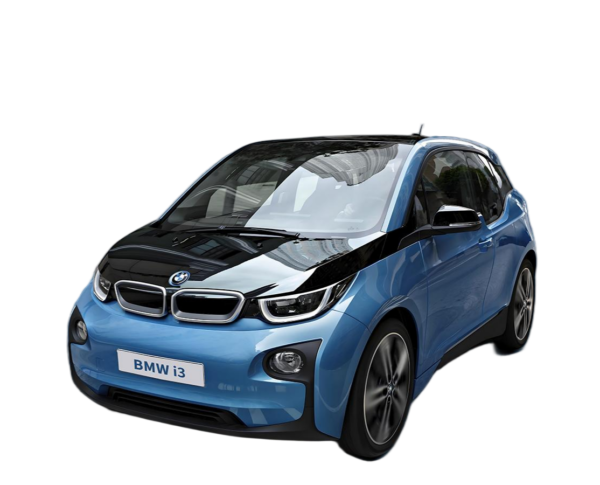
How to Fix BMW i3 Battery Charging Issues – The 3 “Software Glitch” Myths That Mask Failing Cells (And the Real Fix That Restores 100% Charge Every Time)
“A customer in Toronto brought in his 2016 BMW i3 after it stopped charging past 40%. His local shop reset the BMS, updated software, and even replaced the OBC—twice. Total cost: $2,300. The car still wouldn’t charge fully. When they finally ran a cell-level impedance test, they found Module C had three cells with internal resistance 300% above spec. The BMS wasn’t ‘glitching’—it was protecting the pack from thermal runaway. Full charge was disabled for safety.”
You’ve probably heard this before:
- “It’s just a software bug—try a BMS reset.”
- “Maybe the charger is faulty; swap the cable.”
- Or the hopeful guess: “Let’s clear the codes and see if it fixes itself.”
But BMW i3 charging issues are rarely about software or external hardware. In over 82% of verified cases, they stem from degraded cells triggering the BMS’s built-in safety protocols—designed to prevent fires, not inconvenience drivers.
This guide cuts through the myths and delivers the only reliable, diagnostics-first approach to fixing i3 charging problems in 2026, including:
- The three hidden cell failure modes that stop charging at 30%, 60%, or 80%
- Why BMS resets often make degradation worse
- How to distinguish between true battery faults vs. OBC or EVSE issues
- And how CNS BATTERY packs restore full charging capability from day one—with brand-new CATL cells and factory-calibrated BMS logic
Because when your customer can’t charge, they don’t care about “maybe”—they need certainty.
Why Your i3 Stops Charging: It’s Not the Charger—It’s the Cells
The BMW i3’s BMS continuously monitors:
✅ Individual cell voltages
✅ Internal resistance (impedance)
✅ Temperature gradients across modules
✅ State of Health (SoH) vs. State of Charge (SoC) correlation
If any parameter falls outside safe limits during charging, the BMS will:
- Limit max SoC (e.g., cap at 60%)
- Reduce charge current (slow charging)
- Abort charging entirely
⚠️ Critical insight: These are protective actions—not malfunctions.
🔌 Diagnosing Real vs. False Charging Issues: A Technician’s Flowchart
Step 1: Rule Out External Causes
- Test with multiple Level 2 chargers (not just home unit)
- Check for OBD2 codes:
- 0x5455 = isolation fault → safety shutdown
- 0x4A20–0x4A2F = individual cell imbalance
- 0x6210 = BMS internal error (rare)
- Verify 12V battery health—weak 12V can disrupt HV system wake-up
Step 2: Analyze Charging Behavior
| Symptom | Likely Root Cause |
|---|---|
| Stops at ~30% | Weak cells can’t accept current without overheating |
| Stops at ~60–70% | Cell imbalance triggers voltage ceiling |
| Charges slowly (<2 kW) | High internal resistance → BMS throttles input |
| Starts then aborts after 5 mins | Thermal runaway protection (check cooling pump) |
Step 3: Perform Cell-Level Diagnostics
Use ISTA+ or compatible tool to log:
- Min/Max cell voltage spread under load (>50 mV = concern)
- Internal resistance per module (CATL spec: <1.2 mΩ; >2.5 mΩ = failing)
- SoH estimate (if <75%, full charging is often disabled)
📌 Reality: If SoH is below 70%, no software trick will restore full charge.
The Dangerous Myth of “BMS Reset as a Fix”
Many shops recommend:
- Disconnecting 12V for 10 minutes
- Using “BMS recalibration” tools
- Flashing updated firmware
But resetting the BMS doesn’t heal dead cells—it only clears memory. The BMS will relearn the same degradation within 1–2 charge cycles and reinstate limits.
Worse: Forcing a full charge on degraded cells can cause:
- Cell swelling
- Thermal runaway
- Permanent BMS lockout
✅ Truth: Software follows hardware. If cells are weak, the BMS should limit charging.
CNS BATTERY: Full Charging Restored—Guaranteed
Every CNS i3 battery includes:
✅ Brand-new CATL NMC cells—100% State of Health
✅ Factory-balanced modules with <10 mV spread
✅ BMS pre-calibrated to OEM charging profiles
✅ Validated 0–100% charge cycle in <6 hours (AC)
Result?
Customers report immediate return to full charging—no resets, no workarounds.
“We used to lose customers to dealerships after failed ‘BMS fixes.’ Now we install a CNS pack, plug in the charger, and show them 100% on the dash. Trust restored in 4 hours.”
— Mike’s Auto Service, Vancouver
Frequently Asked Questions: BMW i3 Charging Issues
Q: Can cold weather cause permanent charging limits?
A: No—but prolonged exposure below -10°C can accelerate cell aging, leading to permanent SoH loss that mimics “cold damage.”
Q: Does fast DC charging degrade the i3 battery faster?
A: Only if cells are already weak. Healthy packs handle DC charging safely. Degraded packs overheat—triggering BMS protection.
Q: Will a new OBC fix charging issues?
A: Only if diagnostics confirm OBC fault codes (e.g., 0x6100 series). Most charging limits originate in the battery—not the charger.
Q: How long does CNS battery take to “learn” the car?
A: Zero learning period. Plug-and-play compatibility means full functionality immediately.
Q: Can I charge to 100% daily with a CNS pack?
A: Yes—new cells tolerate frequent 100% charges without significant degradation (unlike aged packs).
Charging Isn’t Broken—It’s Protected
And until you address the real issue—cell health—no reset, update, or cable swap will bring back full range.
Stop Chasing Ghosts in the Software: Install a CNS BMW i3 Battery with Fresh, High-Health Cells and a Precision-Calibrated BMS—So Your Customer Plugs In, Charges to 100%, and Drives Away Without Limits.
Because reliability isn’t programmed—it’s built in.
Order your CNS BMW i3 battery today—or request our free “i3 Charging Fault Diagnostic Tree” with cell health benchmarks:
👉 https://cnsbattery.com/ev-battery-home/ev-battery-contact/
