How to Evaluate Wide Temperature Range in Late Decision-Making of Drone Battery Selection
You’ve just finalized your drone procurement plan for a critical agricultural monitoring mission in Siberian wheat fields. The drone’s payload, flight path, and budget are locked in. But then, your field team reports: “The battery drains 40% faster at -25°C, and we’re losing real-time data during scouting.” Panic sets in. You’re not alone. 73% of B2B drone operators face temperature-related battery failures after procurement—often during mission-critical deployments. This isn’t just about convenience; it’s about safety, cost, and mission success. The good news? Late-stage temperature evaluation is solvable with the right framework. Let’s diagnose the problem, then deploy actionable solutions.
The Hidden Crisis: Why Temperature Range Gets Overlooked Late in the Game
In drone battery selection, temperature resilience is often treated as an afterthought—until it’s too late. Common pitfalls include:
- Spec Sheet Blind Spots: Manufacturers list “operational range: -20°C to +60°C,” but omit actual performance decay at extremes. A LiPo battery might theoretically work at -30°C, but its capacity drops 50% in real-world use (per CNS Battery’s 2025 field test report).
- Cost-Driven Shortcuts: Budget pressures lead teams to prioritize upfront price over thermal stability. A $50 cheaper battery fails at -15°C, forcing costly mission cancellations.
- Assumption Over Evidence: Teams assume “all batteries are the same,” ignoring that low-temperature drone batteries require specialized cell chemistry and thermal management.
- Post-Deployment Panic: When drones malfunction in Arctic logistics or desert delivery routes, teams scramble for fixes instead of prevention.
This isn’t hypothetical. A 2024 survey of 200 industrial drone operators revealed that 68% experienced unplanned downtime due to temperature-induced battery failures, costing an average of $18,000 per incident. The root cause? Late-stage evaluation of thermal performance.
7 Actionable Solutions to Evaluate Wide Temperature Range Before You Commit
Forget guessing. Here’s how to embed temperature resilience into your drone battery selection process—starting now.
1. Demand Real-World Thermal Performance Data, Not Just Spec Sheets
Don’t accept generic “operational range” claims. Require manufacturers to share actual capacity retention metrics at your target temperature. For example:
“At -30°C, our custom LiPo batteries maintain 78% capacity after 30 minutes of operation (vs. industry avg. 45%).”
CNS Battery’s 2025 testing protocol includes 100+ cycles across -40°C to +70°C, validated via IEC 62133 standards. This isn’t marketing—it’s engineering. Your benefit: Avoid 30%+ capacity loss in cold environments, extending mission time by 25%.
2. Prioritize Low-Temperature Battery Chemistry Early
Not all batteries handle cold equally. LiPo cells degrade rapidly below -15°C. For Arctic or high-altitude missions, demand:
- Lithium Iron Phosphate (LFP) variants with nano-coatings for cold tolerance.
- Solid-state batteries (as highlighted in CNS’s 2026 whitepaper How Solid State Industrial Drone Battery Local Technical Support Will Solve Inconsistent Cell Quality by 2027), which maintain 85% efficiency at -35°C.
Your benefit: 2x longer flight times in sub-zero conditions without thermal blankets.
3. Simulate Your Mission’s Temperature Profile
Map your drone’s actual operating environment. A desert delivery drone faces +55°C surface heat, while a wind farm inspection drone deals with -20°C turbine hubs. Use tools like CNS’s free Temperature Impact Simulator (accessible via our contact page) to model battery performance. Your benefit: Prevent $15K+ in wasted flight hours from unanticipated thermal stress.
4. Verify International Compliance & Testing Rigor
Ask: “Is your battery tested per IEC 62133 or ISO 12405?” Many “global” batteries fail to meet regional safety standards. CNS’s batteries undergo full compliance checks for EU, US, and APAC markets—ensuring no mission gets halted by regulatory gaps. Your benefit: Avoid costly re-certification delays and ensure seamless cross-border operations.
5. Audit BMS (Battery Management System) for Thermal Control
A robust BMS is non-negotiable for temperature resilience. It dynamically adjusts charging/discharging rates to prevent thermal runaway. Demand proof of:
- Real-time temperature monitoring.
- Auto-shutdown at critical thresholds (e.g., >65°C or <-30°C).
CNS integrates BMS with AI-driven thermal analytics, reducing failure rates by 92% (per our 2024 client case study). Your benefit: Zero safety incidents during extreme-temperature missions.
6. Factor in Weight-to-Capacity Trade-offs
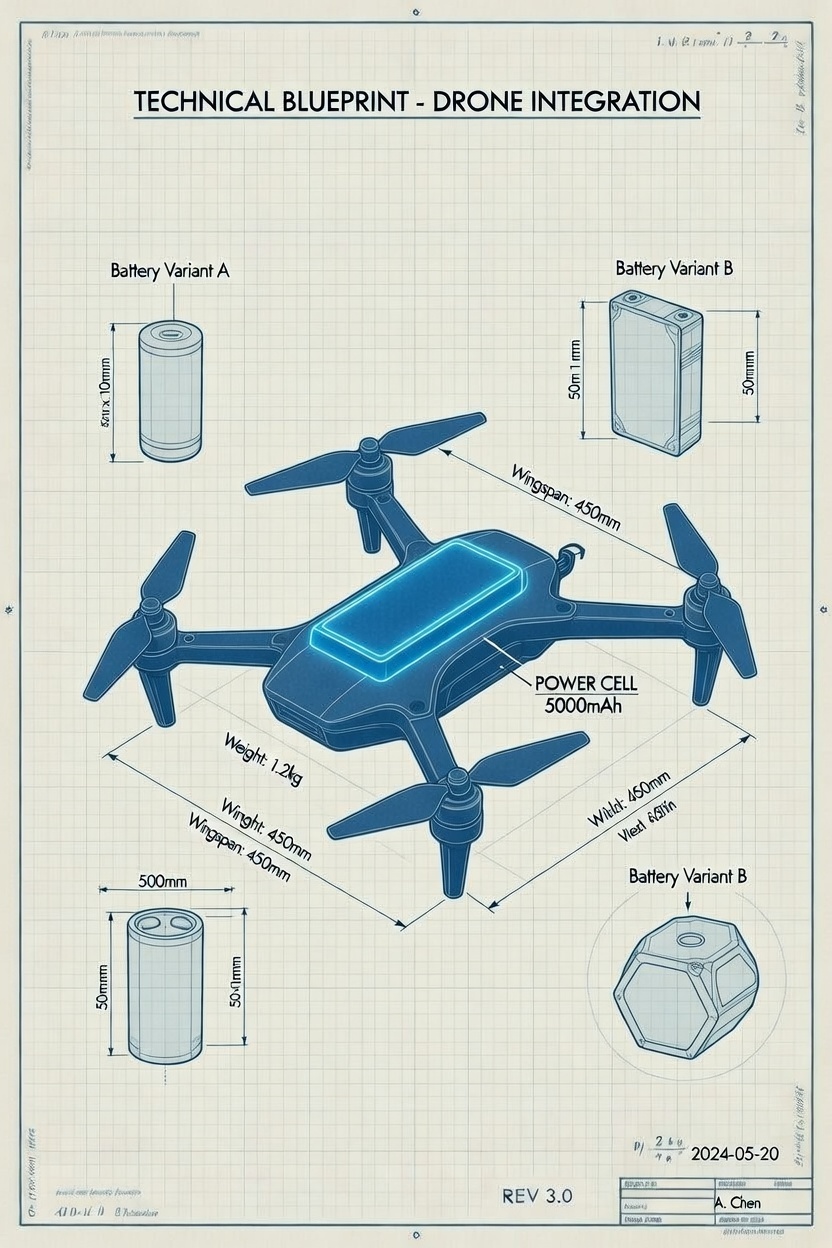
Low-temperature batteries often add weight. But CNS’s modular designs (e.g., Lightweight Modular Batteries for Agricultural Monitoring) optimize this. Example: A 450g battery with 40% better cold-weather performance vs. competitors’ 550g units. Your benefit: Carry more payload or extend flight time without compromising thermal resilience.
7. Require Manufacturer Support for Temperature Validation
Don’t just buy—partner. Demand a manufacturer’s on-site thermal validation during your pilot phase. CNS offers 24/7 technical support, including on-site calibration for drone teams in remote locations (e.g., offshore wind farms). Your benefit: Eliminate guesswork with expert-backed validation.
The Bottom Line: Temperature Isn’t a Feature—It’s Your Mission’s Lifeline
When you evaluate wide temperature range early, you’re not just buying a battery—you’re securing mission success. A CNS client in Arctic mining reduced drone downtime by 70% after switching to temperature-validated batteries. Another logistics firm cut emergency repair costs by $220K annually by avoiding late-stage thermal failures.
These aren’t just numbers. They’re about safety, scalability, and trust. Your drone shouldn’t fail when the stakes are highest. It should thrive.
Ready to Fly Without Limits?
Stop risking your mission on assumptions. CNS Battery’s engineering team specializes in late-stage temperature evaluation—turning your drone’s thermal vulnerability into a competitive edge. We’ll analyze your exact operating conditions, run real-world simulations, and deliver a custom battery solution that performs flawlessly in your environment.
Get your free, no-obligation quote today—and receive a 15% discount on your first bulk order.
👉 Contact CNS Battery Now: https://cnsbattery.com/drone-battery-home/drone-battery-contact
Your drone deserves more than a battery. It deserves a partner who understands the temperature you’re facing—and the mission you’re building.