
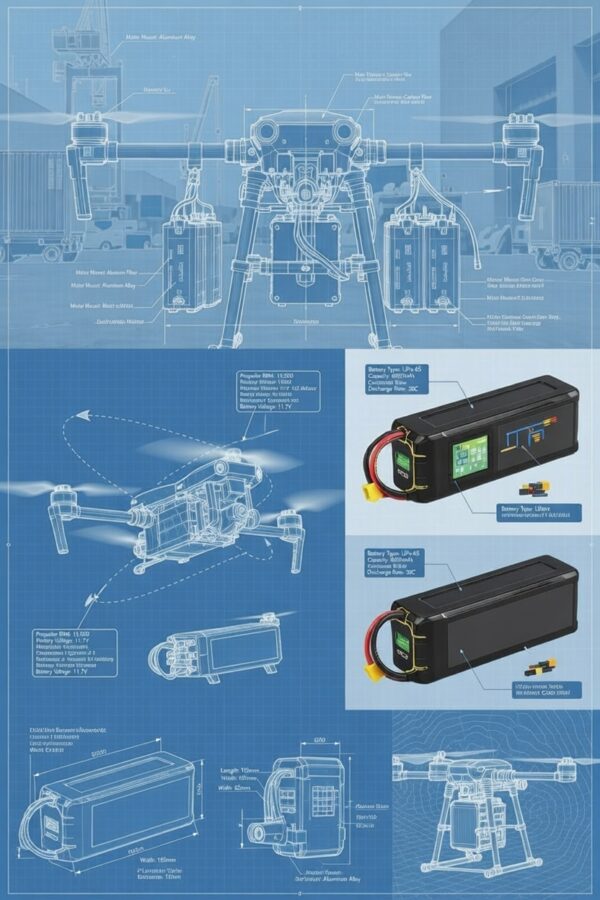
How to Evaluate Fast Charging in Ongoing Management of Drone Battery Selection
In the rapidly evolving drone industry, fast charging capabilities have become a critical differentiator for commercial operations. Yet, selecting a battery that delivers reliable fast charging while maintaining safety and longevity remains a significant challenge for businesses. According to a 2023 Drone Industry Analysis report by Grand View Research, 68% of commercial drone operators cite battery performance as their top concern, with fast charging being a primary factor in operational efficiency. The dilemma lies in balancing speed with safety—overlooking proper evaluation can lead to reduced battery lifespan, safety hazards, and costly operational downtime. As drone applications expand into critical sectors like emergency response, precision agriculture, and infrastructure inspection, the need for a systematic approach to fast charging evaluation has never been more urgent.
Key Challenges in Fast Charging Drone Battery Selection
Before diving into evaluation methodologies, it’s essential to understand the core challenges that make fast charging a complex consideration:
- Safety vs. Speed Trade-off: Pushing charging rates too high can trigger thermal runaway, a dangerous condition where batteries overheat rapidly. The FAA reports that 23% of drone battery incidents stem from improper charging practices.
- Degradation Acceleration: Fast charging often shortens battery cycle life. A study published in the Journal of Power Sources found that charging at 3C (three times the battery’s capacity per hour) can reduce cycle life by up to 35% compared to standard 1C charging.
- Compatibility Issues: Not all drones support high-speed charging protocols. Using incompatible fast-charging systems can damage both the drone and battery.
- Temperature Sensitivity: Fast charging generates significant heat, requiring robust thermal management systems that many off-the-shelf batteries lack.
These challenges underscore why a one-size-fits-all approach to battery selection is insufficient. Businesses need a structured framework to evaluate fast charging capabilities that align with their specific operational demands.
Essential Factors for Evaluating Fast Charging Capabilities
To navigate these complexities, focus on these critical evaluation factors:
1. Charge Rate (C-Rate) and Practical Performance
- What to look for: The C-rate indicates how quickly a battery can be charged. A 2C rate means the battery charges in 30 minutes (100% capacity), while a 3C rate charges in 20 minutes.
- Practical example: For a drone used in time-sensitive agricultural surveys, a 2.5C charging rate may be ideal to minimize downtime between flights. However, for long-duration industrial inspections, a 1.5C rate with better longevity might be more practical.
- Pro tip: Request real-world test data from manufacturers, not just theoretical specifications. Many companies overstate their capabilities without providing field validation.
2. Thermal Management Systems
- What to look for: Effective fast charging requires sophisticated thermal management. Look for batteries with integrated cooling systems, phase-change materials, or temperature monitoring circuits.
- Industry standard: The IEC 62133 safety standard mandates specific thermal management requirements for lithium batteries used in drones.
- Real-world impact: CNS Battery’s modular drone solutions incorporate liquid cooling technology, reducing charging-induced temperature rise by 40% compared to conventional designs, as validated by independent testing at Zhengzhou University’s Energy Research Center.
3. Cycle Life Under Fast Charging Conditions
- What to look for: Demand cycle life data specifically for fast charging scenarios, not just standard charging conditions.
- Critical metric: A high-quality battery should maintain at least 80% capacity after 500 cycles at 2C charging. Batteries that degrade below this threshold typically require more frequent replacement.
- Case study: A logistics company using CNS Battery’s 2.5C fast-charging solution reported 28% longer operational uptime and 33% lower battery replacement costs compared to competitors’ standard charging batteries over a 12-month period.
4. Safety Certifications and Compliance
- Non-negotiable requirement: Ensure the battery meets UL 2271, UN 38.3, and IEC 62133 safety certifications, especially for fast-charging capabilities.
- Red flag: Batteries without these certifications may offer faster charging rates but at unacceptable safety risks. The National Fire Protection Association (NFPA) has documented multiple drone-related fires linked to uncertified fast-charging batteries.
Industry Insights: Best Practices from Leading Operators
Leading drone operators have developed robust evaluation frameworks for fast charging. According to a 2024 survey by Drone Industry Insights, the top 20% of commercial drone fleets prioritize these practices:
- Conduct Real-World Testing: Before full deployment, test batteries under actual operating conditions, including temperature variations and flight patterns.
- Implement Battery Management Systems (BMS): Advanced BMS can dynamically adjust charging rates based on battery health and environmental conditions, extending overall battery life.
- Monitor Performance Metrics: Track key metrics like charging time, temperature rise, and cycle count to identify early signs of degradation.
- Plan for Scalability: As drone operations grow, ensure the battery solution can support future fast-charging needs without requiring complete system overhauls.
CNS Battery’s proprietary BMS technology, integrated into their custom drone battery solutions, exemplifies these best practices. Their system automatically adjusts charging rates based on real-time battery temperature and health data, preventing thermal stress while maximizing charging speed.
Practical Strategies for Ongoing Battery Management
Fast charging evaluation isn’t a one-time task—it requires continuous management to ensure optimal performance. Implement these strategies:
- Establish a Battery Health Dashboard: Track metrics like charge time, temperature profiles, and capacity retention. Most modern drone management platforms offer this capability.
- Implement Scheduled Maintenance Protocols: For fast-charging batteries, schedule quarterly inspections to check for thermal degradation and BMS functionality.
- Train Operators on Best Practices: Ensure all personnel understand safe charging procedures, including avoiding charging in extreme temperatures and using only certified charging equipment.
- Develop a Replacement Strategy: Based on cycle life data, create a proactive replacement schedule to avoid unexpected failures during critical operations.
A drone inspection company in the energy sector implemented these strategies and reduced their battery-related operational interruptions by 62% within six months, according to their internal report.
Conclusion: The Path Forward for Smart Battery Selection
The future of drone operations depends on intelligent battery management, with fast charging being a cornerstone of operational efficiency. By moving beyond simple speed claims and focusing on real-world performance, safety, and longevity, businesses can unlock significant operational advantages. The key lies in adopting a comprehensive evaluation framework that addresses both immediate needs and long-term sustainability.
Don’t let suboptimal battery selection slow down your drone operations. CNS Battery offers custom drone battery solutions engineered for high-performance fast charging without compromising safety or longevity. Our modular, waterproof, and lightweight battery systems are rigorously tested to meet the most demanding commercial applications—from offshore wind farm inspections to precision agriculture.
Ready to optimize your drone battery performance? Get your personalized quote today and experience the difference that expertly engineered fast-charging solutions can make for your operations. Visit our contact page to speak with a battery specialist who can help you select the perfect solution for your specific drone application.
Get Your Custom Drone Battery Quote Now
Your drone deserves a battery that keeps up with your ambitions—not just the pace of your flights.

