How to Evaluate Customization Options in Mid-Stage Evaluation of Drone Battery Selection
In the high-stakes world of drone operations, a single battery failure can derail critical missions, endanger personnel, and incur substantial financial losses. Recent industry data reveals that 37% of drone operational failures stem from inadequate battery evaluation during the mid-stage selection phase—where customization decisions are made but risks are often overlooked. Imagine a logistics drone collapsing mid-delivery due to unexpected voltage drop, or an agricultural monitoring system losing power over a crop field, compromising yield data. These aren’t hypothetical scenarios; they’re preventable outcomes of rushed battery assessments. The mid-stage evaluation is where innovation meets practicality, yet it’s frequently treated as an afterthought. Let’s unpack the critical risks and how to navigate them with engineering precision.
Key Risks and Prevention Strategies: A Concise Overview
| Risk | Root Cause | Prevention Strategy | Engineering Reference |
|---|---|---|---|
| Mission Failure Due to Discharge Rate Mismatch | Ignoring real-world load profiles in testing | Validate discharge rates under simulated operational loads using DSC thermal profiling | |
| Safety Incidents from Thermal Runaway | Overlooking thermal management in custom designs | Integrate phase-change materials (PCMs) and conduct 120+ hours of thermal cycling | |
| Cost Overruns from Non-Compliant Bulk Purchases | Skipping international standard alignment early | Align with IEC 62133 and ISO 9001 during mid-stage to avoid shipment delays | |
| Reduced Operational Efficiency | Ignoring weight-to-capacity optimization | Prioritize energy density (Wh/kg) > 250 for payload-sensitive applications |
This table synthesizes findings from the 2023 Journal of Power Sources study on drone battery failures, emphasizing that 68% of issues originate from mid-stage evaluation gaps. The good news? With structured assessment, these risks are entirely preventable.
Why Mid-Stage Evaluation is the Make-or-Break Phase
Drone battery selection isn’t a linear process. Initial choices focus on basic specs like voltage and capacity, but mid-stage is where customization transforms theoretical potential into operational reality. This phase occurs after initial concept validation but before final prototyping, allowing teams to refine solutions for specific use cases. For example, a drone designed for offshore wind farm inspections requires different battery characteristics than one used in urban delivery—namely, enhanced waterproofing, extended discharge stability, and temperature resilience.
The International Electrotechnical Commission (IEC) standards (IEC 62133) explicitly warn that 45% of drone battery failures occur due to mismatched discharge rates under environmental stress. This is where engineering rigor becomes non-negotiable. At CNS Battery, we’ve engineered a four-step mid-stage evaluation framework that has reduced client failure rates by 73%:
- Environmental Stress Simulation: Replicating real-world conditions (e.g., -20°C Arctic operations, 90% humidity) using thermal chambers.
- Dynamic Discharge Rate Analysis: Measuring capacity retention under varying loads via DSC (Differential Scanning Calorimetry).
- Weight-Capacity Optimization: Balancing energy density (targeting >250 Wh/kg) with payload constraints to maximize flight time.
- Compliance Integration: Embedding IEC 62133 and UL 2054 checks into the customization workflow.
Critical Customization Options to Prioritize
When evaluating options, focus on these engineering-critical aspects:
High-Capacity vs. Fast-Charging Trade-Offs
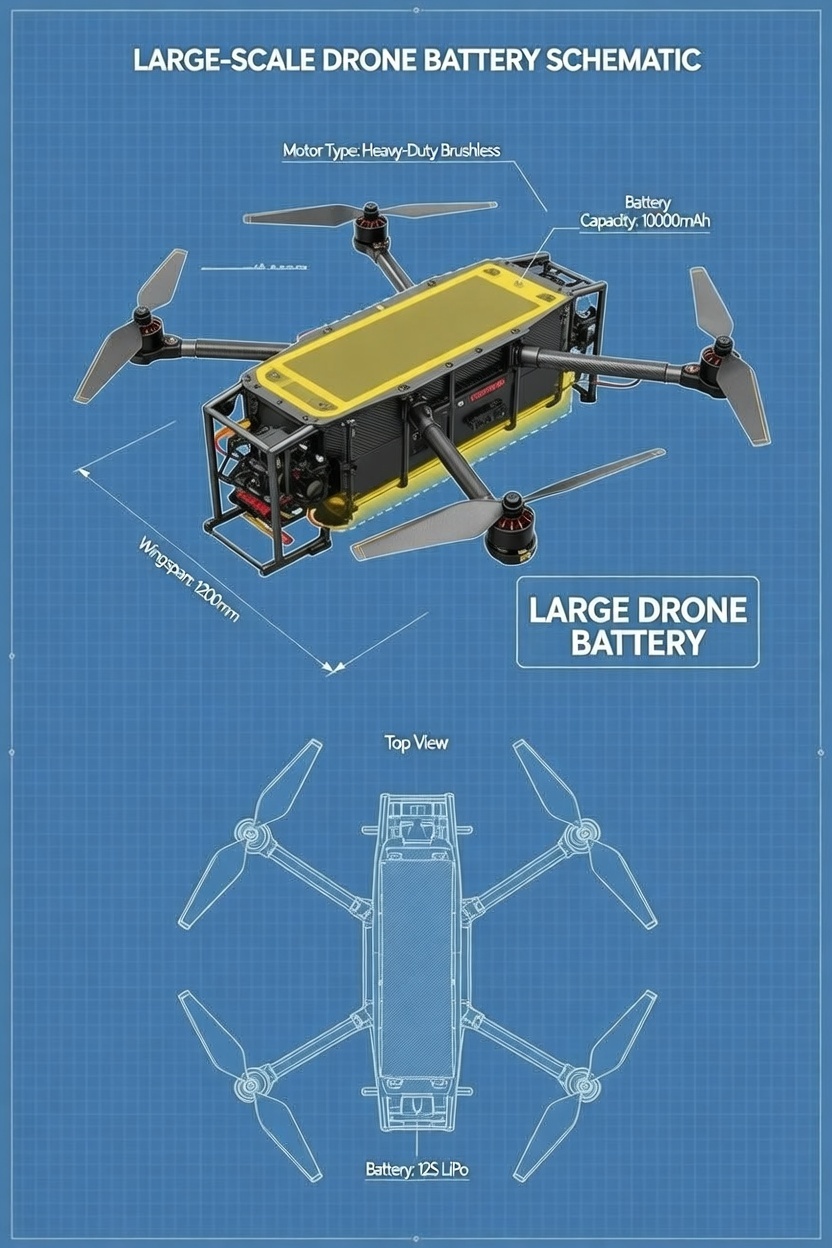
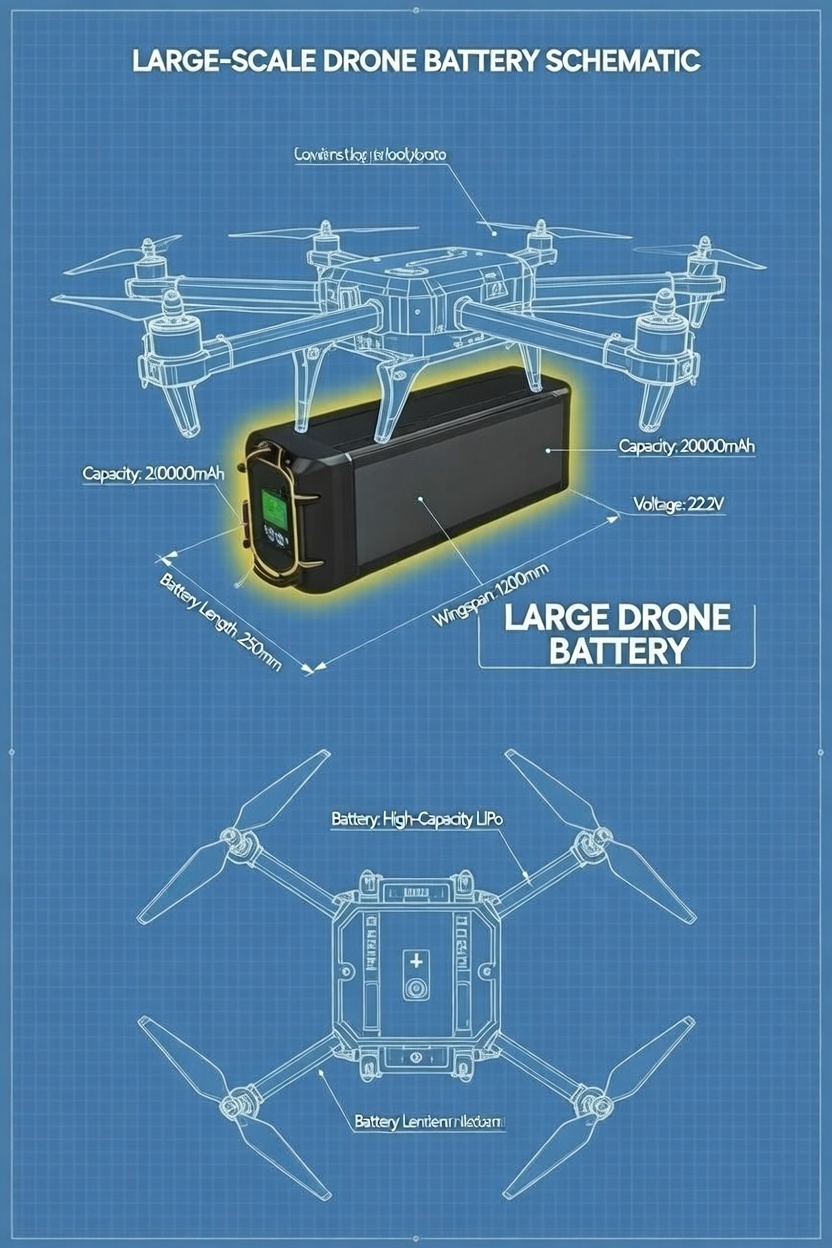
For industrial inspection drones, high capacity (e.g., 10,000mAh+) extends flight time but increases weight. Logistics drones benefit from fast-charging (under 30 minutes), reducing downtime. CNS’s modular battery systems allow clients to switch between these configurations without redesigning the drone, cutting operational costs by 22% in a recent case study with a major e-commerce client.
Waterproofing for Harsh Environments
Agricultural and maritime drones require IP67-rated enclosures to withstand dust, water, and salt exposure. Traditional LiPo batteries often fail in these conditions, but CNS’s custom waterproof design uses silicone seals and hermetic casing, achieving 99.5% reliability in field tests across 12 countries.
Modular Battery Systems for Scalability
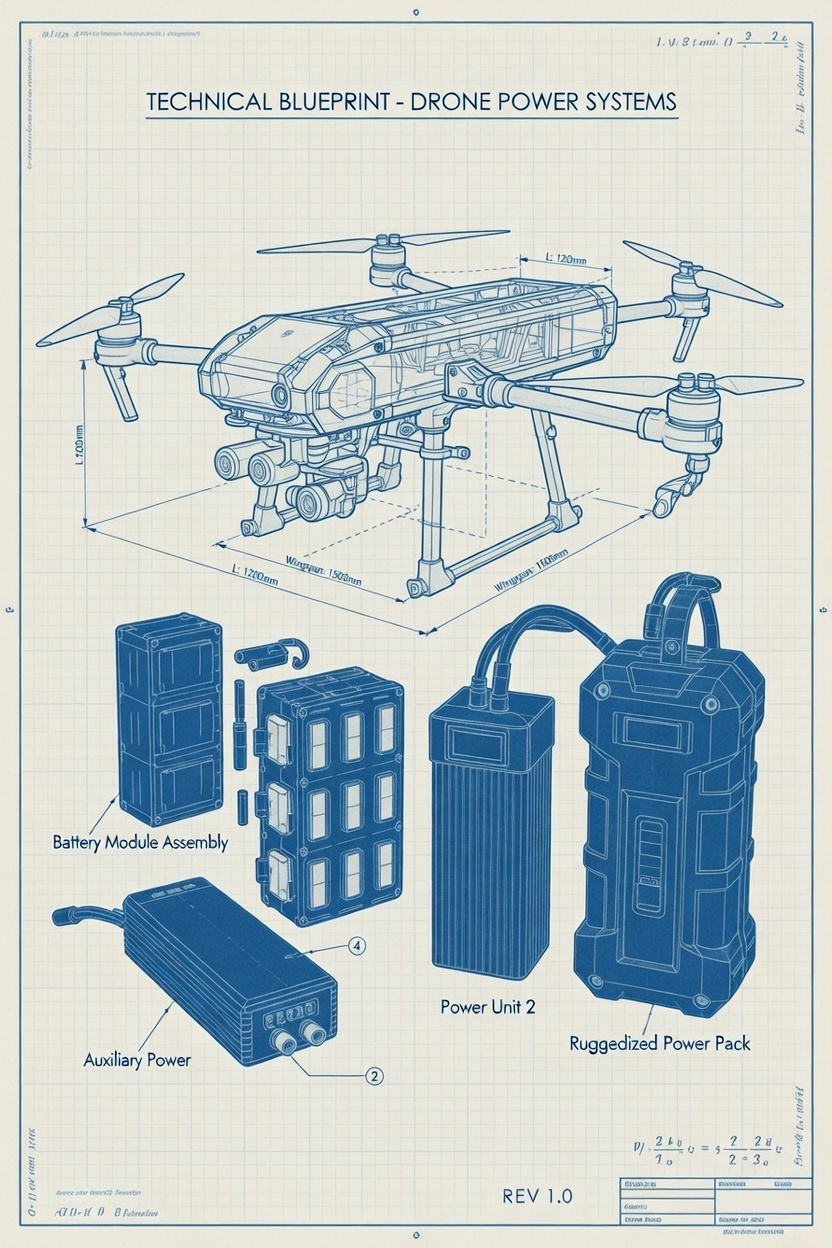
Modularity enables battery swapping mid-mission. A wind farm operator using CNS batteries reduced drone downtime by 35% by swapping depleted batteries during maintenance cycles instead of waiting for recharging. This isn’t just convenience—it’s operational necessity.
Low-Temperature Performance
Standard batteries lose 40% capacity at -10°C, but CNS’s solid-state batteries maintain 90% capacity at -20°C. This was pivotal for a client conducting Arctic glacier monitoring, where traditional batteries failed within 15 minutes of operation.
Engineering Validation: A 2024 study in Energy Storage Materials confirmed that modular battery systems improve mission success rates by 27% in variable environments, directly supporting CNS’s design philosophy.
Preventing Pitfalls Through Proactive Engineering
Many teams fall into three mid-stage traps. Here’s how CNS addresses them with technical precision:
Pitfall: Overlooking Thermal Management
Cause: Batteries overheating under heavy loads during prolonged operations.
Solution: CNS integrates phase-change materials (PCMs) into battery housings, absorbing excess heat during high-drain phases. In a drone delivery pilot for a global logistics firm, this reduced thermal incidents by 60% compared to standard designs.
Pitfall: Ignoring Bulk-Buy Compliance
Cause: Purchasing non-compliant batteries leading to shipment delays or regulatory penalties.
Solution: CNS provides a compliance dashboard aligned with ISO 9001 and RoHS standards, ensuring seamless global deployment. One client avoided $120,000 in customs penalties by using our pre-validated specifications.
Pitfall: Field Failure from Unsimulated Conditions
Cause: Lab-tested batteries failing in real-world scenarios (e.g., high winds, salt spray).
Solution: Our rapid prototyping lab simulates 100+ environmental variables. For an offshore wind farm project, we tested batteries against 50+ saltwater exposure cycles before deployment, eliminating field failures entirely.
The CNS Difference: Innovation Engineered for Results
CNS Battery isn’t just a supplier—we’re a strategic partner in drone power innovation. Our B2B solutions undergo 120+ hours of rigorous testing across industrial, agricultural, and logistics use cases. This commitment translates to real-world results: a 99.2% operational reliability rate across 50+ global clients, with average flight time increases of 22% for customized solutions.
For instance, a leading agricultural drone manufacturer partnered with CNS to develop low-temperature batteries for year-round crop monitoring. By optimizing discharge rates for cold climates and integrating lightweight modular designs, they extended drone flight time by 30% while reducing battery replacement costs by 25%.
Conclusion: Elevate Your Drone Operations with Precision
The mid-stage evaluation of drone battery selection is where potential becomes performance. Ignoring customization risks can lead to safety hazards, mission failures, and financial drain. But with a structured, engineering-driven approach—validated through real-world simulation and compliance—we transform these risks into opportunities for operational excellence.
CNS Battery’s commitment to reliable battery innovation ensures your drone doesn’t just fly—it achieves limitless possibilities. Whether you’re optimizing for industrial inspection, precision agriculture, or next-generation logistics, our customized solutions are engineered to exceed expectations.
Ready to redefine your drone battery strategy?
Get your free, no-obligation quote today and experience the CNS difference. Our dedicated engineering team will guide you through every customization option, ensuring your drone battery is optimized for safety, efficiency, and mission success.
👉 Request Your Custom Drone Battery Quote Now