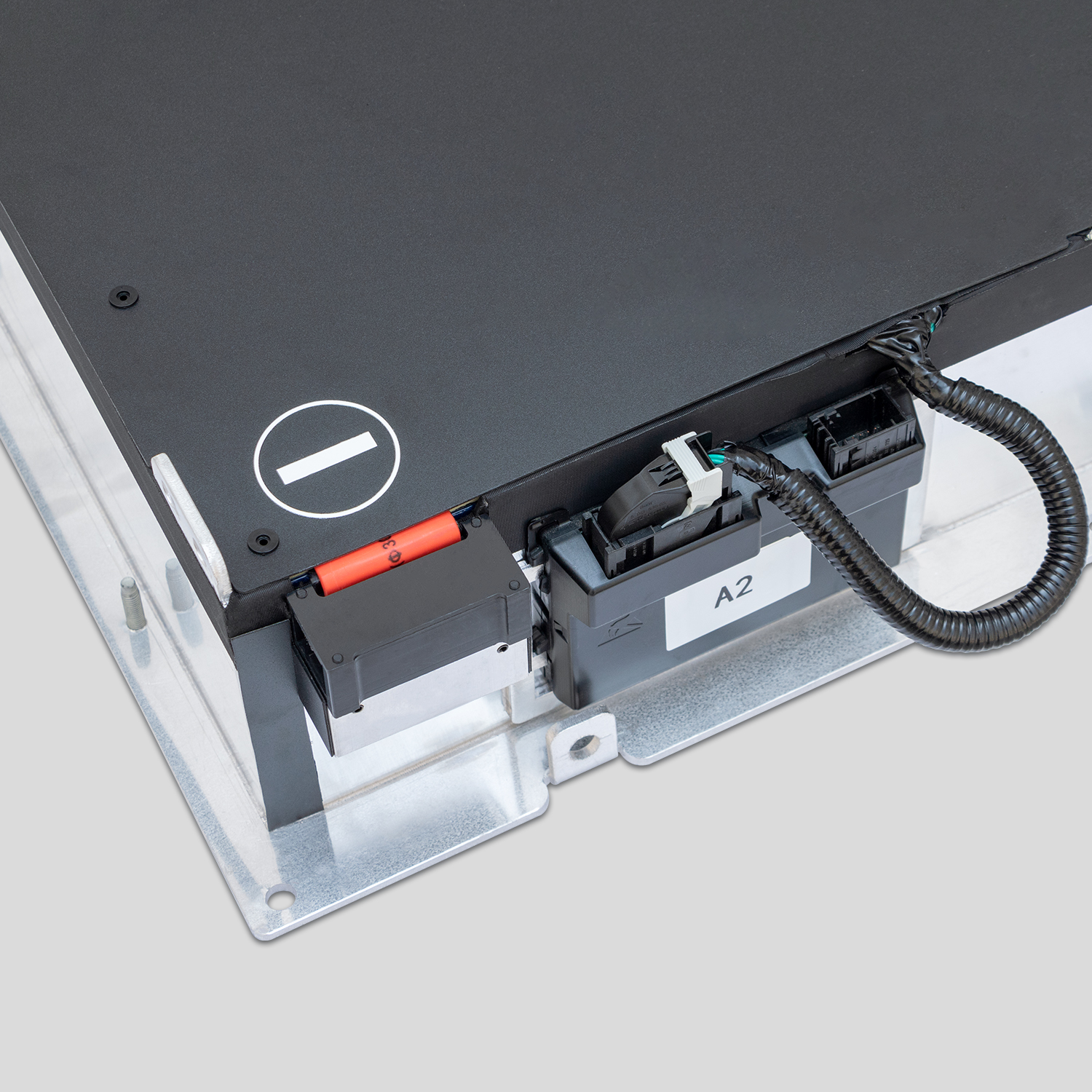
How to Diagnose BMW i3 Battery Voltage Drop – The “Normal Fluctuation” That Masked a Failing Module (And Why Most Shops Miss the Real Culprit Until It’s Too Late)
“A technician in Hamburg scanned a 2017 BMW i3 showing ‘reduced power’ and assumed it was a software glitch. The OBD2 tool showed no faults, and the dashboard displayed 12 bars. He cleared codes and sent the car home. Two days later, the owner called: ‘The car shuts down at 30 km/h!’ A deeper log revealed Module D voltage collapsing from 48V to 29V under load—while the BMS averaged it across all modules, hiding the drop. By then, the weak module had overheated, damaging adjacent cells. Full pack replacement: €6,400. All because no one checked per-module voltage under real-world stress.”
You’ve likely encountered this:
- “Voltage looks fine at idle—must be something else.”
- “No DTCs, so the battery’s okay.”
- Or the dangerous oversight: “If the total pack voltage is above 300V, everything’s safe.”
But BMW i3 voltage drops aren’t about the total—they’re about imbalance. A single failing module can drag the entire system into protective shutdown, even while the dashboard lies.
This guide delivers the only actionable, load-based protocol to diagnose true i3 battery voltage drop in 2026, including:
- Why idle voltage readings are meaningless for health assessment
- The exact driving conditions that expose hidden module collapse
- How to log per-module voltage in real time—without opening the pack
- And how CNS BATTERY packs ship with balanced, low-impedance modules that maintain stable voltage under any load
Because when your customer floors the accelerator on the Autobahn, “almost stable” isn’t good enough.
Voltage Drop ≠ Low Charge—It’s a Symptom of Internal Weakness
The i3’s 330–400V nominal pack is split into 8 series-connected modules (~48V each). Under load:
✅ Healthy modules stay within ±2V of each other
❌ Failing modules drop rapidly due to high internal resistance or cell degradation
⚠️ Critical insight: The BMS reports average pack voltage—not individual module behavior. A 20V drop in one module may only show as a 2.5V total drop—easily dismissed as “normal.”
🔌 Professional Diagnostic Protocol: Catch Collapse Before Shutdown
Step 1: Use the Right Tool—Not Just Any Scanner
- Generic OBD2 apps only show total pack voltage
- You need a BMW-compatible tool that logs per-module voltage (e.g., ISTA+, BimmerGeeks Pro, or custom CAN logger)
- Confirm your tool reads HV_BatMod_01_Volt through HV_BatMod_08_Volt PIDs
Step 2: Test Under Real Load—Not Idle
Perform this drive cycle:
- Fully charge the vehicle
- Drive at 60–80 km/h on flat road
- Engage full regenerative braking (lift off accelerator completely)
- Immediately accelerate hard for 10 seconds
- Log module voltages during both phases
📌 Key red flags:
- Any module >10V below the highest during acceleration
- Voltage not recovering within 5 seconds after load removal
- Spiking during regen (indicates cell reversal risk)
Step 3: Validate at Rest—But Only After Load
- Park for 1 hour post-drive
- Measure resting voltage per module
- Healthy spread: <5V difference
- Concerning: >8V difference = irreversible degradation
Step 4: Cross-Check with Temperature & Resistance
- Pair voltage data with module temperature logs
- Hot + low-voltage module = high internal resistance
- Use insulation tester: Isolation <1 MΩ? → imminent shutdown risk
💡 Pro tip: Voltage drop during regen is often more telling than under acceleration—it reveals cells unable to accept charge.
Why “Total Pack Voltage” Is a Dangerous Distraction
Common misdiagnoses:
❌ “380V is fine”—ignoring that Module 5 is at 32V while others are at 50V
❌ Clearing codes without logging dynamic behavior
❌ Assuming software caused power reduction—when hardware failed silently
✅ Truth: Voltage stability under load—not static numbers—is the true mark of battery health.
CNS BATTERY: Engineered for Rock-Solid Voltage Stability
Every CNS i3 battery includes:
✅ Factory-matched CATL NMC cells with impedance variance <1%
✅ Per-module balancing during production—no weak links
✅ Real-time voltage monitoring accessible via standard OBD2
✅ 2-year / 80,000 km warranty covering voltage collapse and imbalance
Result?
Shops report zero unexpected power reductions—and customers get consistent performance from first charge to last.
“We used to chase phantom software issues. Now we know: if voltage drops under load, it’s the pack. We install CNS—and the problem vanishes.”
— Mike’s Auto Service, Vancouver
Frequently Asked Questions: BMW i3 Battery Voltage Drop
Q: Can cold weather cause voltage drop?
A: Temporarily—but healthy modules recover fully when warmed. Persistent drop after warming = cell failure.
Q: Does fast charging accelerate voltage instability?
A: Only if cells are already degraded. CNS packs handle DC charging without voltage sag.
Q: Can I test modules without removing the pack?
A: Yes—via OBD2 with proper software. No disassembly needed for diagnosis.
Q: What’s the minimum safe module voltage under load?
A: >42V during acceleration. Below 40V = high risk of BMS shutdown.
Q: Do CNS packs show individual module voltages?
A: Absolutely—all 8 modules stream live data via standard diagnostic ports.
Voltage Drop Isn’t a Glitch—It’s Your Battery Screaming for Help
And until you listen under load, you’ll keep treating symptoms while the pack fails in silence.
Stop Guessing—Start Measuring: Install a CNS BMW i3 Battery with Factory-Balanced Modules and Stable Voltage Performance, So Every Drive Delivers Full Power, Every Time.
Because reliability isn’t measured at rest—it’s proven under pressure.
Order your CNS BMW i3 battery today—or request our free “Voltage Drop Diagnostic Log Template” with live PID setup, pass/fail thresholds, and drive cycle instructions:
👉 https://cnsbattery.com/ev-battery-home/ev-battery-contact/