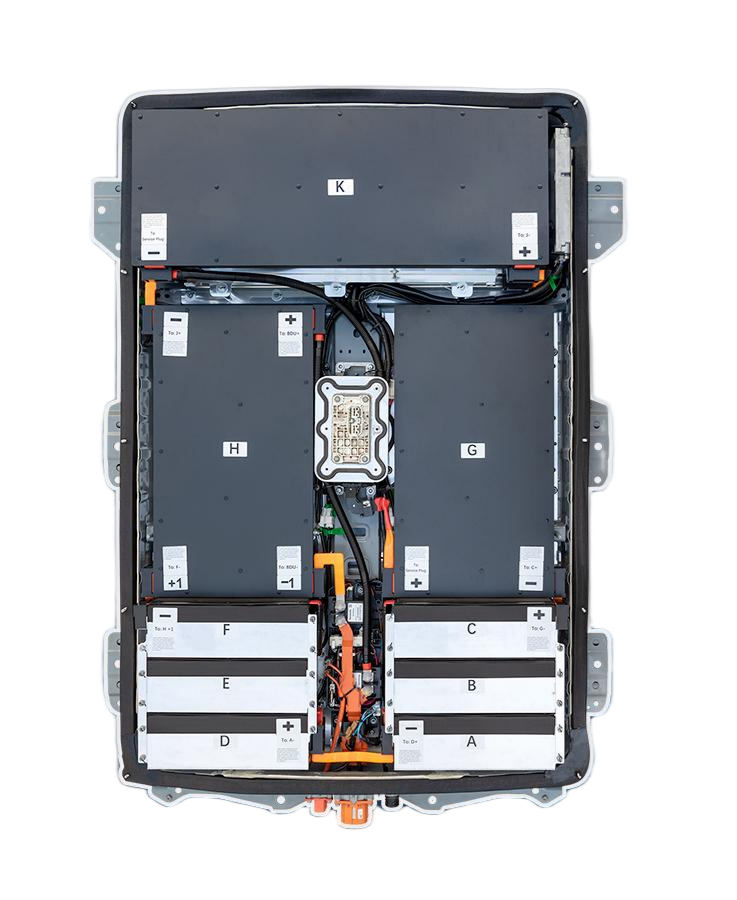
How to Diagnose BMW i3 Battery Overheating (Shop) – The Critical Difference Between a Bad Pump and a Dead Pack
The service advisor hands you a work order for a 2015 BMW i3. The customer is panicked: “The car went into limp mode on the highway,” they say. “The dashboard flashed ‘High Voltage Battery Overheated’ and the AC stopped working. Is it just the fan?”
In the sweltering heat of summer, or even during a routine DC fast charge, the BMW i3 battery overheating warning is a red alert that cannot be ignored. For the uninitiated technician, the instinct is to check the cooling fan, top off the coolant, and clear the code. But in 2026, with thousands of i3s surpassing their prime, an overtemperature event is rarely a simple component failure. It is often the screaming symptom of a battery pack undergoing thermal runaway due to internal resistance spikes from severe cell degradation.
Misdiagnosing this issue doesn’t just lead to a comeback; it risks sending a customer home with a vehicle that could catch fire in their driveway.
How do you distinguish between a failed cooling pump and a battery cooking itself from the inside?
What specific data parameters reveal the true source of the heat?
And when your diagnostics confirm that the cells themselves are the problem, how do you pivot from a temporary fix to a permanent, high-margin upgrade?
At CNS BATTERY, we have analyzed countless thermal events in aging i3s. We know that accurate diagnosis is the only path to safety and profitability. This guide provides a professional step-by-step workflow for diagnosing battery overheating, exposes the hidden dangers of “band-aid” repairs, and reveals why replacing the entire system is often the only ethical solution.
The Anatomy of Heat: External vs. Internal Causes
To diagnose correctly, you must first understand where the heat is coming from. In the BMW i3, overheating generally falls into two categories.
Category A: External Cooling System Failure (Repairable)
The battery chemistry is healthy, but the system designed to cool it has failed.
- Common Culprits: Failed electric water pump, clogged radiator, broken cooling fan, air pockets in the coolant loop, or low coolant levels due to external leaks.
- The Symptom: The entire pack heats up uniformly during high load or charging.
- The Fix: Replace the faulty component, bleed the system, and the car is saved.
Category B: Internal Cell Degradation (Catastrophic)
The cooling system is working perfectly, but the battery cells are generating more heat than the system can remove.
- The Cause: As lithium-ion cells age, their Internal Resistance (IR) increases. When current flows, this resistance generates intense heat ($Heat = I^2 \times R$). In severely degraded packs, this heat generation outpaces the cooling capacity.
- The Symptom: Specific modules or sections of the pack show significantly higher temperatures than others (“Hot Spots”). The car overheats even with moderate driving or slow charging.
- The Fix: No repair is possible. The chemical degradation is permanent. The pack must be replaced.
Professional Diagnostic Protocol: Step-by-Step
Do not guess. Follow this rigorous workflow to pinpoint the root cause.
Step 1: Live Data Analysis (The First Clue)
Connect a bidirectional scan tool (BMW ISTA, Autel, Launch) and view live temperature data from all battery sensors.
- Check Uniformity: Are all temperature sensors reading within 2-3°C of each other?
- Yes: Likely an External Cooling Issue. The whole pack is hot because nothing is cooling it.
- No: If one sensor reads 45°C while others read 30°C, you have an Internal Hot Spot. This indicates a failing module with high internal resistance. Stop here. The pack is compromised.
Step 2: Component Function Test
If temperatures are uniform, verify the cooling components are working.
- Electric Pump: Use your scan tool to activate the pump at 100%. Listen for operation and feel the hose for vibration/flow.
- Cooling Fan: Command the rear cooling fan to run. Ensure it spins freely and reaches high RPM.
- Coolant Level & Quality: Check the reservoir. Is it low? Is the fluid dirty or contaminated?
- Air Pockets: Air is the enemy of cooling. If the system was recently serviced, air bubbles may be blocking flow to the core.
Step 3: Thermal Imaging Verification (The Gold Standard)
If you have access to a thermal imaging camera, use it while the car is under load (on a lift or dyno).
- Scan the Pack: Look at the underside of the vehicle where the battery is located.
- Identify Gradients: A healthy pack will show a smooth, even heat distribution. A failing pack will show distinct bright yellow/white hot spots corresponding to specific degraded modules.
- The Verdict: Any localized hot spot >10°C above the average confirms internal cell failure.
Step 4: Internal Resistance (IR) Check
If your diagnostic tool supports it, view the calculated internal resistance for each module.
- High IR = High Heat: Modules with significantly higher resistance than the pack average are the heat generators.
- Correlation: Match the high IR modules with the hot spots seen on your thermal camera. This is definitive proof of internal degradation.
The Hard Truth: Why “Fixing” Internal Overheating Is Impossible
If your diagnosis points to Category B (Internal Degradation), you must deliver hard news to the customer.
- You Cannot Cool Chemistry: Adding more coolant or a stronger fan won’t fix cells that are chemically generating excessive heat. The heat is a byproduct of the degradation itself.
- Thermal Runaway Risk: A pack that is already showing hot spots is one step away from thermal runaway. Continuing to drive or charge it is a severe fire hazard.
- The Domino Effect: Heat accelerates degradation. Even if you manage to cool it temporarily, the damaged cells will continue to degrade faster than the rest, leading to total failure soon.
The Only Solution: The battery pack must be replaced immediately. Attempting to manage a thermally unstable pack is negligent and creates massive liability for your shop.
The CNS BATTERY Solution: Eliminate the Heat Forever
When you explain that the overheating is due to a dying battery, the customer will fear the dealer’s $20,000+ quote. This is your opportunity to offer the CNS BATTERY High-Capacity Upgrade—the ultimate thermal solution.
Why Upgrading Is the Only Safe Fix
- Low-Resistance Cells: Our brand-new Grade-A cells have minimal internal resistance. They generate significantly less heat during operation than original 10-year-old cells, even under heavy load.
- Advanced Thermal Management: Our packs are engineered with optimized cooling plate designs that ensure even heat distribution, eliminating hot spots entirely.
- Perfect Integration: The upgrade works seamlessly with the existing (or newly repaired) cooling system, but places far less demand on it.
- Double the Range: While solving the overheating crisis, you upgrade the customer from a failing 60 Ah or 94 Ah pack to a 120 Ah to 180 Ah system, giving them 130–200+ miles of range.
- Cost Efficiency:
- Cooling Repair (Temporary): $600–$1,000 (Risk of recurrence if cells are bad).
- Dealership Replacement: $20,000+.
- CNS BATTERY Upgrade: $8,000 – $14,000 USD. You get a brand-new, cool-running battery with double the range for half the dealer price.
Real Story: From “Thermal Panic” to “Cool Confidence”
“Sunshine EV Repair” in Arizona had a 2015 i3 come in during a heatwave. The car wouldn’t fast charge without triggering an overheat warning. The previous shop had replaced the fan and pump, but the problem returned in two days.
“Our thermal camera showed a massive hot spot on Module #12,” says the lead tech. “The cooling system was fine; the battery was cooking itself. We explained that no amount of fans would fix the dead cells.” They installed a CNS BATTERY 150 Ah upgrade. “The new pack runs incredibly cool. We tested it with DC fast charging in 100-degree heat, and the temps stayed perfect. The customer paid $11,500, got 170 miles of range, and finally feels safe driving in the summer again.”
Stop Guessing, Start Diagnosing
Diagnosing BMW i3 battery overheating requires more than checking a fan. It demands a deep dive into cell health and thermal dynamics. Don’t let a simple component swap blind you to the underlying chemical failure.
Be the shop that identifies the real risk. Be the shop that offers the permanent solution.
Seeing overtemperature warnings?
Don’t risk a fire. Contact CNS BATTERY today for a professional thermal assessment. Discover how our BMW i3 Series Battery upgrades can eliminate overheating risks permanently, providing your customers with a cool, safe, and high-range driving experience.
👉 Get Your Thermal Diagnostic & Upgrade Quote
Frequently Asked Questions (FAQ) for Shops
1. What are the common causes of BMW i3 battery overheating?
Causes fall into two categories: External (failed water pump, broken fan, low coolant, air pockets) and Internal (degraded cells with high internal resistance generating excess heat). Distinguishing between them is critical.
2. How can I tell if the overheating is caused by bad cells?
Use a scan tool to check individual temperature sensor readings. If one area is significantly hotter (>5-10°C) than the rest, or if a thermal camera shows localized hot spots, the cells are degraded. High Internal Resistance readings on specific modules confirm this.
3. Can I fix an overheating battery by just replacing the cooling pump?
Only if the cells are healthy. If the overheating is caused by internal cell degradation, replacing the pump will not solve the problem. The cells will continue to generate excessive heat, and the risk of thermal runaway remains.
4. Is it safe to drive an i3 with an overheating warning?
No. Continued driving can lead to permanent battery damage, reduced range, and in extreme cases, thermal runaway (fire). The vehicle should be towed to a specialist immediately.
5. Does CNS BATTERY offer batteries that run cooler?
Yes. Our upgrades use modern, low-resistance Grade-A cells that generate significantly less heat than original OEM cells. Combined with optimized cooling designs, our packs maintain stable temperatures even in extreme conditions.
6. How much does it cost to fix overheating issues?
External cooling repairs (pump, fan, flush) typically cost $600–$1,200. However, if the battery itself is the cause, a dealership replacement costs $20,000+. A CNS BATTERY upgrade costs $8,000–$14,000, providing a brand-new, cool-running battery with double the range.
7. Will upgrading the battery fix my AC issues?
Often, yes. In the i3, the AC compressor is linked to the battery thermal management system. If the battery is overheating, the car disables the AC to save power/cooling capacity. A new, cool-running battery restores full AC functionality.