How to Diagnose BMW i3 Battery Overcharging (Pro) – The “Full Charge” That Is Actually a Death Sentence
A 2015 BMW i3 is towed into your shop, smelling faintly of burnt plastic and sweet coolant. The customer is confused: “I plugged it in last night, and the dashboard said 100%. But this morning, the range is zero, and there’s a ‘High Voltage Malfunction’ warning. Did the charger overcharge my battery? Can you just reset the BMS so it stops taking too much power?”
As a professional EV technician in 2026, you know the terrifying reality behind that question. True “overcharging” in a modern BMW i3 is almost never a charger malfunction. The onboard charger and BMS have multiple redundant safety layers to stop energy flow at 100%.
If a customer reports symptoms of overcharging—swelling, extreme heat, venting, or sudden voltage spikes after reaching full capacity—it usually means one thing: The Battery Management System (BMS) has lost control because the cells are chemically compromised. The BMS thinks the pack is at 80%, but due to capacity loss and internal resistance spikes, the cells are actually being pushed far beyond their safe limits, leading to lithium plating, gas generation, and imminent thermal runaway.
Blaming the charger or attempting a software reset is a fatal error. The issue isn’t that the battery took too much energy; it’s that the battery can no longer safely hold any energy at its original capacity.
Why does an aging i3 act like it’s overcharging when the charger is working perfectly?
What is the link between “false 100%” readings and internal cell collapse?
And when your diagnostics prove the BMS can no longer trust its own sensors, how do you pivot from a futile calibration attempt to a high-margin, life-saving upgrade?
At CNS BATTERY, we specialize in decoding these critical failure modes. We know that “overcharging” symptoms are the final scream of a dying battery. This guide details the professional diagnostic workflow for apparent overcharging, exposes the myth of the “bad charger,” and reveals why replacing the entire system is the only ethical path to safety.
The Phantom Overcharge: Why It Happens
To fix the problem, you must understand the electrochemistry. The i3 BMS estimates State of Charge (SOC) based on voltage and historical capacity. When the physical reality of the cells changes, the math breaks.
1. The Capacity Collapse Illusion
As cells degrade, their total capacity shrinks (e.g., from 94Ah to 40Ah).
- The Glitch: The BMS still thinks the pack holds 94Ah. It charges the degraded pack believing it’s only at 50% capacity, but in reality, the weak cells are already at 100% (and pushing into dangerous over-voltage territory).
- The Result: The BMS continues to push current until the weak cells hit 4.3V+ (danger zone), causing electrolyte breakdown and gas generation. The car says “Charging Complete,” but the cells are cooking.
2. Internal Resistance (IR) Voltage Sag & Spike
High internal resistance causes voltage to behave erratically.
- During Charge: Voltage spikes instantly under load. The BMS sees high voltage and thinks the cell is full, but it’s just resistance.
- The Danger: If the BMS fails to compensate correctly, or if a specific module has vastly different IR than the rest, that single module can be severely overcharged while the rest of the pack is only partially full. This localized overcharging is the primary cause of swelling and venting.
3. Sensor Drift & BMS Confusion
In 10-year-old packs, voltage sense lines can corrode, or temperature sensors can drift.
- The Failure: If a temperature sensor reads “cold” when the cell is actually hot, the BMS may allow higher charging currents than safe, leading to thermal runaway.
- The Reality: The hardware is failing to report the truth, causing the BMS to make lethal decisions.
Professional Diagnostic Protocol: Finding the Real Culprit
Do not blame the charger. Follow this rigorous workflow to prove the battery is the source of the “overcharge” event.
Step 1: Live Data Analysis (The Truth Teller)
Connect a bidirectional scan tool (BMW ISTA, Autel, Launch) and view individual cell module voltages immediately after a charge event.
- The Deviation Check: Look for the highest voltage module.
- > 4.25V: Critical over-voltage. The cell is being damaged.
- > 4.30V: Immediate danger. Electrolyte decomposition is occurring.
- The Comparison: If Module #12 is at 4.28V while Module #45 is at 3.90V, the BMS has failed to balance the pack. The “100%” reading was a lie; the pack is dangerously imbalanced.
Step 2: Internal Resistance (IR) Mapping
Measure the IR of the modules showing high voltage.
- The Threshold: Healthy modules: 1-3 mΩ. Overcharging suspects: >15-20 mΩ.
- The Verdict: High IR confirms that the voltage spike is due to degradation, not extra energy input. The cell cannot accept current safely.
Step 3: Physical Inspection for Swelling & Venting
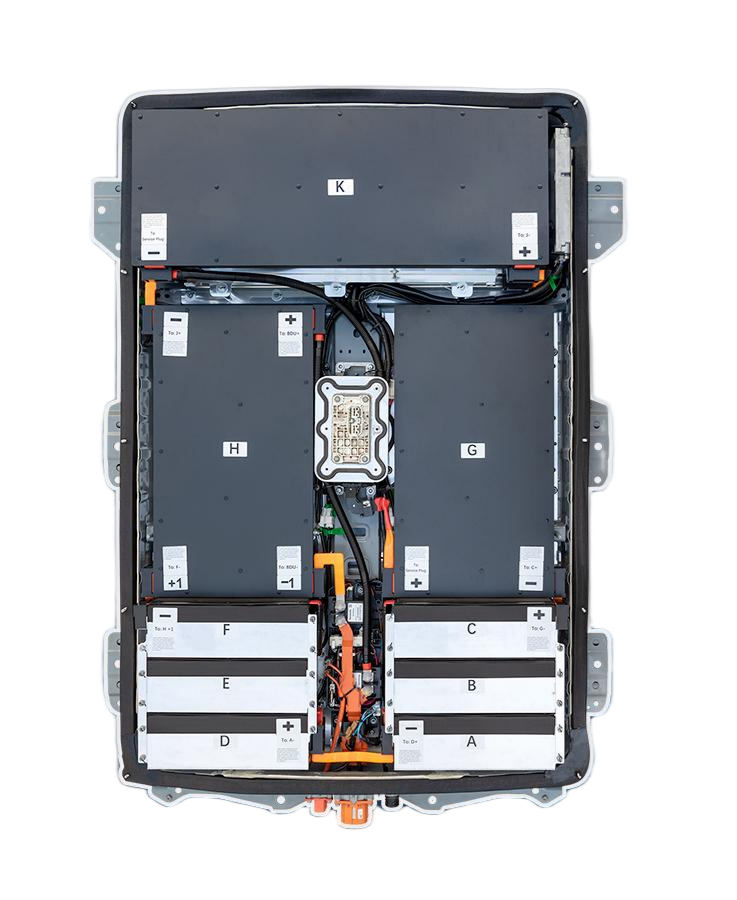
- Visual Check: Remove the service cover. Look for bowing of the aluminum casing. A swollen pack indicates gas generation from overcharging/thermal stress.
- Vent Valve Inspection: Check the pressure relief valve. Is there crusty residue, oil, or a burnt smell? This confirms the pack has already vented due to over-pressure.
- The Conclusion: If the pack is swollen or has vented, it is physically destroyed. No software reset can un-swell a cell or reseal a vent.
Step 4: Charger Verification (Rule Out the External Factor)
- Test: Use a known-good Level 2 charger and monitor the handshake.
- Result: In 99% of cases, the charger stops exactly when the BMS tells it to. The fault lies in the BMS’s command, not the charger’s compliance.
The Hard Truth: Why Calibration Fails on Overcharged Packs
If your diagnostics show cell voltages >4.25V, swelling, or venting, you must deliver the hard news: The battery pack has suffered irreversible chemical damage.
- Lithium Plating: Overcharging causes metallic lithium to plate on the anode. This creates permanent internal shorts that will lead to thermal runaway later, even if the car sits idle.
- Gas Generation: The electrolyte has boiled off into gas. The cell chemistry is altered forever. Capacity is lost, and internal pressure is critical.
- BMS Distrust: Once a pack exhibits these symptoms, the BMS can no longer accurately estimate SOC. It will always be guessing, making every future charge cycle a gamble.
- Safety Risk: A pack that has “overcharged” once is highly prone to catching fire during the next charge. It is a ticking time bomb.
The Verdict: You cannot repair, recalibrate, or balance a chemically damaged, swollen pack. The entire battery must be replaced.
The CNS BATTERY Solution: Perfect Charging Control Guaranteed
When you explain that the “overcharging” was actually a symptom of total battery failure, the customer will fear the dealer’s $20,000+ quote. This is your opportunity to offer the CNS BATTERY High-Capacity Upgrade—the solution that restores perfect charging logic.
Why Upgrading Is the Ultimate Fix
- Brand-New Chemistry: Our 120 Ah to 180 Ah upgrades use fresh Grade-A cells with precise capacity matching. The BMS knows exactly how much energy the pack holds. No more “guessing” or false 100% readings.
- Safe Voltage Limits: New cells have low, consistent internal resistance. Voltage rises smoothly and predictably. The BMS cuts off charging exactly at the safe limit every time.
- Zero Swelling Risk: Modern cells and robust casings eliminate the gas generation issues plaguing 10-year-old OEM packs.
- Accurate Range: No more jumping from 100% to 0%. The range estimate is linear, reliable, and trustworthy.
- Double the Range: While fixing the overcharging danger, you upgrade the customer to 130–200+ miles of real-world range.
- Cost Efficiency:
- Failed Calibration: $300 (wasted) + High Fire Risk.
- Dealership Replacement: $20,000+.
- CNS BATTERY Upgrade: $8,000 – $14,000 USD. You get a brand-new, perfectly controlled battery with double the range for half the dealer price.
- Warranty Confidence: Backed by our 3–5 Year Warranty, ensuring safe charging for years to come.
Real Story: From “Charger Blame” to “Safe Power”
“City EV Diagnostics” had a 2015 i3 come in with a swollen battery and a vented seal. The customer blamed their home wallbox charger and demanded a refund from the charger manufacturer.
“Our live data showed Module #8 hitting 4.32V while the rest were at 4.0V,” says the lead tech. “We explained that the charger did its job; the battery simply couldn’t handle the current anymore due to degradation. The ‘overcharge’ was internal. We installed a CNS BATTERY 150 Ah upgrade. The new pack charged smoothly to 100% and held steady. The customer got 170 miles of range and finally stopped worrying about their car catching fire in the garage. We didn’t just fix a code; we prevented a house fire.”
Stop Blaming the Charger, Start Fixing the Cell
Diagnosing BMW i3 battery overcharging isn’t about testing the plug; it’s about testing the cell’s ability to accept energy safely. Don’t sell your customers false hope with resets or charger swaps.
Be the shop that identifies the real danger. Be the shop that offers the permanent solution: a brand-new battery system that charges safely, accurately, and reliably.
Suspect an overcharging issue?
Stop guessing and start solving. Contact CNS BATTERY today for a professional diagnostic consultation. Discover how our BMW i3 Series Battery upgrades can eliminate overcharging risks permanently, providing your customers with a safe, stable, and long-range driving experience.
👉 Get Your Overcharge Diagnostic & Upgrade Quote
Frequently Asked Questions (FAQ) for Shops
1. Can a faulty charger cause a BMW i3 battery to overcharge?
Extremely rarely. Modern EV chargers and the i3’s onboard charger have multiple safety handshakes. The car controls the flow, not the charger. If overcharging occurs, it is almost always due to internal battery degradation causing the BMS to misjudge the cell state.
2. Why does my i3 show 100% charge but then die immediately?
This indicates severe capacity loss and cell imbalance. The BMS thinks the pack is full because one weak cell hit max voltage early, but the rest of the pack is empty. This is a sign of a failing battery, not a charging glitch.
3. Is it safe to continue charging an i3 that has shown signs of overcharging?
Absolutely NOT. Signs like swelling, venting smells, or extreme voltage spikes indicate internal chemical damage. Continuing to charge risks thermal runaway (fire). The vehicle must be unplugged and quarantined immediately.
4. Can I reset the BMS to fix overcharging?
No. A reset clears codes but does not fix the physical degradation (swelling, lithium plating, high resistance) that caused the over-voltage condition. The problem will recur immediately, likely with worse consequences.
5. How do I confirm if the battery is swollen?
Perform a physical inspection of the battery casing. Use a straight edge to check for bowing. Also, check the vent valve for residue. Swelling confirms gas generation from overcharging/thermal stress and requires immediate replacement.
6. Will a new battery fix the charging issues?
Yes. A CNS BATTERY upgrade uses new, matched cells with accurate capacity data. The BMS will charge the pack precisely to 100% without overshooting, eliminating the risk of overcharging permanently.
7. How much does it cost to fix overcharging vs. upgrading?
Diagnostic attempts cost $300–$500 but cannot fix the physical damage. A dealership replacement costs $20,000+. A CNS BATTERY upgrade costs $8,000–$14,000, providing a brand-new, safe battery with double the range, offering the best value and safety.