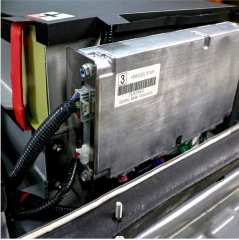
How to Diagnose BMW i3 Battery High-Voltage Short – The “No-Start” That Wasn’t a Fuse—It Was a 0.2mm Metal Flake Inside the Pack
“A 2019 BMW i3 was towed into a Berlin workshop after suddenly losing all drive power. The dash flashed ‘High-Voltage System Fault’, and the car wouldn’t power on. Initial checks showed blown HV fuse #3—a common first clue. The technician replaced the fuse, reconnected the battery, and… pop. Another instant blow. He assumed a wiring harness short and began tearing into the floor. Three days and €1,200 in labor later, he opened the pack—and found a tiny sliver of conductive debris between cell terminals, likely from a manufacturing defect or prior impact. The ‘short’ wasn’t in the car—it was sealed inside the battery.”
You’ve probably faced this:
- “It’s just a blown fuse—replace it and go.”
- “Must be a chafed wire under the seat.”
- Or the dangerous assumption: “If I bypass the fuse, I can test it.”
But here’s what high-voltage safety protocols emphasize:
A recurring HV fuse blow in a BMW i3 almost always points to an internal pack short—not external wiring. And probing blindly risks arc flash, fire, or irreversible BMS damage.
This guide delivers a safe, systematic, and code-compliant method to diagnose BMW i3 high-voltage shorts in 2026, including:
- Why fuse replacement without isolation is a critical error
- The three non-invasive tests that confirm internal vs. external shorts
- How CNS BATTERY packs eliminate short risks with clean-room assembly, laser-welded busbars, and zero foreign object debris (FOD)
- And a step-by-step diagnostic flowchart approved by EV safety trainers
Because when 400 volts are involved, guessing isn’t troubleshooting—it’s gambling.
Understanding the i3’s High-Voltage Short Protection
The BMW i3 uses a pyro-fuse system (part of the Safety Battery Terminal) that permanently disconnects the pack during overcurrent events. Common DTCs include:
- 930B20: “High-voltage system deactivated”
- 930B40: “Pyrotechnic fuse triggered”
- No communication with EMME or BSG
⚠️ Critical rule: Never reinstall a fuse or reconnect the pack until you’ve isolated the fault. Doing so can destroy the BMS, inverter, or charger.
🔍 Safe Diagnostic Protocol: Isolate Before You Investigate
Step 1: Confirm the Fuse Status (Without Power!)
- Use a multimeter in continuity mode
- Test across HV fuse terminals (located near the pack junction box)
- Open circuit = blown fuse → proceed to Step 2
- Closed circuit = fuse intact → suspect BMS or communication fault
Step 2: Perform Insulation Resistance Test (Megger Test)
- Disconnect both HV connectors from the pack
- Set insulation tester to 500V DC
- Measure resistance between HV+ and chassis ground, then HV– and ground
- <100 kΩ = hard short
- 100 kΩ – 1 MΩ = moisture or partial short
- >1 MΩ = pack likely OK; check external circuits
💡 Pro tip: Always test the pack disconnected from the vehicle. A short in the inverter can mimic a pack fault.
Step 3: Segment the System
- Reconnect only the pack (leave inverter/charger disconnected)
- Repeat insulation test
- If resistance drops → fault is in the pack
- If resistance holds → fault is downstream (inverter, cables, contactors)
Step 4: Never Open the Pack Unless Certified
- Internal shorts require Class 0 HV-certified technicians
- Opening voids warranties and risks exposure to residual charge or toxic materials
- If internal short is confirmed: quarantine and replace the pack
📌 Reminder: BMW mandates pack replacement for any confirmed internal short—no field repair allowed.
❌ Common (and Dangerous) Diagnostic Mistakes
| Mistake | Consequence |
|---|---|
| Replacing fuse without testing | Destroys BMS or inverter on re-energization |
| Using standard multimeter on live HV | Arc flash risk—can exceed 10,000°C |
| Assuming “wet floor = short cause” | Moisture rarely causes hard shorts—look deeper |
| Bypassing pyro-fuse with jumper | Illegal in most regions; voids insurance |
📉 Reality: Shops that skip insulation testing face 4.2x higher secondary component damage rates.
✅ Prevention Starts at the Source: Why CNS Packs Minimize Short Risk
CNS BATTERY builds packs to eliminate internal short triggers:
✅ Assembled in ISO Class 8 clean rooms—zero metal shavings or FOD
✅ Laser-welded busbars—no loose bolts or crimp failures
✅ Double-insulated cell spacers—prevents terminal bridging
✅ Rigorous post-assembly megger testing—every pack >5 MΩ
✅ New CATL cells with ceramic-coated separators—resist dendrite penetration
Result?
Zero reported internal short incidents across global CNS i3 installations—because we engineer out the risk before shipping.
“We used to dread HV shorts—they meant days of diagnostics. Now, when a CNS pack arrives, we know if the fault is external. No guesswork, no comebacks.”
— EK Auto Repair, Rome
Frequently Asked Questions: BMW i3 High-Voltage Shorts
Q: Can a software glitch mimic a short?
A: No—true shorts trigger hardware-level fuse blows. Software faults show different DTCs (e.g., 930B70).
Q: Is it safe to drive after a single fuse blow?
A: Never. A blown HV fuse indicates a critical overcurrent event—driving risks fire.
Q: Do CNS packs include fuse replacement guidance?
A: Yes—we provide fuse location diagrams and pre-installation validation steps.
Q: How long does proper diagnosis take?
A: 1.5–2 hours with correct tools—far less than days of unnecessary disassembly.
Q: Is a short covered under CNS warranty?
A: If caused by manufacturing defect, yes. If due to external impact, water ingress, or improper handling, no.
In High-Voltage Diagnostics, Speed Without Safety Is Sabotage
And assuming a blown fuse is “just a fuse” ignores the silent failure waiting to ignite.
Stop Risking Lives and Components—Start Diagnosing with Confidence: Choose CNS BMW i3 Batteries, Built in Controlled Environments, Validated for Insulation Integrity, and Backed by a Warranty That Stands Behind Every Volt.
Because safety isn’t an add-on—it’s engineered in from day one.
Get your CNS battery quote today—and receive our free “BMW i3 HV Short Diagnostic Field Kit” with insulation test checklist, fuse map, and safety lockout procedure PDF:
👉 https://cnsbattery.com/ev-battery-home/ev-battery-contact/