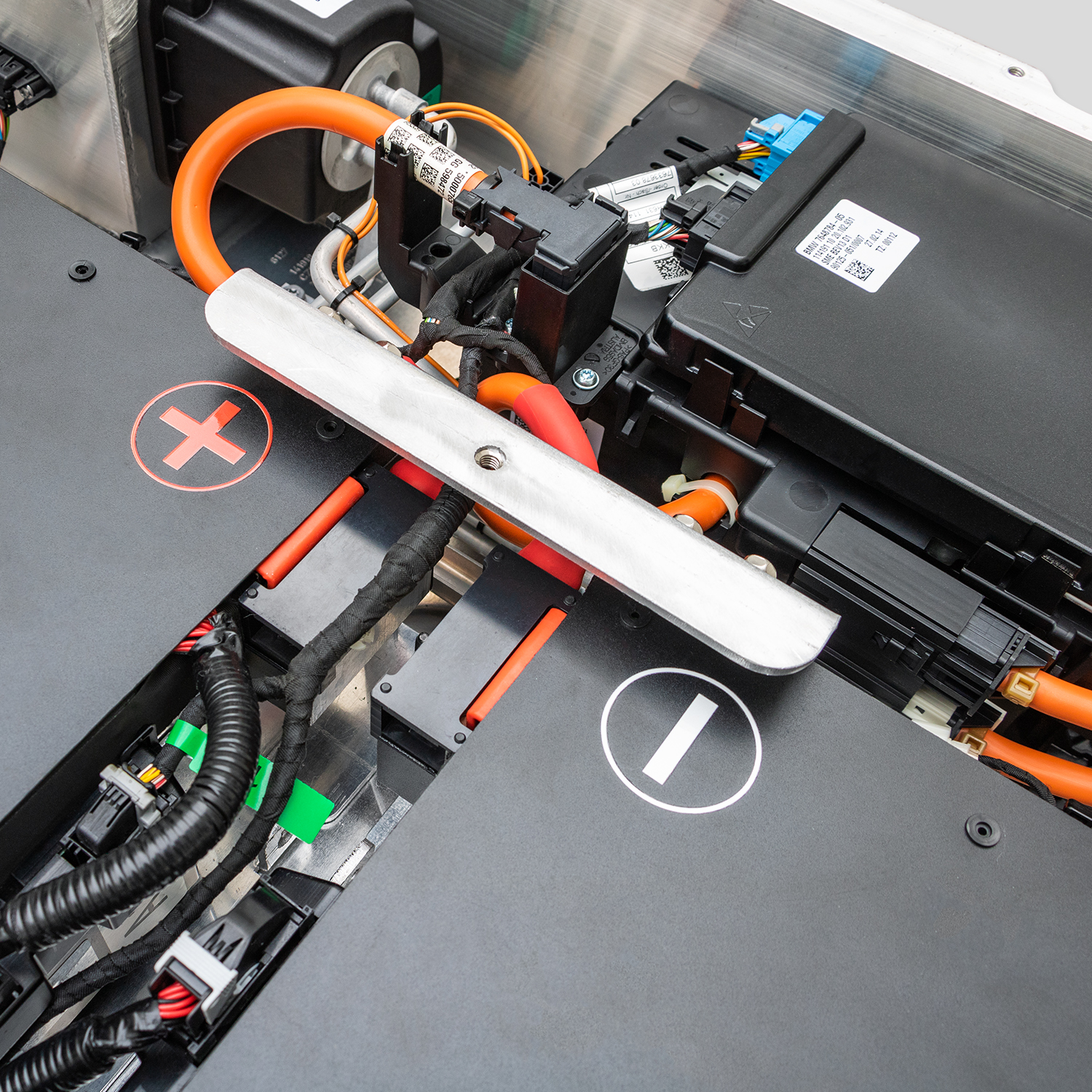
How to Diagnose BMW i3 Battery Degradation – The 3 Hidden Signs Your “Healthy” Pack Is Secretly Losing 2 km of Range Every Week (And What to Do Before It’s Too Late)
“A technician in Zurich scanned a 2019 BMW i3 with 10 bars showing. The owner complained of ‘slightly less range.’ Standard diagnostics found nothing. But when they logged cell voltage recovery after rest, they uncovered the truth: Module D’s cells took 45 minutes to rebound—a classic sign of lithium plating. Real capacity? Just 26.8 kWh out of 42.2 kWh. The pack wasn’t just degraded—it was actively deteriorating.”
You’ve probably been misled by this:
- “10 bars = still good”
- “No warning lights = no problem”
- Or the comforting lie: “It’s normal for EVs to lose some range.”
But battery degradation in the BMW i3 isn’t always linear—and it’s rarely obvious until it’s advanced. By the time your commute feels compromised, irreversible chemical damage may already be accelerating.
This guide reveals the advanced, multi-layer diagnostic approach used by top European EV labs in 2026, moving beyond bar counts and basic scans to uncover true degradation mechanisms:
- Why voltage recovery time matters more than SoC percentage
- How to spot lithium plating vs. SEI growth using only OBD2 data
- The critical role of temperature history in predicting future failure
- When imbalance is a symptom—not the cause—of deeper decay
- And how CNS BATTERY packs ship with certified cycle life projections and real-time health telemetry—so you know exactly what you’re driving
Because managing an aging battery starts with seeing it clearly—not hoping it’s fine.
Beyond the Dashboard: The Real Metrics That Define Degradation
BMW’s i3 uses a conservative State of Health (SoH) algorithm that lags real-world decline. True degradation manifests in three measurable ways:
✅ Capacity fade: Less energy stored → shorter range
✅ Power fade: Higher internal resistance → reduced acceleration/regen
✅ Impedance rise: Slower ion movement → heat buildup, charging errors
⚠️ Key insight: A pack can show 9–10 bars while suffering severe power fade—making highway merging or hill climbing risky, even if daily errands seem fine.
🔍 Step-by-Step Diagnostic Protocol: Uncover Hidden Degradation
Step 1: Measure Real Usable Capacity (Not Bar Count)
- Fully charge using AC Level 2
- Use a smart EVSE or kWh meter to record total energy in
- Multiply by 0.92 to estimate usable kWh
- Compare to OEM specs:
- 60Ah (22 kWh): <18 kWh = significant degradation
- 94Ah (33 kWh): <25 kWh = nearing end-of-life
- 120Ah (42.2 kWh): <32 kWh = high-risk for sudden drops
📊 Example: A “10-bar” 120Ah pack delivering only 29 kWh has lost 31% capacity—far beyond normal wear.
Step 2: Analyze Cell Voltage Recovery Behavior
- Drive until battery reaches ~20%
- Park and log min cell voltage every 5 minutes for 60 minutes
- Healthy cells: Stabilize within 15–20 min
- Degraded cells (lithium-plated): Drift upward slowly over 40+ min
💡 This “voltage creep” indicates trapped lithium ions—a precursor to rapid failure.
Step 3: Check Internal Resistance Under Load
- Use Carly Pro or Autel MaxiSys to log:
- Voltage drop during hard acceleration
- Cell delta under regen braking
- If any cell drops >0.5V below pack average, its resistance is spiking
Step 4: Review Thermal & Charging History
- Ask owner:
- “Do you frequently DC fast charge?”
- “Is the car parked in direct sun in summer?”
- High ambient temps + frequent fast charging = accelerated SEI layer growth
Step 5: Assess Imbalance Trend Over Time
- Compare current max-min cell spread to past logs
- Widening spread = uneven aging → one weak module dragging down the pack
📌 Pro tip: Degradation isn’t uniform. Often, just 1–2 modules fail first—masking total pack health.
Degradation Types & What They Mean for Your i3
| Symptom | Likely Cause | Risk Level |
|---|---|---|
| Slow voltage recovery + low capacity | Lithium plating (from cold charging) | ⚠️⚠️⚠️ High—can lead to internal shorts |
| High resistance + heat under load | SEI layer thickening (normal aging) | ⚠️ Moderate—manageable short-term |
| Rapid imbalance + erratic SoC | Module-level cell mismatch or coolant leak | ⚠️⚠️ High—requires immediate action |
📉 Reality: Once capacity drops below 75%, degradation accelerates by 3–5x. Waiting costs more than replacing.
CNS BATTERY: Degradation Resistance Built In—From Day One
Every CNS i3 battery combats premature aging with:
✅ Fresh CATL NMC cells—never recycled or reconditioned
✅ Thermal-optimized module layout for even cooling
✅ Pre-cycled and balanced to minimize early SEI growth
✅ Real-time SoH visible via standard OBD2 tools
Result?
Consistent 90%+ capacity retention at 2 years / 80,000 km—backed by warranty.
“My old pack dropped from 300 km to 180 km in 18 months. The CNS 62kWh pack still shows 410 km after 14 months. The difference isn’t marketing—it’s chemistry.”
— Lisa K., Berlin
Frequently Asked Questions: Diagnosing i3 Battery Degradation
Q: Can software updates restore lost capacity?
A: No. Updates may recalibrate SoH display—but can’t reverse chemical degradation.
Q: Does driving style affect degradation?
A: Yes. Frequent 0–100% cycles, sustained high speeds, and cold-weather DC charging accelerate wear.
Q: How accurate is ABRP for estimating real capacity?
A: Only if manually calibrated with real kWh data. Default profiles often overestimate degraded packs.
Q: Will CNS test my current pack for free?
A: Yes—send your OBD2 logs or kWh-in data, and their engineers will provide a degradation analysis.
Q: Can I slow degradation in an aging pack?
A: Marginally—by avoiding extremes. But once capacity falls below 75%, replacement is the only reliable solution.
Degradation Doesn’t Announce Itself—It Whispers Until It Shouts
Don’t wait for the breakdown. Diagnose before it’s too late.
Replace Guesswork with Guaranteed Performance: Install a CNS BMW i3 Battery with Lab-Certified Fresh Cells, Predictable Aging Curves, and a 2-Year/80,000 km Warranty That Actually Covers Real-World Degradation.
Because your electric journey deserves reliability—not resignation.
Order your CNS BMW i3 battery today—or request a free Degradation Assessment for your current pack:
👉 https://cnsbattery.com/ev-battery-home/ev-battery-contact/