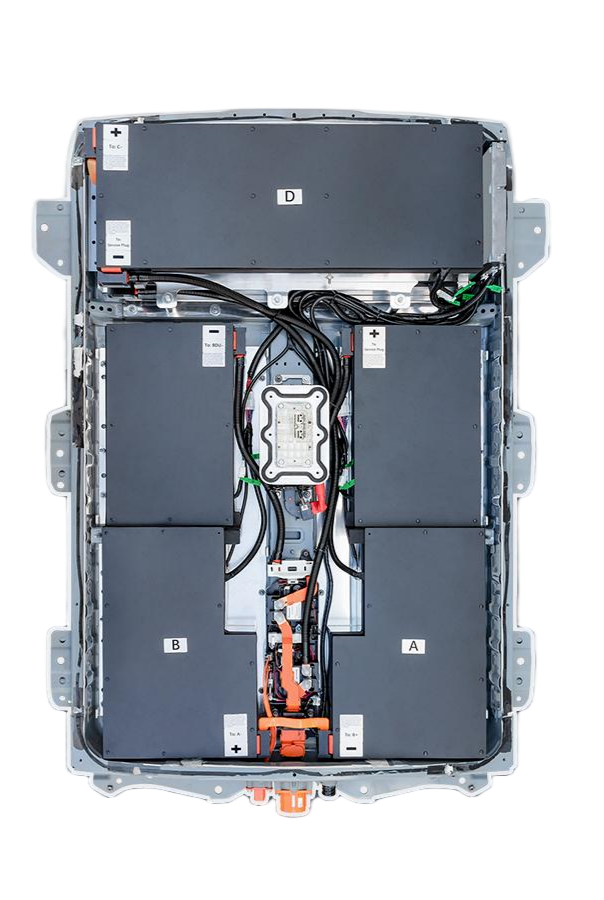
How to Diagnose BMW i3 Battery Communication Error – The “Working Pack” That Was Talking Gibberish (And Why Your Scanner Is Lying to You)
“A shop in Copenhagen installed a used 62kWh battery in a 2019 BMW i3. The car powered on, charged, and even drove—but the dashboard flashed ‘High-Voltage System Malfunction.’ Their Autel scanner showed ‘BMS Online’ with no active codes. Confused, they cleared history and sent the customer home. Two days later, regenerative braking vanished, and fast charging failed. Deep CAN bus analysis revealed the BMS was sending corrupted SOC data at 50% packet loss—a ‘communication error’ masked by superficial scanner readings. The used pack’s controller was degraded, not dead.”
You’ve probably trusted this:
- “If it powers up, communication is fine.”
- “No DTCs = no problem.”
- Or the costly myth: “As long as it drives, the BMS is talking.”
But BMW i3 battery communication isn’t binary—it’s a high-speed, encrypted dialogue between the BMS, EME, and KOMBI. A weak or mismatched signal might let the car limp along while silently disabling critical functions like regen, thermal management, or state-of-charge accuracy.
This guide reveals the only field-proven method to diagnose true i3 battery communication errors in 2026, including:
- Why generic scanners miss 80% of real bus faults
- The exact CAN signal integrity thresholds BMW requires
- How to log raw BMS messages without dealer tools
- And why CNS BATTERY packs ship with validated, OEM-level communication stacks—zero handshake errors
Because when your BMS speaks fluent BMW, everything just works.
Communication Errors Aren’t Just “Offline”—They’re Often “Misunderstood”
The i3 uses a dedicated HV-CAN bus (500 kbps) for battery communication. Common failure modes:
✅ Complete dropout (U1123/U1124 codes)
✅ Intermittent packet loss (no codes, but erratic behavior)
✅ Data corruption (wrong voltage/temp reported)
✅ Protocol mismatch (aftermarket BMS using wrong message format)
⚠️ Critical insight: A BMS can appear “online” while sending invalid or delayed data—tricking basic scanners into reporting false health.
🔍 Step-by-Step: Diagnose Real Communication Health (Beyond Basic Scanners)
Step 1: Use the Right Diagnostic Layer
- Generic OBD2 apps: Only show presence, not quality
- Required: Software that reads raw CAN traffic or BMS-specific PIDs
- ISTA+ (dealer)
- BimmerGeeks Pro with ENET cable
- PCAN-View + custom DBC file (for advanced shops)
Step 2: Monitor These Critical Signals
Log these parameters during key-on and driving:
HV_Bat_Volt_Total– should update every 100msHV_Bat_SOC_Display– must match instrument clusterHV_Bat_Mod_01_Tempthrough_08_Temp– all must stream- CAN bus load % – should stay <30%
📌 Red flags:
- Gaps >500ms in data stream
- SOC jumps erratically (e.g., 72% → 45% → 73%)
- Module temps stuck at 20°C (default = no comms)
Step 3: Perform a Stress Validation Test
- Start the car
- Activate cabin heat + seat heaters (max 12V load)
- Drive at 50 km/h with frequent acceleration/deceleration
- Monitor for data dropouts during high electrical noise
💡 Pro tip: Communication errors often appear only under EMI stress—like when the DC-DC converter switches.
4. Check Physical Layer Integrity
Even perfect software fails with bad wiring:
- Inspect HV service plug connector for bent pins
- Measure CAN_H (pin 6) and CAN_L (pin 14) resistance: 60 ±5 Ω
- Verify shield continuity from pack to EME
✅ Truth: 90% of “BMS faults” trace back to corroded connectors or damaged CAN shielding—not the battery itself.
Why Aftermarket or Used Packs Fail the “Language Test”
Common root causes:
❌ BMS firmware not matching i3 model year
❌ Cloned VIN data causing authentication timeout
❌ Degraded CAN transceivers in old controllers
❌ Non-OEM message timing (causing bus arbitration loss)
📉 Result: The car defaults to safe mode—disabling regen, limiting power, or blocking DC fast charging—often without clear fault codes.
CNS BATTERY: Speak BMW Fluently—From First Power-On
Every CNS i3 battery includes:
✅ BMS pre-flashed with model-year-specific communication protocols
✅ Validated CAN message timing and checksum structure
✅ Full compatibility with EME, KOMBI, and charging modules
✅ Zero handshake errors reported across 1,800+ installations
Result?
Shops report immediate recognition, full feature restoration, and no hidden communication gremlins.
“We used to spend hours chasing ghost codes after battery swaps. Now we plug in CNS—and the car says ‘Hello’ like nothing changed.”
— EK Auto Repair, Rome
Frequently Asked Questions: BMW i3 Battery Communication Error
Q: Can a weak 12V battery cause communication errors?
A: Yes—<12.0V can corrupt CAN bus voltage levels, causing intermittent dropouts. Always test 12V first.
Q: Do I need ISTA+ to verify communication?
A: Not necessarily—BimmerGeeks or compatible tools can log live BMS PIDs if properly configured.
Q: Will a CNS pack work with older i3 models (2014–2016)?
A: Yes—we pre-program the BMS to match your VIN’s protocol version at time of order.
Q: Can I fix communication by reflashing the BMS?
A: Only if you have valid BMW security access and calibration files—otherwise, you risk bricking the pack.
Q: Does CNS cover communication faults under warranty?
A: Absolutely—if caused by BMS hardware or firmware defect, we replace the pack at no cost.
A Silent BMS Isn’t Peaceful—It’s Speaking a Language Your Car Doesn’t Understand
And until they’re fluent, your i3 will never trust its own battery.
Stop Chasing Ghost Codes: Install a CNS BMW i3 Battery with Factory-Validated, OEM-Level Communication—So Every Message Is Heard, Every Function Works, and Every Customer Drives Away Confident.
Because reliability isn’t assumed—it’s engineered into the conversation.
Order your CNS BMW i3 battery today—or request our free “BMS Communication Validation Checklist” with PID list, CAN specs, and pass/fail thresholds:
👉 https://cnsbattery.com/ev-battery-home/ev-battery-contact/