How to Diagnose BMW i3 Battery Cell Short Circuit (Pro) – The Silent Killer Beneath the Floor
The tow truck driver shuts off his engine and points to a 2015 BMW i3 on the flatbed. “It just died on the highway,” he says. “No warning, no sputtering. Just instant blackness.” Or perhaps the customer calls in a panic: “My car won’t charge, and the dashboard is flashing ‘High Voltage System Malfunction’ with an insulation fault.”
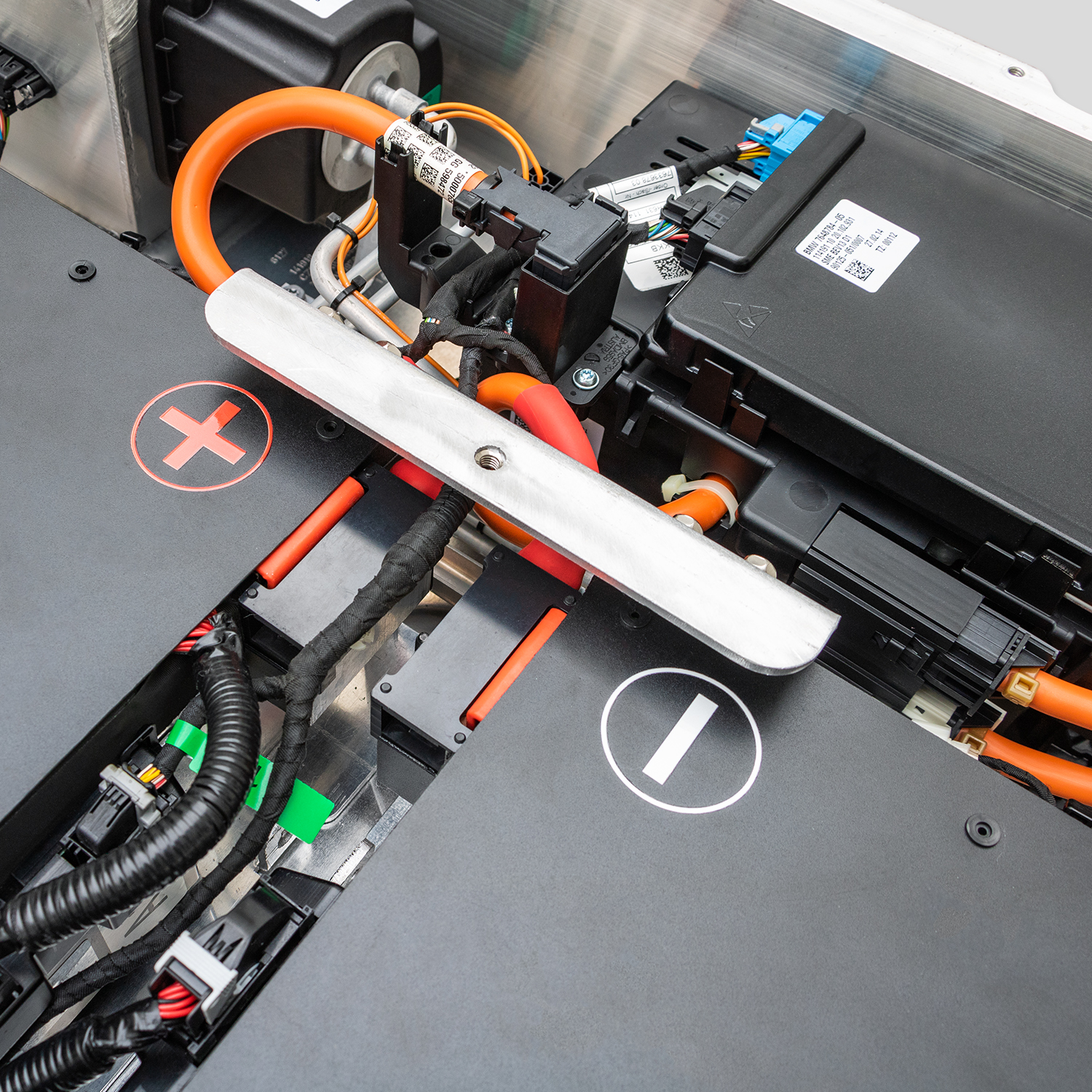
As a professional EV technician in 2026, your mind immediately goes to the worst-case scenario: a cell short circuit. In the world of gasoline engines, a dead cylinder means a rough ride. In the high-voltage realm of the BMW i3, a single internal cell short is a catastrophic event that can trigger thermal runaway, melt busbars, and turn the battery pack into an uncontrollable fire hazard within minutes.
Many shops make the fatal mistake of treating this as a simple “bad module” that can be swapped out. But diagnosing a short circuit requires more than a code reader; it demands a deep understanding of electrochemistry, precise resistance testing, and the courage to condemn a pack that others might try to “fix.”
What are the subtle data signatures that precede a total cell collapse?
How do you safely isolate a shorted cell without triggering an arc flash?
And when your diagnostics confirm an internal short, how do you pivot from a dangerous repair attempt to a safe, profitable, and permanent upgrade?
At CNS BATTERY, we have analyzed hundreds of failed i3 packs. We know that a cell short is rarely an isolated incident; it is often the culmination of years of degradation, dendrite growth, or coolant intrusion. This guide provides the professional diagnostic protocol for identifying cell short circuits, explains why “repairing” a shorted pack is impossible, and reveals why replacing the entire system is the only ethical path forward.
The Anatomy of a Short: Internal vs. External
Before diving into diagnostics, you must distinguish between the two types of shorts, as the implications are vastly different.
1. External Short (Rare but Dangerous)
- Cause: Physical damage to HV cables, rodent chewing, or tool drop during previous service.
- Symptom: Immediate fuse blow, visible arcing, melted connectors.
- Diagnosis: Visual inspection and continuity testing of external harnesses.
- Verdict: Repairable if the battery pack itself wasn’t damaged by the surge.
2. Internal Cell Short (The Common Killer)
- Cause:
- Dendrite Growth: Microscopic lithium spikes pierce the separator inside the cell over time, connecting the anode and cathode.
- Coolant Intrusion: Conductive fluid leaks onto internal busbars or cell terminals.
- Mechanical Failure: Previous undercarriage impact crushed a cell internally.
- Symptom: Sudden voltage drop to 0V on one module, massive heat generation, insulation faults, or immediate contactor opening.
- Verdict: Catastrophic. The chemical integrity of the pack is compromised. It cannot be repaired.
Professional Diagnostic Protocol: Finding the Dead Cell
Do not guess. Follow this rigorous, safety-first workflow to pinpoint the short.
Step 1: Safety Depower & Isolation
- PPE Up: Class 00 gloves, arc-flash face shield.
- Disconnect: Remove 12V negative, extract Service Plug (MSD). Wait 15 minutes.
- Verify 0V: Confirm zero voltage at main terminals.
- Isolate: Disconnect the main HV cables from the rest of the car to ensure the fault is in the pack, not the motor or compressor.
Step 2: Live Data Analysis (If BMS is Active)
If the BMS is still communicating before total shutdown:
- Check Module Voltages: Look for a module reading 0.0V or significantly lower (<2.0V) than the rest (which should be ~3.6V-3.8V).
- The “Cliff” Signature: A healthy pack discharges evenly. A pack with a shorted cell will show one module dropping vertically while others remain stable.
- Temperature Spikes: Check thermal sensors. A shorted cell generates intense heat. If one sensor reads 10-20°C higher than neighbors at rest, you have found the hotspot.
Step 3: The Megger Test (Insulation Resistance)
This is critical for detecting shorts to the chassis (ground).
- Tool: Digital Megohmmeter (500V DC).
- Procedure: Measure resistance between HV+ and Chassis, and HV- and Chassis.
- Interpretation:
- >1 MΩ: Good isolation. The short is likely internal cell-to-cell (not to ground).
- <100 kΩ: Critical Failure. Electricity is leaking to the chassis. This is often caused by coolant bridging the gap. The pack is unsafe.
Step 4: Internal Resistance (IR) & Voltage Load Test
- Voltage Resting: If a module sits at 0V or near 0V after resting for an hour, it has a hard internal short. It cannot hold a charge.
- Internal Resistance: Use a specialized AC impedance meter. A shorted cell will show near-zero or erratic resistance readings compared to the consistent mΩ values of healthy cells.
- Load Test (Caution): Applying a small load will cause the voltage of a shorted module to collapse instantly. Note: Do not perform this if thermal runaway is suspected.
The Hard Truth: Why “Repairing” a Shorted Pack Is Impossible
If your diagnostics confirm an internal cell short, you must deliver the hard news to the customer. There is no “fix.”
- Thermal Damage is Permanent: A short circuit generates temperatures exceeding 1,000°C locally. This heat damages the separators and electrolytes of neighboring cells, even if they haven’t shorted yet. They are now unstable time bombs.
- Chemical Contamination: The electrolyte breaks down into flammable gases. The internal chemistry is altered forever. You cannot “flush” this out.
- Seal Integrity Compromised: To access the shorted cell, you must open the sealed IP67 casing. Once opened, you cannot guarantee the pack will ever be water/dust proof again.
- Liability Nightmare: If you swap a module in a pack that has experienced a short, and it catches fire two weeks later due to a neighboring cell failing, your shop is liable. Insurance will not cover unauthorized internal repairs on a thermally compromised pack.
The Verdict: A BMW i3 battery with an internal cell short is total loss. It must be quarantined and replaced.
The CNS BATTERY Solution: Eliminate the Risk Forever
When you explain that the battery has suffered an internal short and is unsafe, the customer faces a crisis. The dealer will quote $20,000+ for a remanufactured unit. This is your opportunity to offer the CNS BATTERY High-Capacity Upgrade—the only solution that guarantees safety and performance.
Why Upgrading Is the Only Safe Fix
- Zero Short Risk: Our BMW i3 Series Battery upgrades use brand-new, Grade-A cells with intact separators and perfect manufacturing quality control. No dendrites, no history of abuse.
- Perfect Insulation: Factory-sealed and leak-tested to exceed IP67 standards. No risk of coolant-induced shorts.
- Advanced BMS Protection: Our modern Battery Management Systems detect anomalies faster than the 10-year-old OEM units, preventing issues before they become shorts.
- Double the Range: While solving the short circuit crisis, you upgrade the customer from a dead 60 Ah or 94 Ah pack to a 120 Ah to 180 Ah system, giving them 130–200+ miles of range.
- Cost Efficiency:
- Attempted Module Swap: $1,500+ (labor) + 100% Risk of Fire/Liability.
- Dealership Replacement: $20,000+.
- CNS BATTERY Upgrade: $8,000 – $14,000 USD. You get a brand-new, safe battery with double the range for half the dealer price.
Real Story: From “Sudden Death” to “Reliable Power”
“City EV Diagnostics” in New York had a 2015 i3 tow in with a sudden shutdown. Scan data showed Module #45 at 0.1V while others were at 3.7V. The tech noticed the casing near that module was warm to the touch.
“We explained that the cell had internally shorted and cooked its neighbors,” says the lead tech. “We refused to open the pack due to fire risk. Instead, we installed a CNS BATTERY 150 Ah upgrade. The new pack fired up instantly, zero faults, perfect balance. The customer paid $11,500, got 170 miles of range, and drives with total confidence. We avoided a potential catastrophe and made a great profit.”
Stop Guessing, Start Diagnosing
Diagnosing a BMW i3 battery cell short circuit requires precision, courage, and the right protocol. Don’t let the pressure to “save money” tempt you into risky internal repairs.
Be the shop that prioritizes safety above all else. Be the shop that offers the only true solution: complete replacement with modern, certified technology.
Suspect a cell short?
Don’t risk a fire. Contact CNS BATTERY today for a professional assessment. Discover how our BMW i3 Series Battery upgrades can eliminate short circuit risks permanently, providing your customers with a safe, reliable, and high-range driving experience.
👉 Get Your Short Circuit Diagnosis & Upgrade Quote
Frequently Asked Questions (FAQ) for Shops
1. What are the signs of a cell short circuit in a BMW i3?
Common signs include sudden total power loss, a specific battery module reading 0V or near 0V, rapid voltage drop under load, localized overheating on the battery casing, and insulation fault codes (if the short bridges to the chassis).
2. Can I replace just the shorted cell/module?
No. A short circuit generates extreme heat that damages neighboring cells and compromises the pack’s structural and chemical integrity. Attempting to swap a single module is unsafe and carries a high risk of future thermal runaway. The entire pack must be replaced.
3. Is it safe to drive an i3 with a suspected short?
Absolutely NOT. A shorted cell can lead to thermal runaway (fire) at any moment, even while parked. The vehicle must be towed immediately to a secure location for diagnosis.
4. How do I confirm a short without opening the pack?
Use a bidirectional scanner to check individual module voltages (looking for 0V outliers) and perform an Insulation Resistance (Megger) test to check for shorts to the chassis. Thermal imaging can also identify hot spots indicative of internal shorts.
5. What causes internal cell shorts in older i3s?
The most common causes are dendrite growth (lithium spikes piercing separators) due to age/cycling, coolant intrusion from internal leaks, or physical damage from road debris impacting the pack.
6. Does CNS BATTERY guarantee their packs are free from shorts?
Yes. Every upgrade uses brand-new, rigorously tested Grade-A cells and undergoes factory quality control to ensure zero internal defects. We provide documentation confirming safety and performance.
7. How much does it cost to fix a short circuit?
Attempting a repair is impossible/unsafe. A dealership replacement costs $20,000+. A CNS BATTERY upgrade costs $8,000–$14,000, providing a brand-new, safe battery with double the range and a warranty.