How to Choose the Right Nissan Leaf Battery Upgrade: Expert Tips for Range & Reliability
Are you overwhelmed by the endless options when planning a Nissan Leaf battery upgrade? With varying capacities, cell types, and compatibility requirements across Leaf generations, choosing the wrong upgrade can lead to wasted money, poor performance, or even electrical damage. Many Leaf owners struggle to balance range needs, budget, and long-term durability—but the process doesn’t have to be stressful. As CNS BATTERY experts, we’ve distilled years of experience into this guide, walking you through step-by-step how to select the perfect battery upgrade for your Leaf, no matter the model year.
Step 1: Know Your Nissan Leaf’s Generation & Original Battery Specs
The first rule of choosing a Nissan Leaf battery upgrade is matching it to your vehicle’s generation. Leafs evolved significantly across two generations, with distinct battery systems that impact compatibility:
1st-Generation Leaf (2010-2017)
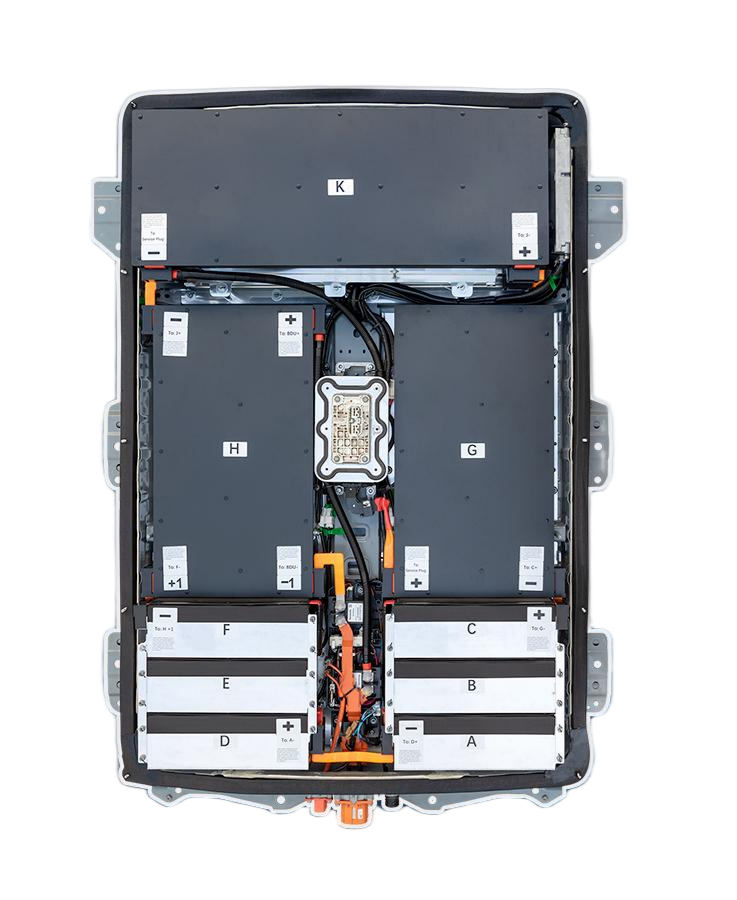
Early Leafs came with 24kWh (2010-2014) or 30kWh (2015-2017) batteries, using Nissan’s AESC cells and passive thermal management 。 These models can be upgraded to 40kWh packs (the most popular choice) or even 62kWh with minor modifications. Key note: 1st-gen Leafs require BMS reprogramming for any capacity upgrade.
2nd-Generation Leaf (2018-Present)
Second-gen Leafs feature 40kWh (standard) or 62kWh (e+ trims) batteries, equipped with active thermal management and advanced BMS 。 Upgrades for these models typically focus on replacing degraded packs with same-capacity or higher-density alternatives, as the chassis supports up to 62kWh without major tweaks.
Step 2: Choose the Right Battery Capacity Based on Your Driving Needs
Battery capacity (measured in kWh) directly dictates your Leaf’s range. Avoid overpaying for a large capacity you don’t need, or settling for too little and facing range anxiety. Here’s how to decide:
Daily Commuters (Under 50 Miles Per Day)
If you drive short distances and have access to home charging, a 30kWh or 40kWh upgrade is sufficient. For 1st-gen Leafs, upgrading from 24kWh to 30kWh boosts range from 135km to 176km (84 to 109 miles), perfectly fitting daily use 。 This balances cost and performance without unnecessary bulk.
Weekend Trippers (50-150 Miles Per Day)
Opt for a 40kWh (1st-gen) or 62kWh (2nd-gen) Nissan Leaf battery upgrade. A 40kWh pack delivers 226 miles of EPA range, while 62kWh pushes to 239 miles—enough for road trips without frequent charging stops. This is the sweet spot for most Leaf owners.
Long-Distance Drivers (Over 150 Miles Per Day)
For maximum range, a 62kWh upgrade is ideal. This capacity is compatible with 2016+ Leafs (with retrofitting for 2016-2017 models) and delivers consistent long-distance performance, even in cold weather.
Step 3: Select the Right Battery Cell Type for Your Climate & Goals
Battery cell type impacts durability, performance, and cost. Two options dominate the Nissan Leaf battery upgrade market, each with distinct benefits:
Lithium-Ion (AESC/Nissan OEM Cells)
These are the original cells used in Nissan Leafs, offering seamless compatibility and reliable performance. AESC cells balance energy density and longevity, retaining 80% capacity after 8 years. They’re ideal for all climates and prioritize consistency over extreme range—perfect for owners wanting OEM-like performance.
Ternary Lithium (NCM) Cells
NCM cells (nickel-cobalt-manganese) deliver higher energy density than AESC cells, meaning more range in the same battery size. They perform better in cold weather (less range degradation) and charge faster. CNS BATTERY’s NCM-based upgrades are popular for 2nd-gen Leafs, though they come at a slight premium. Avoid these for 1st-gen Leafs with passive cooling, as they generate more heat.
Step 4: Evaluate Upgrade Options (OEM, Aftermarket, Refurbished)
Your budget and warranty needs will guide your choice of upgrade type. We’ve compared the three main options to simplify your decision:
OEM Nissan Upgrades
Genuine OEM upgrades offer perfect compatibility and a 1-year warranty but are the priciest (40kWh: $7,500-$8,500; 62kWh: $9,000-$10,500). They’re ideal for Leafs still under Nissan’s 8-year/100,000-mile warranty, as they maintain factory coverage.
CNS BATTERY Aftermarket Upgrades
Our aftermarket packs cost 20-30% less than OEM, using high-grade cells (AESC or NCM) and pre-calibrated BMS. They include a 3-year/50,000-mile warranty and 1:1 compatibility. For most Leaf owners, this is the best value—combining quality, savings, and expert support.
Certified Refurbished Upgrades
Refurbished packs ($4,299-$6,499) are budget-friendly, with 90%+ State of Health (SOH) and a 2-year warranty. They’re rebuilt with new cells for weak modules and calibrated for Leaf compatibility. Perfect for 1st-gen Leaf owners outside warranty, but avoid uncertified options (they use worn cells and fail prematurely).
Key Benefits of Choosing the Right Nissan Leaf Battery Upgrade
A well-chosen Nissan Leaf battery upgrade isn’t just about range—it transforms your EV ownership experience:
1. Eliminate Range Anxiety Permanently
The right capacity upgrade turns your Leaf from a city car into a versatile vehicle. No more planning routes around charging stations or cutting trips short—you’ll drive with the confidence of consistent range.
2. Extend Your Leaf’s Lifespan by 5-7 Years
A quality upgrade delays the $30,000+ cost of a new EV. The Leaf’s robust chassis and features remain relevant, making battery replacement far more cost-effective than trading in.
3. Boost Resale Value
A documented, high-quality battery upgrade increases your Leaf’s resale value by $2,000-$3,000. Buyers prioritize vehicles with known battery health, avoiding the risk of costly replacements.
4. Optimize Performance & Efficiency
Newer battery cells deliver smoother acceleration, faster charging, and better regenerative braking. You’ll enjoy a like-new driving experience while reducing long-term charging costs.
FAQs About Choosing a Nissan Leaf Battery Upgrade
Will a battery upgrade void my Nissan Leaf’s warranty?
No—if installed by a certified technician. Aftermarket upgrades won’t void non-battery component coverage. For Leafs under warranty, OEM upgrades maintain full factory coverage, while aftermarket options preserve coverage for motors, electronics, and other parts.
Can I upgrade my 1st-gen Leaf to a 62kWh battery?
Yes, but it requires retrofitting (including a cooling fan upgrade for passive systems) and BMS reprogramming. CNS BATTERY’s 62kWh retrofit kit for 1st-gen Leafs costs $7,499 and includes all necessary components for seamless integration.
Which cell type is better for hot climates?
Stick with AESC/OEM cells for hot climates. Their passive cooling compatibility and thermal stability reduce degradation. NCM cells generate more heat, making them risky for 1st-gen Leafs without active cooling.
How do I know if I need a battery upgrade or just a repair?
If your Leaf’s range has dropped by 30%+ or it fails to hold a charge, an upgrade is necessary. CNS BATTERY offers free diagnostics to test cell health, BMS functionality, and charging systems—ensuring you don’t pay for an upgrade when a simple repair suffices.
Get Expert Help Choosing Your Nissan Leaf Battery Upgrade
Choosing the right Nissan Leaf battery upgrade depends on your model, driving habits, and budget—and our team is here to help. At CNS BATTERY, we offer personalized recommendations, premium compatible packs, and professional installation to ensure your upgrade is seamless and reliable. Don’t guess—trust the experts to match you with the perfect battery.立即访问https://cnsbattery.com/nissan-leaf-battery/,获取独家折扣并咨询专家升级方案!