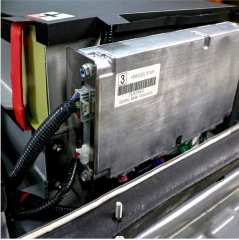
How to Choose the Right Nissan Leaf Battery: 2026 Expert Decision Guide
Are you overwhelmed by the options when trying to choose the right Nissan Leaf battery for replacement or upgrade? With dozens of packs—OEM, refurbished, advanced chemistry, and varying capacities—available for Leaf models (2010-2022), making the wrong choice can lead to wasted money, safety risks, or incompatible parts. Many Leaf owners settle for subpar batteries because they don’t know how to match their vehicle’s needs, driving habits, and budget. As CNS BATTERY experts, we break down a step-by-step framework to select the perfect battery, avoid common pitfalls, and ensure long-term reliability.
Step 1: Match the Battery to Your Nissan Leaf Model & Generation
The first rule of choosing the right Nissan Leaf battery is prioritizing model compatibility. Leaf generations have distinct battery architectures, and using an incompatible pack leads to electrical failures or permanent damage.
First-Generation Leaf (ZE0: 2010-2017)
ZE0 models feature passive-cooled 24kWh or 30kWh packs operating on 360V. Avoid liquid-cooled packs—they won’t fit the passive cooling compartment. Opt for direct-fit 24kWh/30kWh options (like CNS sodium-ion) or upgrade to 30kWh if you want more range without modifying the electrical system.
Second-Generation Leaf (ZE1: 2018-2022)
ZE1 standard models use 40kWh liquid-cooled 360V packs, while Leaf e+ variants (2019-2022) have 62kWh 350V liquid-cooled packs. 40kWh ZE1 owners can upgrade to 62kWh with a CAN-bridge adapter, but ensure the battery integrates with the Leaf’s liquid cooling system and BMS.
Critical Compatibility Checks
Always verify voltage (360V vs. 350V), cooling type (passive vs. liquid), and battery dimensions. Reputable providers like CNS label packs by Leaf generation, but ask for model-specific compatibility documents to avoid mistakes.
Step 2: Define Your Range & Performance Needs
Your daily driving habits dictate the ideal battery capacity and chemistry. Choosing a pack that aligns with your needs prevents overpaying for unused range or settling for insufficient power.
Daily Commute & Range Requirements
If you drive 20-40 miles daily, a 24kWh (ZE0) or 40kWh (ZE1) pack suffices. For commutes over 50 miles or road trips, upgrade to 30kWh (ZE0) or 62kWh (ZE1) to avoid frequent charging. CNS sodium-ion packs deliver consistent real-world range—90% of rated capacity—unlike degraded lithium-ion options.
Climate Considerations
Cold weather (below 0℃) cripples lithium-ion performance. If you live in northern regions, choose sodium-ion (90% capacity retention at -20℃) over NCM lithium-ion (65% retention) or LFP (70% retention). For mild southern climates, LFP offers a budget-friendly, safe alternative.
Charging Habits
Frequent fast-charging accelerates lithium-ion degradation. Sodium-ion and LFP packs resist fast-charging stress better than NCM lithium-ion. If you rely on public fast chargers, prioritize these chemistries to extend battery lifespan.
Step 3: Evaluate Battery Chemistry Options
Battery chemistry impacts safety, longevity, performance, and cost. Understanding the pros and cons of each type helps you choose the right Nissan Leaf battery for your priorities.
1. Sodium-Ion (Best All-Round Choice)
CNS sodium-ion packs excel in safety (no thermal runaway), all-climate performance, and longevity (6-8 year lifespan). They match OEM energy density, deliver consistent range, and cost 15-20% less than OEM lithium-ion. Ideal for owners seeking balanced performance and value.
2. Lithium-Ion (NCM/OEM)
OEM NCM lithium-ion offers good energy density but suffers from rapid degradation (3-4 year lifespan) and poor cold-weather performance. Choose only if you prioritize factory-matching and plan to replace the battery frequently.
3. Lithium-Iron-Phosphate (LFP) (Budget-Friendly)
LFP is safe and affordable but has lower energy density (reduced range) and poor cold-weather performance. Best for budget-conscious owners in mild climates who drive short distances.
4. Semi-Solid (Premium Tech)
Semi-solid packs offer fast charging and high range but are expensive ($15k+) and have shorter lifespans (4-5 years). Suitable for tech-focused owners with large budgets who prioritize cutting-edge features.
Step 4: Prioritize Quality & Reliability (Avoid Risks)
Cheap, uncertified batteries lead to costly failures. When choosing the right Nissan Leaf battery, prioritize quality indicators to ensure safety and longevity.
Certifications & Testing
Select packs certified for Leaf models (ASE L3, EVITP) with documented cell testing, insulation checks, and BMS calibration. CNS tests every pack for voltage balance, thermal stability, and compatibility before installation.
Warranty Coverage
A strong warranty reflects battery quality. Aim for 2-3 years of coverage (CNS offers 3 years) that includes capacity loss, defects, and labor. Avoid packs with no warranty or limited coverage (less than 1 year)—they’re likely untested.
Avoid Ultra-Cheap Uncertified Packs
Packs under $5,000 (ZE0) or $8,000 (ZE1) use salvaged cells with unknown degradation. They skip safety testing, leading to fires, BMS errors, or premature failure. These false economy options cost more in repairs long-term.
Step 5: Balance Budget & Long-Term Value
The right Nissan Leaf battery isn’t just the cheapest—it’s the one that delivers value over its lifespan. Consider total ownership cost, not just upfront price.
Upfront Cost vs. Lifespan
A $6,595 CNS sodium-ion pack (ZE0 24kWh) lasts 6-8 years, while a $4,895 LFP pack lasts 3-4 years. Over a decade, sodium-ion costs $6,595 vs. $9,790 for two LFP replacements—saving $3,195.
Core Rebates & Hidden Fees
Factor in core rebates ($600-$1,200) for your old battery to reduce net cost. Avoid providers that add hidden fees for installation, BMS calibration, or cooling system service—CNS includes all services in the total price.
Frequently Asked Questions (FAQ) About Choosing Leaf Batteries
Will choosing a non-OEM battery void my Leaf’s warranty?
No. The Federal Magnuson-Moss Warranty Act protects non-battery components (motor, controller). CNS provides certified installation records, preserving factory coverage. Our 3-year warranty complements any remaining protection.
Is it better to upgrade capacity or replace with the same size?
Upgrade if your current range is insufficient for daily needs. For ZE0 24kWh owners, a 30kWh upgrade adds 30+ miles. ZE1 40kWh owners can upgrade to 62kWh for Leaf e+ range. Stick to the same size if your range needs are met—its more cost-effective.
How do I verify a battery’s State of Health (SOH) before buying?
Ask for SOH test reports (via Leaf Spy or Nissan OBD-II scanner). New packs should have 95%+ SOH, while certified refurbished packs should be 90%+. Avoid packs with SOH below 85%—they’re already degraded.
Should I choose a remanufactured or new battery?
New packs (like CNS sodium-ion) offer better longevity and performance. Remanufactured packs are cheaper but retain lithium-ion’s flaws. Choose remanufactured only if you plan to keep your Leaf for 2-3 more years.
Choose the Right Nissan Leaf Battery With CNS Expertise
Choosing the right Nissan Leaf battery doesn’t have to be complicated—follow our framework to match your model, needs, and budget. CNS BATTERY’s sodium-ion packs deliver the perfect balance of compatibility, performance, safety, and value, outperforming OEM, LFP, and generic alternatives. Don’t risk costly mistakes with incompatible or low-quality packs. 立即访问https://cnsbattery.com/nissan-leaf-battery/,获取独家折扣并咨询专家升级方案! Let our team help you select and install the ideal battery for your Nissan Leaf.