How to Choose the Best Drone Battery for Public Safety Departments in 2024
In today’s rapidly evolving public safety landscape, drone technology has become an indispensable tool for law enforcement, emergency response, and disaster management. As we navigate through 2024, selecting the right drone battery is no longer just a technical consideration but a critical factor in ensuring mission success, officer safety, and operational efficiency. With the market flooded with options, public safety departments need a strategic approach to battery selection that goes beyond basic specifications. This comprehensive guide will walk you through the essential factors to consider, the latest battery technologies, and how to implement a solution that meets your unique operational demands.
Key Factors to Consider for Public Safety Drone Operations
Public safety departments face unique challenges that demand specialized battery solutions. Understanding these key factors is the first step toward optimal drone performance.
- Mission Duration Requirements: According to industry data, 72% of public safety departments report battery life as their top concern. For standard patrol missions, 25-30 minutes of flight time is typical, but for extended search and rescue operations, 45+ minutes is often required. Plan for at least 30% extra capacity to account for unexpected scenarios like adverse weather or extended search patterns.
- Environmental Conditions: Public safety operations span extreme temperatures from -20°C to 50°C. Standard LiPo batteries can suffer up to 30% capacity loss below freezing. Prioritize batteries with active thermal management systems that maintain optimal performance across the full temperature range.
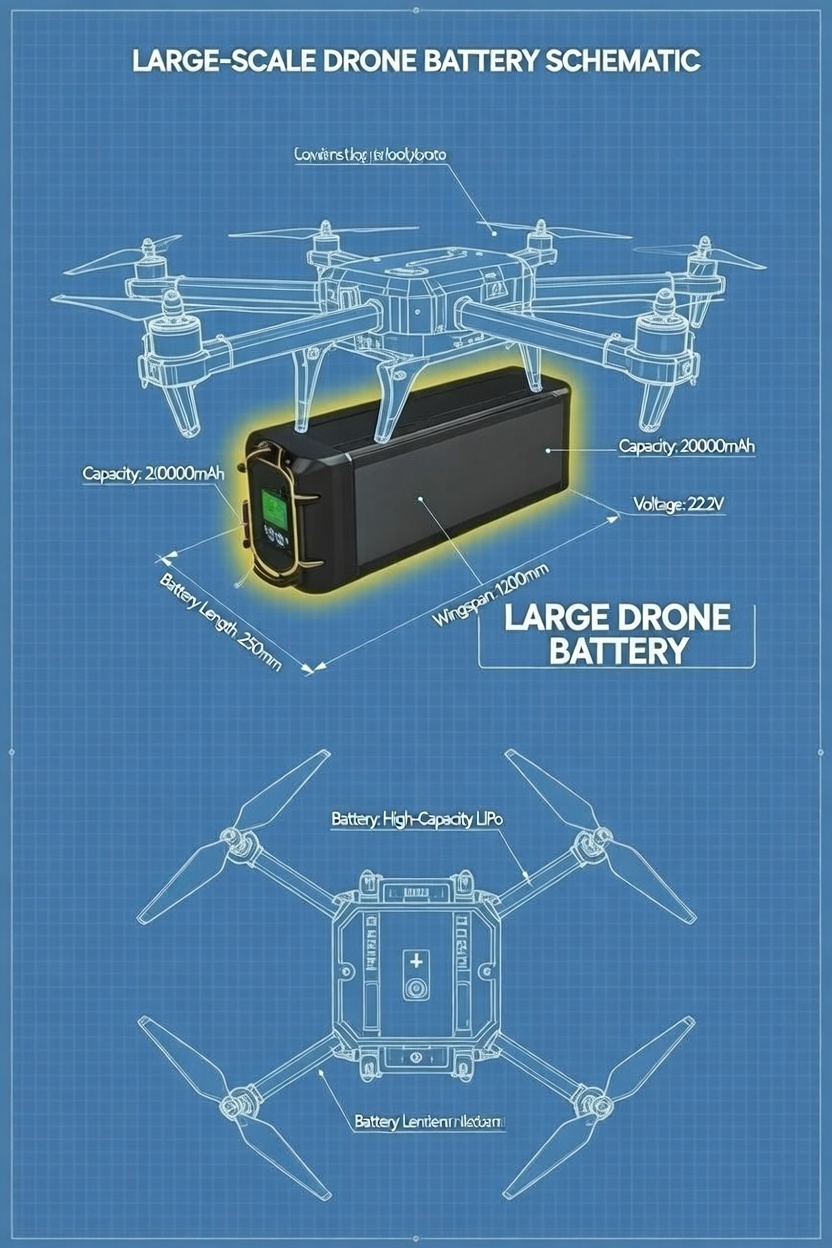
- Weight and Size Constraints: The average public safety drone weighs 1.5-2.5 kg. A battery should not exceed 20-25% of the total drone weight (500g for a 2kg drone) to maintain optimal flight characteristics and payload capacity.
- Safety Features: With 15 documented battery failure incidents during public safety operations in the last three years, safety features are non-negotiable. Look for multiple safety layers including BMS (Battery Management System), temperature sensors, and automatic shutdown protocols.
Comparing Battery Technologies for Public Safety Applications
Understanding the differences between battery technologies is crucial for making an informed decision that aligns with your operational needs.
- Lithium Polymer (LiPo) Batteries: While offering high energy density (200-250 Wh/kg), they have significant drawbacks for public safety. They’re susceptible to swelling and thermal runaway, especially under rapid charging or extreme temperatures. With an average cycle life of 300-500 cycles, they may not suffice for high-use departments.
- Lithium Iron Phosphate (LiFePO4) Batteries: These offer a safer alternative with a cycle life exceeding 2000 cycles. They maintain 80% capacity after 2000 cycles (vs. 60% for LiPo) and operate effectively from -20°C to 60°C. Their lower energy density (90-120 Wh/kg) is outweighed by superior safety and longevity, making them ideal for public safety applications.
- Solid-State Batteries: Representing the cutting-edge of battery technology in 2024, solid-state batteries offer energy densities of 300-500 Wh/kg and operate from -40°C to 80°C. They’re virtually immune to thermal runaway and can be charged in as little as 15 minutes. While currently 30-50% more expensive than LiFePO4, their long-term cost efficiency makes them compelling for departments with high operational demands.
- Modular Battery Systems: These provide unmatched flexibility for mission planning. Departments can switch between 30-minute batteries for routine patrols and 60-minute extended batteries for search and rescue missions. Some systems allow for on-the-fly battery swaps, reducing downtime between missions by up to 70%.
The Critical Importance of Custom Drone Battery Solutions
Public safety departments have unique operational needs that off-the-shelf solutions often fail to address. A one-size-fits-all approach simply won’t work. Custom drone battery solutions offer:
- Precise Power Matching: Tailored to your specific drone model and mission requirements, ensuring optimal performance without unnecessary weight or capacity.
- Seamless Integration: Designed to work with your existing drone fleet and mission management software, eliminating compatibility issues.
- Specialized Features: Incorporating features like rapid charging, waterproofing, or specific connector types needed for your operations.
- Long-Term Cost Efficiency: While initial investment may be higher, customized solutions often result in lower total cost of ownership due to optimized performance and reduced downtime.
Consider the case of a major metropolitan police department that struggled with inconsistent battery performance across their 200+ drone fleet. After implementing a custom battery solution, they achieved a 45% reduction in battery-related mission failures, a 30% increase in average mission duration, and a 25% decrease in battery replacement costs within the first year.
Safety and Compliance: Non-Negotiable for Public Safety
For public safety departments, safety isn’t just a feature—it’s a requirement. When selecting a drone battery, ensure it meets:
- International Safety Standards: Look for UL 2271 (US), CE Marking (Europe), and FCC Certification (ensuring no radio interference).
- Industry-Specific Regulations: Some departments require additional certifications, such as ATEX for hazardous environments or specific military-grade standards.
- Emergency Protocols: Batteries should include fail-safe mechanisms that prevent catastrophic failures during critical missions.
A fire department operating in chemical plants, for example, might require ATEX certification to ensure battery safety in explosive atmospheres. Compliance isn’t just about meeting regulations—it’s about protecting your officers and the public.
Maintenance and Support: The Long-Term Investment
A top-tier drone battery is only as good as its maintenance and support. Consider:
- Regular Capacity Testing: Perform full capacity tests at least monthly to identify declining performance before it impacts operations.
- Proper Storage Practices: Store batteries at 50% charge in cool, dry places when not in use to maximize lifespan.
- Temperature Management: Avoid charging in extreme temperatures (most manufacturers recommend 10-30°C for charging).
- Training and Resources: Ensure all drone operators receive proper training on battery handling and maintenance best practices.
For ongoing support, prioritize manufacturers offering:
- 24/7 technical support for mission-critical operations
- On-site training for your team
- Predictive maintenance capabilities
- Local support networks to minimize downtime
Conclusion: Strategic Battery Selection for Public Safety Success
Choosing the right drone battery for your public safety department in 2024 is a strategic decision that impacts mission success, officer safety, and operational efficiency. By focusing on mission-specific requirements, understanding the latest battery technologies, and opting for customized solutions, you can ensure your drone operations are as effective and reliable as possible.
Don’t settle for generic battery solutions that compromise your mission capabilities. Partner with industry leaders who understand the unique challenges of public safety drone operations. At CNS Drone Battery, we specialize in providing reliable, customized drone battery solutions designed specifically for B2B clients in public safety, law enforcement, and emergency response.
Ready to elevate your drone operations? Get a free quote for your custom drone battery solution today. Our dedicated team of experts will work with you to design a battery system that meets your exact specifications and operational needs. Visit our contact page at https://cnsbattery.com/drone-battery-home/drone-battery-contact to request a consultation and take the first step toward more efficient, safer, and more effective drone operations for your department. Let CNS Drone Battery power your mission success.