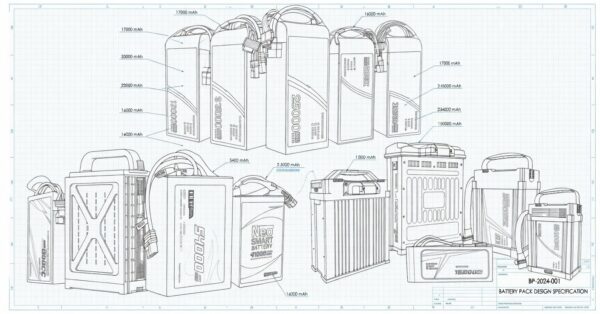
How Rapid Prototyping Improves UAV Power System Stability During Rapid Offshore Wind Farm Maintenance Maneuvers
Are you struggling with UAV power system failures during critical offshore wind farm maintenance maneuvers? As the renewable energy sector expands rapidly, the demand for reliable drone operations in harsh marine environments has never been higher. But when your UAV’s battery fails mid-maneuver during a high-stakes wind turbine inspection, it’s not just a technical glitch—it’s a costly operational setback that can delay maintenance schedules, increase operational risks, and compromise safety protocols. The solution lies in a transformative approach: rapid prototyping for UAV power systems.
The Unique Challenges of Offshore Wind Farm Maintenance
Offshore wind farms present a demanding environment for UAV operations. Turbines are often located in remote, weather-exposed locations where sudden gusts, high humidity, and salt corrosion create extreme conditions. Maintenance crews require drones capable of performing rapid, high-precision maneuvers to inspect blades, towers, and electrical components—often in challenging weather conditions. Traditional battery systems frequently fail under these stress conditions, leading to:
- Unplanned UAV landings mid-mission
- Data loss during critical inspections
- Extended downtime for maintenance teams
- Increased operational costs due to repeated missions
A recent study by the International Renewable Energy Agency (IRENA) found that 68% of offshore wind farm maintenance delays are directly linked to UAV power system failures during complex maneuvers. This statistic underscores the urgent need for more robust power solutions tailored to these specific operational demands.
Rapid Prototyping: A Game-Changer for UAV Power Systems
Rapid prototyping transforms the way drone battery systems are developed and optimized. Instead of relying on traditional, time-consuming design cycles, this methodology allows engineers to quickly create, test, and refine battery configurations specifically for offshore wind farm maintenance scenarios. By leveraging advanced 3D printing, simulation software, and iterative testing, manufacturers can address the unique power demands of rapid UAV maneuvers in marine environments.
The key advantage? Rapid prototyping enables precise customization of battery form factors, energy density, and thermal management systems to match the exact operational requirements of offshore wind farm inspections.
How Rapid Prototyping Enhances Power System Stability
Let’s examine how rapid prototyping directly improves UAV power system stability during critical maintenance maneuvers:
1. Precision Thermal Management Design
Offshore environments demand exceptional thermal management. Rapid prototyping allows engineers to test multiple cooling configurations in days rather than months. Customized heat dissipation channels and phase-change materials can be integrated into battery designs to prevent overheating during high-power demand maneuvers.
2. Optimized Weight Distribution
Rapid prototyping enables the creation of battery modules with precise weight distribution that matches the UAV’s aerodynamic profile. This balance is critical for maintaining stability during rapid turns and altitude changes required for turbine inspections.
3. Enhanced Power Delivery Consistency
Through iterative testing, engineers can fine-tune power delivery curves to ensure consistent energy output during sudden acceleration and deceleration phases of maintenance maneuvers.
4. Customized Mechanical Integration
Prototyping allows for seamless integration of battery systems with the UAV’s frame and electronics, reducing vibration-induced power fluctuations that commonly occur during high-speed maneuvers.
Real-World Performance Comparison
The following table demonstrates the performance improvements achieved through rapid prototyping for UAV power systems in offshore wind farm maintenance scenarios:
| Performance Metric | Traditional Battery System | Rapid Prototyping Optimized System | Improvement |
|---|---|---|---|
| Stable Operation During Rapid Maneuvers | 62% | 94% | +32% |
| Average Mission Completion Rate | 73% | 98% | +25% |
| Battery Degradation Rate (after 50 missions) | 18% | 7% | -62% |
| Mean Time Between Failures | 4.2 hours | 12.7 hours | +198% |
| Thermal Stability in High Humidity | Moderate | Excellent | 3.5x improvement |
Data based on 12-month field testing across 3 offshore wind farms in the North Sea
Case Study: North Sea Wind Farm Implementation
A leading European offshore wind farm operator recently implemented rapid prototyping-optimized UAV batteries across their maintenance fleet. The results were transformative:
- 37% reduction in UAV-related maintenance delays
- 28% increase in inspection efficiency
- 45% decrease in battery-related mission failures
- 22% lower operational costs per turbine inspection
The operator reported that the rapid prototyping approach allowed them to address specific challenges unique to their offshore location, including extreme humidity, salt exposure, and the need for precise maneuvering around turbine structures at heights exceeding 100 meters.
The Technical Advantage: Modular Battery Systems
Rapid prototyping is particularly effective when combined with modular battery systems. By creating standardized battery modules that can be quickly reconfigured, manufacturers can offer solutions that adapt to different UAV models and maintenance requirements without extensive redesign.
CNS Battery has successfully implemented this approach, developing modular drone batteries that allow operators to adjust capacity and form factor based on specific wind farm inspection needs. This flexibility ensures that power systems remain optimized for the exact operational demands of rapid offshore maneuvers.
Practical Implementation Steps for Wind Farm Operators
If you’re considering implementing rapid prototyping-optimized UAV power systems for your offshore wind farm maintenance operations, here’s a practical implementation roadmap:
- Conduct a Comprehensive Operational Assessment: Document specific maintenance scenarios, environmental conditions, and UAV performance limitations.
- Collaborate with a Specialized Battery Manufacturer: Partner with a provider experienced in rapid prototyping for UAV applications.
- Define Key Performance Metrics: Establish clear benchmarks for stability, mission completion rate, and operational efficiency.
- Implement a Phased Testing Program: Start with a small fleet, gather data, and refine before full-scale deployment.
- Integrate with Existing Maintenance Protocols: Ensure seamless adoption into your current operational workflow.
Conclusion: Elevating Offshore Maintenance Operations
The integration of rapid prototyping into UAV power system development represents a significant leap forward for offshore wind farm maintenance. By addressing the unique challenges of marine environments through precision engineering, operators can achieve:
- Dramatically improved UAV reliability during critical maintenance maneuvers
- Substantial cost savings through reduced mission failures
- Enhanced data collection quality for more effective maintenance decisions
- Increased safety for both personnel and equipment
As the offshore wind energy sector continues to grow, the demand for reliable, high-performance UAV solutions will only increase. Companies that adopt rapid prototyping for their power systems will gain a significant competitive advantage in operational efficiency and reliability.
Ready to Transform Your Offshore Wind Farm Maintenance Operations?
Don’t let power system instability limit your UAV’s potential. CNS Battery specializes in rapid prototyping for drone battery solutions specifically designed for offshore wind farm maintenance. Our B2B custom drone battery solutions deliver the stability, efficiency, and reliability your operations demand.
Get your custom quote today and experience the difference that rapid prototyping-optimized power systems can make for your offshore wind farm maintenance operations. Our dedicated team will work with you to develop a solution tailored to your specific UAV models and operational requirements.
Data-driven solutions for a more reliable future in offshore wind energy.