Introduction
The low-altitude economy is experiencing unprecedented growth in 2026, with the global market projected to exceed 800 billion yuan. As electric vertical take-off and landing (eVTOL) vehicles, industrial drones, and unmanned aerial vehicles (UAVs) transition from concept to commercial reality, the demand for reliable power solutions has never been more critical. This strategic guide explores the essential partnership between low-altitude aircraft developers and drone battery suppliers, emphasizing technical compatibility as the cornerstone of successful collaboration. Whether you’re manufacturing delivery drones, surveillance UAVs, or passenger eVTOLs, understanding battery specifications, safety standards, and integration requirements will determine your competitive edge in this rapidly evolving industry.
The Low-Altitude Aircraft Revolution: Market Dynamics in 2026
The year 2026 marks a pivotal turning point for the low-altitude economy. Regulatory frameworks have matured significantly, with aviation authorities in China, Europe, and the United States establishing comprehensive airworthiness standards for unmanned systems weighing between 150kg and 5700kg. Guangdong Province alone hosts over 2,000 low-altitude aircraft manufacturers, accounting for 90% of China’s total drone production.
Key Market Drivers:
- Regulatory Clarity: New airworthiness certification pathways enable commercial operations
- Technology Maturation: Solid-state batteries now offer 400+ km range for hybrid eVTOL architectures
- Infrastructure Expansion: Shenzhen plans 1,200 vertiports and 1,000 flight routes by 2026
- Investment Surge: Global eVTOL orders reached 17,500 units in 2025, with 60% from Chinese customers
This explosive growth creates immense opportunities for drone battery suppliers who can deliver technically compatible, certified power solutions at scale.
Technical Compatibility: The Make-or-Break Factor
Technical compatibility between aircraft systems and battery packs determines flight safety, operational efficiency, and certification success. Incompatible power systems lead to reduced flight time, increased maintenance costs, and potential regulatory rejection.
Critical Compatibility Parameters
Voltage and Capacity Matching:
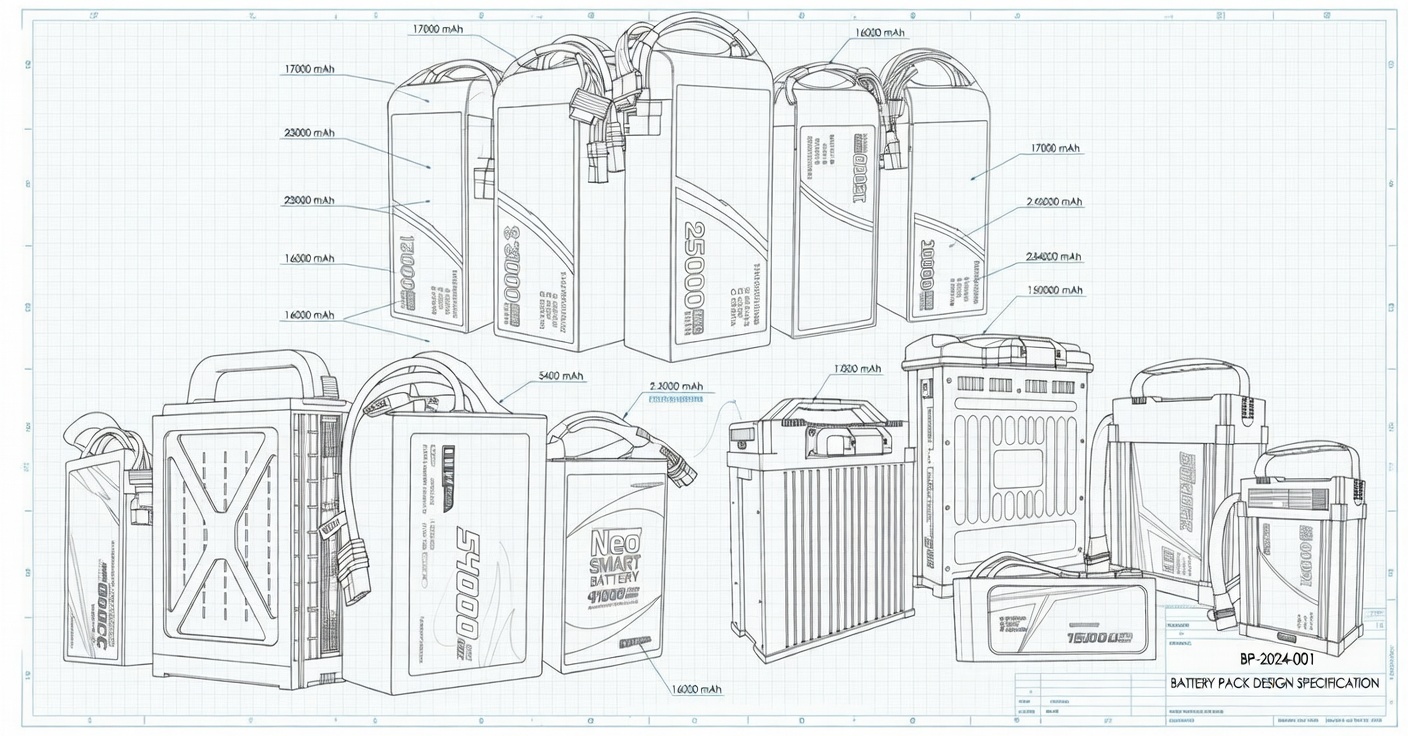
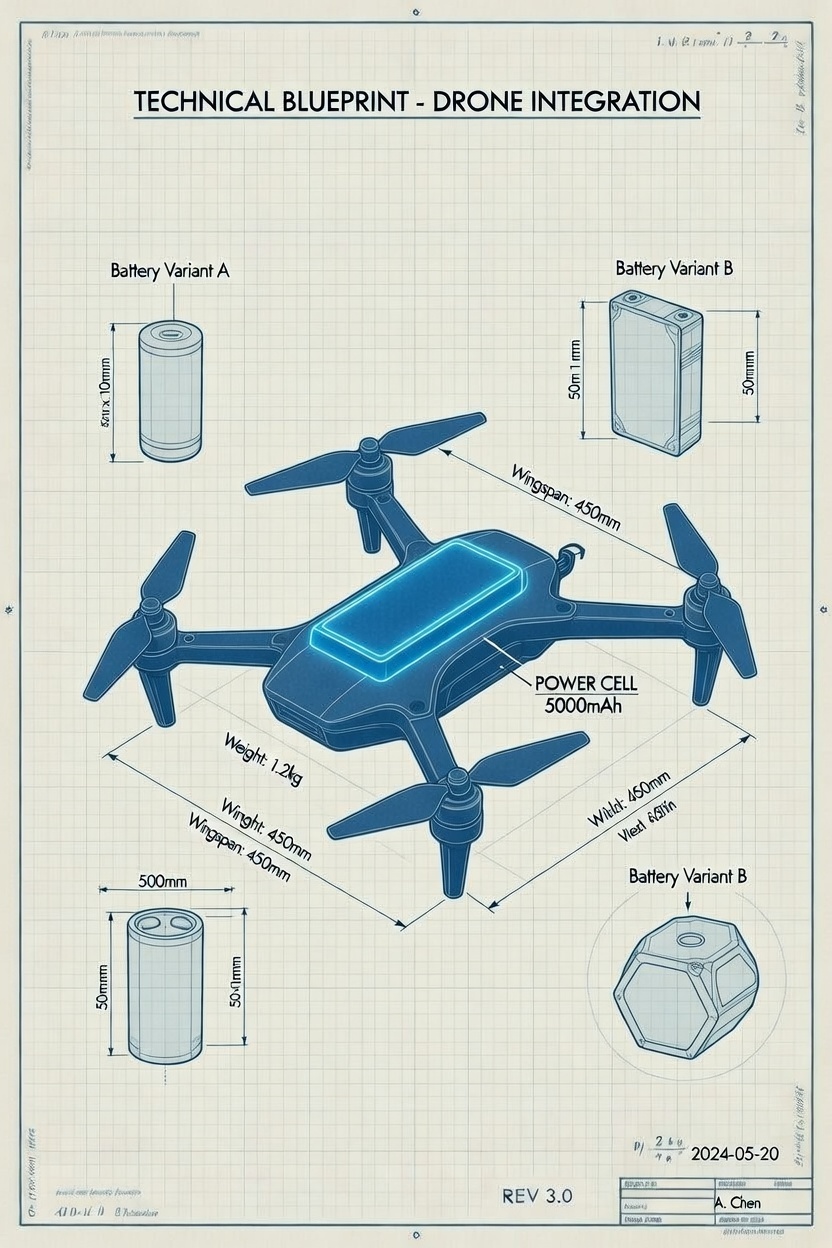
Low-altitude aircraft require precise voltage configurations. Common setups include 6S (22.2V) for small drones, 12S (44.4V) for medium UAVs, and custom high-voltage packs (100V+) for eVTOLs. Capacity must align with mission profiles—3600mAh for short-range inspection drones versus 200kWh+ for passenger vehicles.
Battery Chemistry Selection:
- Lithium Polymer (LiPo): High discharge rates (60C+), ideal for agile drones
- Lithium Iron Phosphate (LFP): 4000+ cycle life, excellent for stationary charging stations
- Solid-State Batteries: Emerging standard for eVTOLs, offering superior energy density and thermal stability
Communication Protocols:
Modern intelligent batteries feature BMS (Battery Management System) communication via CAN bus, SMBus, or proprietary protocols. Drone battery suppliers must ensure seamless data exchange for real-time monitoring of voltage, current, temperature, and state-of-charge.
Physical Integration:
Battery dimensions, mounting points, and connector types must match aircraft design specifications. Custom form factors often required for eVTOL distributed electric propulsion systems.
Selecting the Right Drone Battery Suppliers: Strategic Criteria
Not all drone battery suppliers possess the capabilities required for low-altitude aircraft applications. Evaluate potential partners against these essential criteria:
Certification and Compliance
- UN38.3 Testing: Mandatory for air transport of lithium batteries
- MSDS Documentation: Chemical safety data for regulatory submissions
- Aviation Certifications: EASA, FAA, or CAAC approval for aviation-grade cells
- ISO 9001: Quality management system certification
Technical Capabilities
- Custom Pack Design: Ability to engineer bespoke solutions for unique aircraft configurations
- BMS Development: In-house battery management system engineering
- Thermal Management: Active or passive cooling solutions for high-power applications
- Testing Facilities: In-house cycle testing, vibration testing, and environmental chambers
Production Capacity
- Scalability: Can the supplier meet volume requirements as production ramps?
- Lead Times: Typical delivery schedules for prototype and production quantities
- Supply Chain Resilience: Multiple cell sourcing options to mitigate shortages
Management Tips for Aircraft-Battery Integration Projects
Successful collaboration between low-altitude aircraft developers and drone battery suppliers requires structured project management. Implement these best practices:
• Establish Cross-Functional Teams Early
Create joint working groups including electrical engineers, safety specialists, and procurement managers from both organizations. Weekly sync meetings prevent misalignment on specifications and timelines.
• Define Compatibility Requirements in Writing
Document all technical parameters—voltage tolerance, maximum discharge rates, operating temperature ranges, communication protocols—in a formal specification sheet. This becomes the single source of truth throughout development.
• Implement Iterative Testing Protocols
Conduct bench testing, ground testing, and flight testing in sequential phases. Each stage validates different aspects of technical compatibility before advancing to the next.
• Plan for Certification from Day One
Engage regulatory consultants early. Airworthiness certification requires extensive documentation of battery safety, performance, and failure modes. Retroactive compliance efforts cost 3-5x more than integrated approaches.
• Build Redundancy into Supply Chains
Qualify multiple drone battery suppliers for critical components. Single-source dependencies create vulnerability to production delays and price fluctuations.
• Monitor Battery Performance in Operation
Deploy telemetry systems to track battery health across your fleet. Real-world data informs future procurement decisions and identifies potential issues before failures occur.
Emerging Technologies Shaping the Future
The battery landscape for low-altitude aircraft continues evolving rapidly. Stay informed about these breakthrough technologies:
Solid-State Batteries: Ganfeng Lithium and other manufacturers have achieved small-batch production of 10Ah solid-state cells. These offer 50% higher energy density than conventional lithium-ion, with dramatically improved safety profiles—critical for urban air mobility applications.
Hybrid Power Systems: Honda’s eVTOL program demonstrates 400km range through hybrid architectures combining batteries with conventional generators. This approach addresses current energy density limitations while maintaining electric propulsion benefits.
Fast-Charging Infrastructure: DJI’s Power 1000 V2 system supports connecting up to five expansion batteries, delivering 11kWh total capacity. Similar scalable charging solutions enable rapid turnaround for commercial drone operations.
Smart Battery Analytics: AI-powered battery health prediction extends service life and prevents in-flight failures. Drone battery suppliers increasingly offer cloud-connected BMS platforms for fleet-wide monitoring.
Conclusion: Building Strategic Partnerships for Success
The low-altitude economy’s explosive growth presents extraordinary opportunities for low-altitude aircraft developers and drone battery suppliers who prioritize technical compatibility from the outset. Success requires more than transactional purchasing—it demands deep collaboration, shared risk management, and joint investment in certification and testing.
As 2026 unfolds as the definitive year for eVTOL commercialization, companies that establish robust battery supply partnerships today will dominate tomorrow’s skies. The regulatory framework is now clear, the technology is proven, and the market demand is undeniable. The question isn’t whether to invest in low-altitude aviation—it’s whether your power system partnerships are ready for takeoff.
Call to Action
Ready to secure technically compatible battery solutions for your low-altitude aircraft projects? Our team specializes in custom drone battery packs designed for UAV, eVTOL, and industrial drone applications. We offer comprehensive support from prototype development through mass production, with full certification documentation for global regulatory compliance.
Contact us today to discuss your specific requirements and discover how our drone battery solutions can accelerate your path to commercial deployment. Visit our contact page at https://cnsbattery.com/drone-battery-home/drone-battery-contact to connect with our engineering team and request a customized quotation.
The future of flight is electric—and it’s taking off now. Position your company at the forefront of this revolution with battery partnerships built on technical excellence, regulatory compliance, and unwavering reliability.