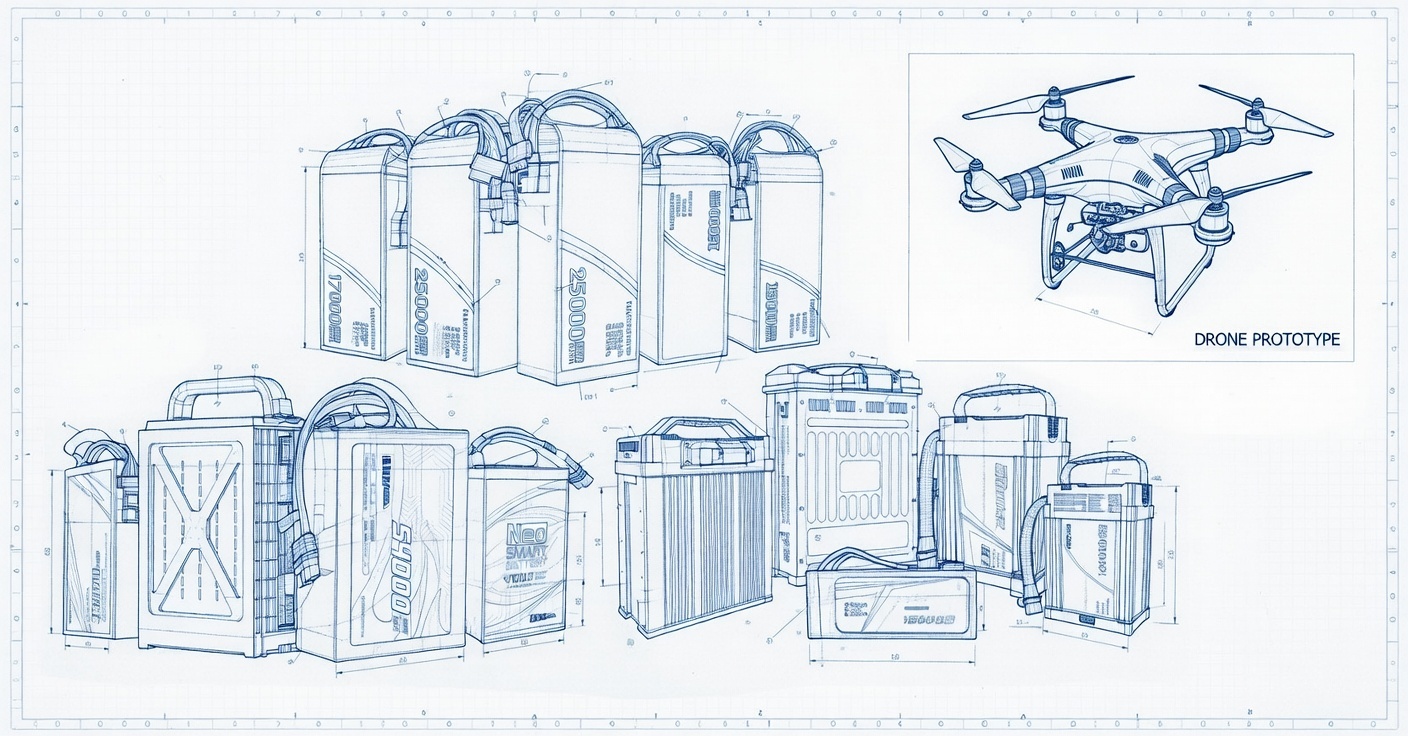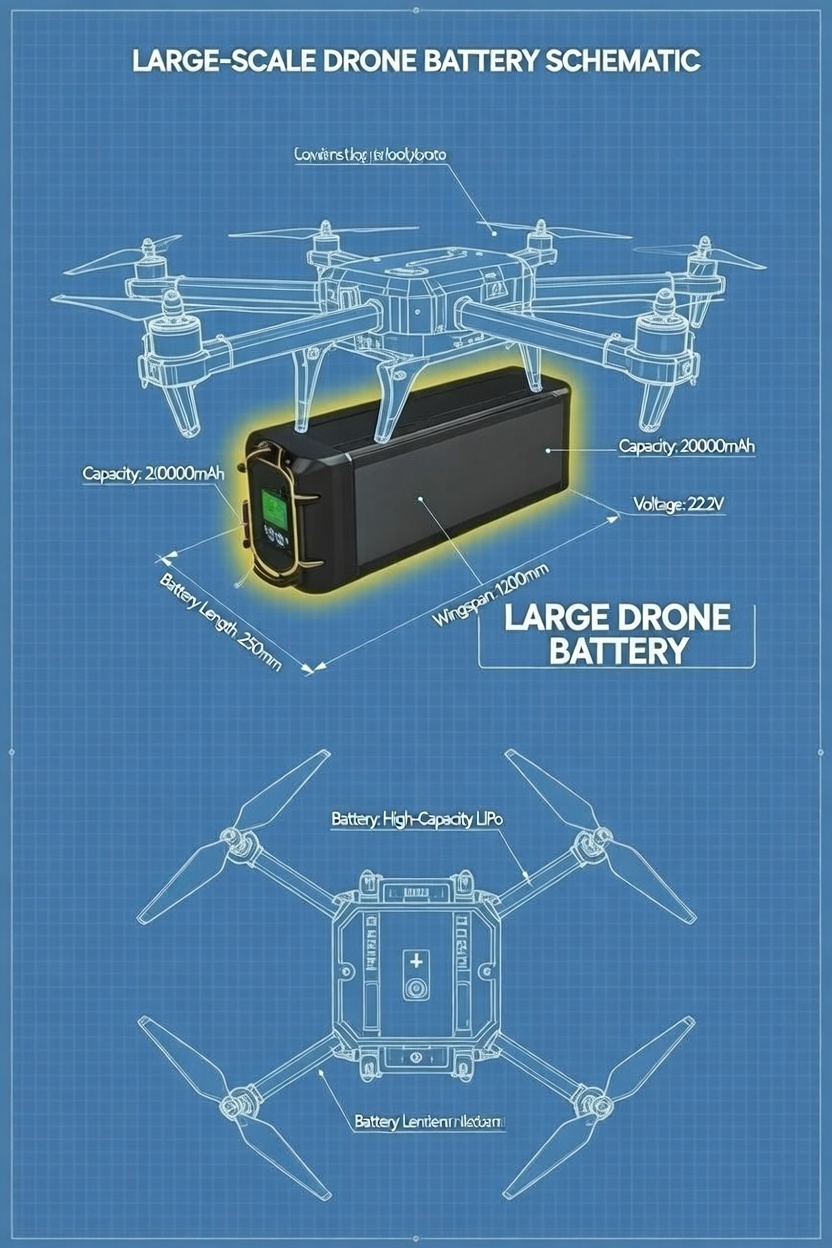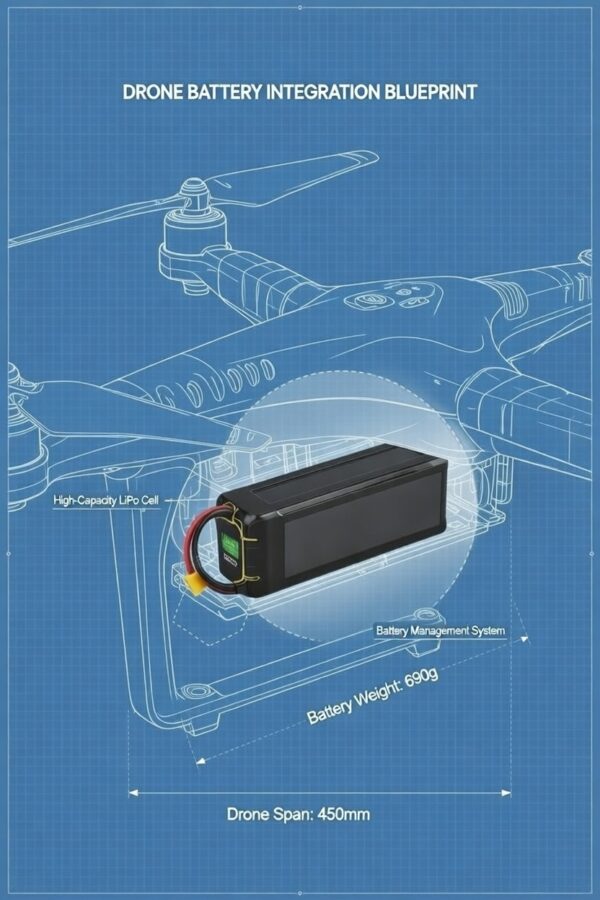
The commercial drone industry is experiencing unprecedented growth, with logistics and delivery companies leading the charge in adopting unmanned aerial vehicles (UAVs) for last-mile delivery, warehouse management, and inventory tracking. However, one critical component often overlooked in procurement decisions is the drone battery—and more importantly, the Total Cost of Ownership (TCO) associated with battery selection.
Diagnosing the Hidden Costs in Drone Battery Procurement
Many logistics companies make a common mistake: they focus solely on the upfront purchase price of drone batteries without considering the full lifecycle costs. This narrow approach leads to unexpected expenses that can erode profit margins and operational efficiency.
The Real Cost Breakdown
When evaluating drone battery suppliers, logistics managers must account for several hidden cost factors:
Initial Acquisition Costs: While the sticker price matters, it represents only 20-30% of the total battery investment over its operational lifetime.
Replacement Cycle Expenses: Commercial drone batteries typically last 300-500 charge cycles before capacity degradation becomes significant. High-quality lithium polymer batteries may extend this to 800+ cycles, dramatically reducing replacement frequency.
Downtime Costs: Every minute a delivery drone is grounded for battery charging or replacement represents lost revenue. Premium battery suppliers offer fast-charging solutions and battery management systems that minimize operational interruptions.
Safety and Compliance Costs: With 2026 aviation regulations requiring stricter battery transportation standards (including 30% state-of-charge limits for air shipping), non-compliant batteries can result in costly delays and regulatory penalties.
Performance Degradation: Lower-quality batteries experience faster capacity loss, requiring more frequent charging cycles and reducing delivery range over time. This directly impacts route planning efficiency and fuel consumption.
List-Based Solutions: Selecting the Right Drone Battery Supplier for Your Logistics Operation
Based on industry research and technical analysis, here are the key criteria logistics and delivery companies should use when evaluating drone battery suppliers with TCO in mind:
1. Evaluate Battery Chemistry and Energy Density
High-capacity lithium polymer (Li-Po) and emerging lithium manganese iron phosphate (LMFP) technologies offer superior energy density compared to traditional options. Look for suppliers providing:
- Energy density exceeding 250 Wh/kg for extended flight times
- Stable discharge rates supporting heavy payload deliveries
- Temperature resilience for varied operational environments
2. Assess Cycle Life and Warranty Terms
Request detailed cycle life documentation from potential suppliers. Quality indicators include:
- Minimum 500 charge cycles at 80% capacity retention
- Comprehensive warranty covering performance degradation
- Clear replacement policies and turnaround times
3. Verify Safety Certifications and Compliance
Ensure batteries meet international transportation and aviation standards:
- UN 38.3 certification for safe transport
- IATA DGR compliance for air shipping
- ISO 9001 quality management certification
- Regional regulatory approvals (FAA, EASA, CAAC)
4. Analyze Charging Infrastructure Compatibility
Battery systems should integrate seamlessly with your existing operations:
- Fast-charging capabilities (80% charge in under 60 minutes)
- Smart battery management systems (BMS) for health monitoring
- Compatibility with automated charging stations
- Scalable solutions for fleet expansion
5. Calculate True TCO Using Standardized Metrics
Develop a TCO model incorporating:
- Purchase price per battery unit
- Expected cycle life and replacement schedule
- Charging electricity costs
- Maintenance and inspection expenses
- Downtime cost per operational hour
- Disposal and recycling fees
6. Prioritize Supplier Technical Support
Reliable suppliers offer:
- Dedicated account management for logistics clients
- On-site training for battery handling and maintenance
- 24/7 technical support for operational issues
- Regular performance audits and optimization recommendations
7. Consider Supply Chain Reliability
Evaluate supplier stability through:
- Manufacturing capacity and lead times
- Raw material sourcing transparency
- Geographic distribution of production facilities
- Backup inventory availability for urgent replacements
Technical Reference: TCO Calculation Framework
For logistics companies seeking quantitative analysis, apply this TCO formula:
TCO = (Initial Cost + Replacement Costs + Operating Costs + Downtime Costs + Disposal Costs) / Total Operational Hours
Example calculation for a delivery fleet of 50 drones:
- Initial battery investment: $75,000 (50 drones × $1,500 per battery pack)
- Annual replacement (assuming 500 cycles, 2 replacements/year): $150,000
- Charging costs (estimated $0.15/kWh, 5 kWh per charge, 10 charges/day): $136,875 annually
- Downtime costs (2 hours/week per drone at $500/hour): $260,000 annually
- Disposal and recycling: $5,000 annually
Total Annual TCO: $626,875 or approximately $12,538 per drone annually
Premium battery suppliers may offer 20-30% higher upfront costs but reduce total TCO by 15-25% through extended cycle life, reduced downtime, and lower maintenance requirements.
Industry Trends Shaping Battery Selection in 2026
The logistics drone battery market is evolving rapidly. Key developments include:
Regulatory Changes: New 2026 aviation transportation rules require stricter battery state-of-charge limits, affecting shipping timelines and inventory management.
Technology Advancements: Manganese-rich cathode materials and solid-state battery prototypes promise 40% longer flight times and improved safety profiles.
Sustainability Pressures: Logistics companies face increasing demands for carbon-neutral operations, making battery recycling programs and energy-efficient charging critical selection criteria.
Automation Integration: Smart battery systems with IoT connectivity enable predictive maintenance, reducing unexpected failures and optimizing replacement schedules.
Summary: Making the Right Investment Decision
Selecting drone battery suppliers based on Total Cost of Ownership rather than initial price alone is essential for logistics and delivery companies seeking sustainable competitive advantages. The key takeaways include:
- Look beyond sticker price—TCO reveals the true financial impact over the battery’s operational lifetime
- Prioritize quality certifications—Compliance with international standards prevents costly regulatory issues
- Demand transparency—Suppliers should provide clear cycle life data and performance guarantees
- Factor in downtime—Operational continuity often outweighs marginal cost savings
- Plan for scalability—Choose suppliers capable of supporting fleet expansion without quality compromises
By applying these principles, logistics companies can reduce operational costs by 15-25% while improving delivery reliability and customer satisfaction.
Ready to Optimize Your Drone Battery TCO?
Every logistics operation has unique requirements based on fleet size, delivery routes, payload specifications, and operational environments. Generic solutions rarely deliver optimal results.
Contact our battery specialists today for a customized TCO analysis tailored to your specific logistics and delivery operations. Our team will evaluate your current battery procurement strategy, identify cost-saving opportunities, and recommend supplier solutions that balance performance, compliance, and total ownership costs.
Visit our contact page at https://cnsbattery.com/drone-battery-home/drone-battery-contact to schedule a consultation with our drone battery experts. Let us help you transform your battery procurement from a cost center into a strategic advantage.
This article is based on current industry standards, regulatory requirements, and technical specifications as of 2026. Battery performance may vary based on operational conditions, maintenance practices, and environmental factors. Always consult with qualified technical professionals before making procurement decisions.