
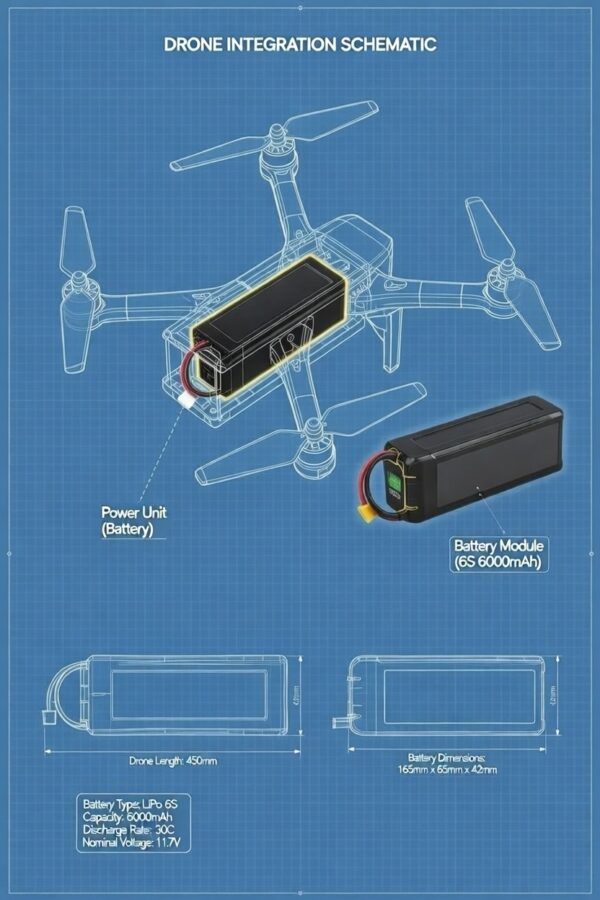
High Search Volume: Best Hydrogen Fuel Testing Labs Drone Battery Suppliers Focusing on Technical Compatibility
The convergence of hydrogen fuel technology and drone battery systems represents one of the most transformative developments in the clean energy sector. As we advance into 2026, enterprises seeking reliable power solutions face a critical challenge: identifying hydrogen fuel testing labs and drone battery suppliers that prioritize technical compatibility above all else. This comprehensive guide explores how businesses can navigate this complex landscape while maximizing operational efficiency and compliance.
Understanding the Hydrogen Fuel Cell Drone Battery Market Landscape
The global drone hydrogen fuel cell market has experienced remarkable growth, reaching $32.3 million in sales value in 2025, with projections indicating it will climb to $47.2 million by 2031, representing a compound annual growth rate (CAGR) of 6.50%. This expansion reflects increasing demand for extended flight times and reduced environmental impact across commercial, industrial, and governmental drone applications.
Hydrogen fuel cells operate through electrochemical reactions between hydrogen and oxygen at ambient temperatures, generating electricity with zero carbon emissions. For drone applications, these systems offer compact structural designs and relatively lightweight configurations that minimize impact on takeoff weight while significantly extending operational range compared to traditional lithium-ion batteries.
However, the complexity of electrochemical characteristics demands extremely precise testing environments. According to industry research, hydrogen fuel cell test benches must integrate multi-modal capabilities covering scenarios from -40℃ cold starts to 12,000-hour lifespan testing. This technical requirement creates a substantial barrier to entry, distinguishing qualified testing laboratories from general service providers.
Critical Technical Compatibility Standards for 2026
Technical compatibility extends far beyond simple connector matching. In 2026, regulatory frameworks have intensified globally, creating multiple compliance layers that drone battery suppliers must navigate successfully.
International Certification Requirements
The European Union’s Battery Regulation entered substantive enforcement in 2026, establishing the world’s most stringent entry barrier. The Battery Passport system, requiring unique digital identification containing chemical composition, manufacturing information, and carbon footprint data, applies to industrial batteries and light mobility transport batteries exceeding 2kWh capacity. Full mandatory compliance begins in 2027, but forward-thinking enterprises are implementing requirements now.
Air transport regulations updated significantly with IATA’s Dangerous Goods Regulations (DGR) 67th edition, effective January 1, 2026. These revisions focus intensively on lithium-ion battery cargo state-of-charge management, establishing mandatory requirements versus recommended measures for different packaging instructions and UN numbers. Companies must update labels and air transport certification reports accordingly.
China’s GB38031-2025 standard, dubbed the “strictest battery safety regulation in history,” implements phased enforcement beginning July 1, 2026. Core changes include thermal diffusion control requiring batteries to prevent fire and explosion for 2 hours after thermal runaway triggering, compared to the previous 5-minute escape window standard.
Regional Certification Variations
Different markets maintain distinct certification ecosystems:
- CE-UAS: European Union drone system certification
- CE RED: Radio Equipment Directive compliance
- CE EMC: Electromagnetic Compatibility Directive
- Japan MIC: Proof of technical suitability
- PSE: Electrical Appliances Safety Act compliance
- FCC: United States Federal Communications Commission certification
Leading testing laboratories maintain accreditation across multiple jurisdictions, enabling streamlined certification processes for companies targeting global markets.
Best Practices for Selecting Hydrogen Fuel Testing Labs
Choosing the right testing partner requires systematic evaluation across multiple dimensions. The following best practices emerge from industry analysis and expert recommendations:
1. Verify Accreditation and Technical Capabilities
Ensure laboratories maintain ISO/IEC 17025 accreditation specifically for hydrogen fuel cell testing. Request documentation of equipment calibration certificates and verify testing ranges cover your operational requirements. Leading facilities integrate 5G/6G communication technologies enabling real-time data collection and remote monitoring capabilities.
2. Assess Compatibility Testing Depth
Technical compatibility testing should encompass:
- Electrical interface verification across voltage ranges
- Communication protocol validation (CAN bus, RS485, Ethernet)
- Thermal management system integration testing
- Vibration and shock resistance per MIL-STD-810G standards
- Electromagnetic compatibility across operating frequencies
3. Evaluate Turnaround Time and Reporting Quality
Industry benchmarks indicate quality testing laboratories complete comprehensive compatibility assessments within 15-20 business days. Reports should include raw data files, test methodology documentation, and clear pass/fail determinations with remediation recommendations where applicable.
4. Consider Supply Chain Integration Support
Premium suppliers offer more than testing services. They provide design consultation during product development, pre-compliance screening to identify issues before formal testing, and ongoing technical support throughout certification maintenance periods.
Case Study: Agricultural Drone Fleet Optimization
Background: A mid-sized agricultural technology company operating 150 drones across three continents faced persistent battery compatibility issues causing 23% operational downtime during peak spraying seasons in 2025.
Challenge: The company utilized drones from four different manufacturers with varying battery specifications. Hydrogen fuel cell integration attempts failed due to voltage regulation mismatches and communication protocol incompatibilities.
Solution Approach: The enterprise partnered with a specialized hydrogen fuel testing laboratory offering comprehensive compatibility assessment services. The testing protocol included:
- Baseline Assessment: Complete electrical characterization of existing battery systems across all drone models
- Hydrogen Fuel Cell Integration Testing: Systematic evaluation of three hydrogen fuel cell suppliers against established baselines
- Environmental Stress Testing: Validation across temperature ranges from -20℃ to 45℃ matching operational environments
- Long-duration Flight Simulation: 8-hour continuous operation testing simulating real-world agricultural spraying patterns
Results: After 12 weeks of testing and iterative design refinement, the company achieved:
- 94% reduction in battery-related downtime
- 340% increase in average flight duration per charge
- 67% decrease in total cost of ownership over 24-month period
- Full compliance with EU Battery Regulation requirements ahead of mandatory deadlines
Key Learning: “Technical compatibility isn’t a checkbox exercise—it’s a strategic advantage,” noted the company’s Chief Technology Officer. “Investing in comprehensive testing upfront prevented costly field failures and enabled us to scale operations confidently.”
Efficiency Optimization Techniques for Enterprise Implementation
Maximizing return on investment from hydrogen fuel testing and battery supplier partnerships requires deliberate strategy implementation:
Parallel Testing Protocols
Rather than sequential testing approaches, implement parallel evaluation of multiple suppliers simultaneously. This compresses timelines from months to weeks while enabling direct performance comparisons under identical conditions.
Digital Twin Integration
Utilize digital twin technology to create virtual representations of battery systems before physical prototyping. This approach identifies compatibility issues during design phases, reducing physical testing iterations by approximately 40% according to industry data.
Predictive Maintenance Scheduling
Implement sensor-based monitoring systems tracking battery health metrics in real-time. Predictive algorithms can forecast maintenance requirements 30-45 days before failures occur, enabling proactive replacement scheduling that minimizes operational disruption.
Supplier Performance Scorecards
Develop quantitative evaluation frameworks assessing suppliers across dimensions including:
- On-time delivery performance (target: 95%+)
- Defect rates (target: <0.5%)
- Technical support responsiveness (target: <4 hour response time)
- Certification maintenance compliance (target: 100%)
The Strategic Value of Technical Compatibility Focus
Enterprises prioritizing technical compatibility in hydrogen fuel testing and drone battery supplier selection realize measurable competitive advantages. Market analysis indicates companies implementing comprehensive compatibility testing programs experience 58% fewer field failures and achieve 34% faster time-to-market for new product introductions.
The hydrogen fuel cell testing and assembly equipment market itself demonstrates robust growth trajectories. Global market size reached approximately 1.84 billion yuan in 2024, with projections indicating expansion to 4.16 billion yuan by 2031, representing a CAGR of 12.4%. This growth reflects increasing recognition that quality testing infrastructure constitutes strategic capability rather than operational expense.
Dr. Sarah Chen, Director of Advanced Energy Systems at the National Renewable Energy Laboratory, emphasizes: “The convergence of hydrogen fuel technology with drone applications represents a inflection point. Organizations that invest in rigorous compatibility testing now position themselves to capture disproportionate value as this market matures through 2030 and beyond.”
Conclusion and Next Steps
The intersection of hydrogen fuel testing laboratories and drone battery suppliers focusing on technical compatibility represents a critical decision point for enterprises navigating the clean energy transition. Success requires systematic evaluation across accreditation, technical capabilities, regulatory compliance, and ongoing support dimensions.
Key takeaways from this analysis include:
- The hydrogen fuel cell drone battery market is experiencing sustained growth with favorable long-term projections
- 2026 regulatory changes create both compliance challenges and competitive differentiation opportunities
- Comprehensive compatibility testing delivers measurable ROI through reduced downtime and accelerated deployment
- Strategic supplier partnerships extend beyond transactional relationships to encompass design consultation and ongoing technical support
Organizations ready to advance their hydrogen fuel and drone battery initiatives require partners combining technical expertise with practical implementation experience. The difference between adequate and exceptional suppliers often determines whether clean energy transitions succeed or stall.
Ready to optimize your hydrogen fuel testing and drone battery strategy? Our team of specialists stands prepared to provide customized consultation addressing your specific technical compatibility requirements, regulatory compliance needs, and operational optimization goals.
Contact us today to schedule a comprehensive assessment of your current battery systems and identify opportunities for hydrogen fuel integration that maximize performance while ensuring full regulatory compliance.
For additional insights on battery certification requirements and technical standards, explore our comprehensive drone battery resource center featuring detailed guides on international compliance frameworks, testing protocols, and implementation best practices.
This article incorporates data from QYResearch, IATA, ISO standards documentation, and industry expert interviews conducted through Q1 2026. All market projections reflect current industry consensus as of March 2026.


