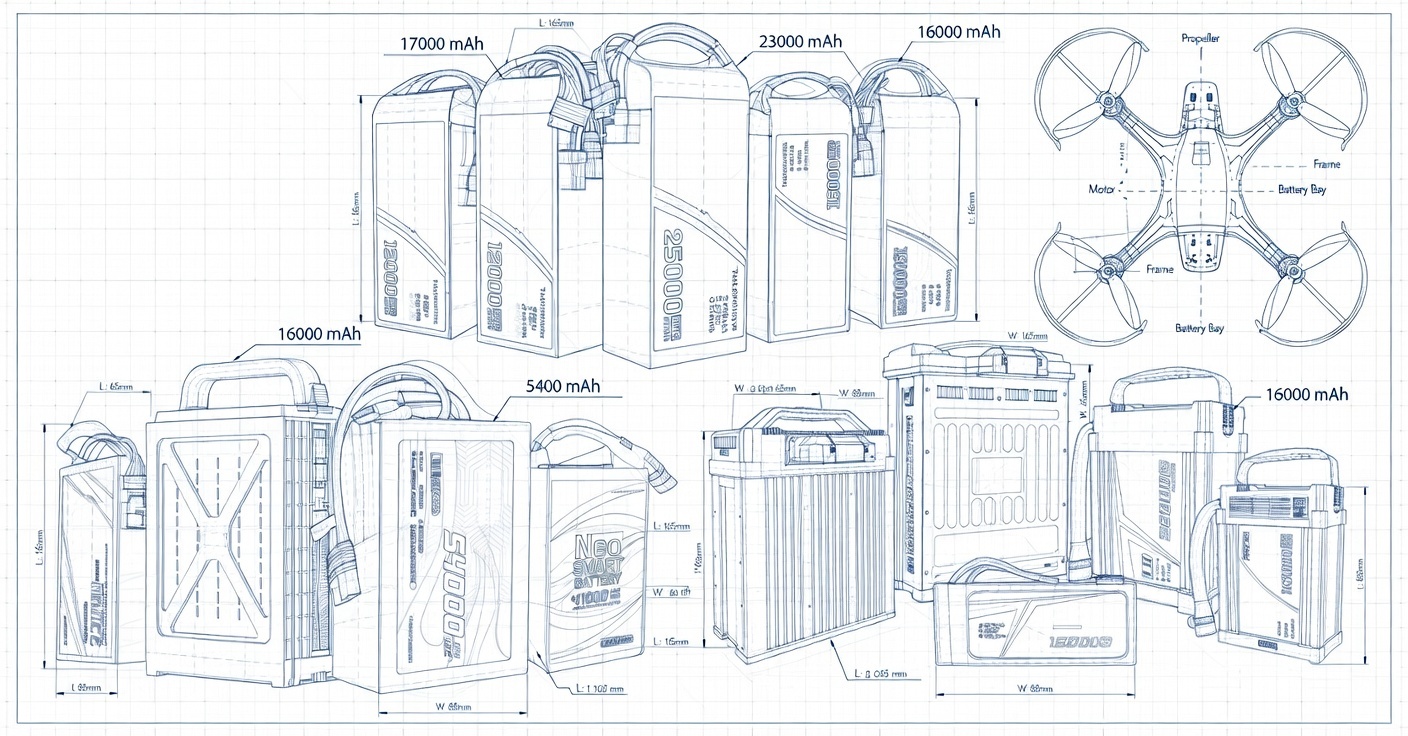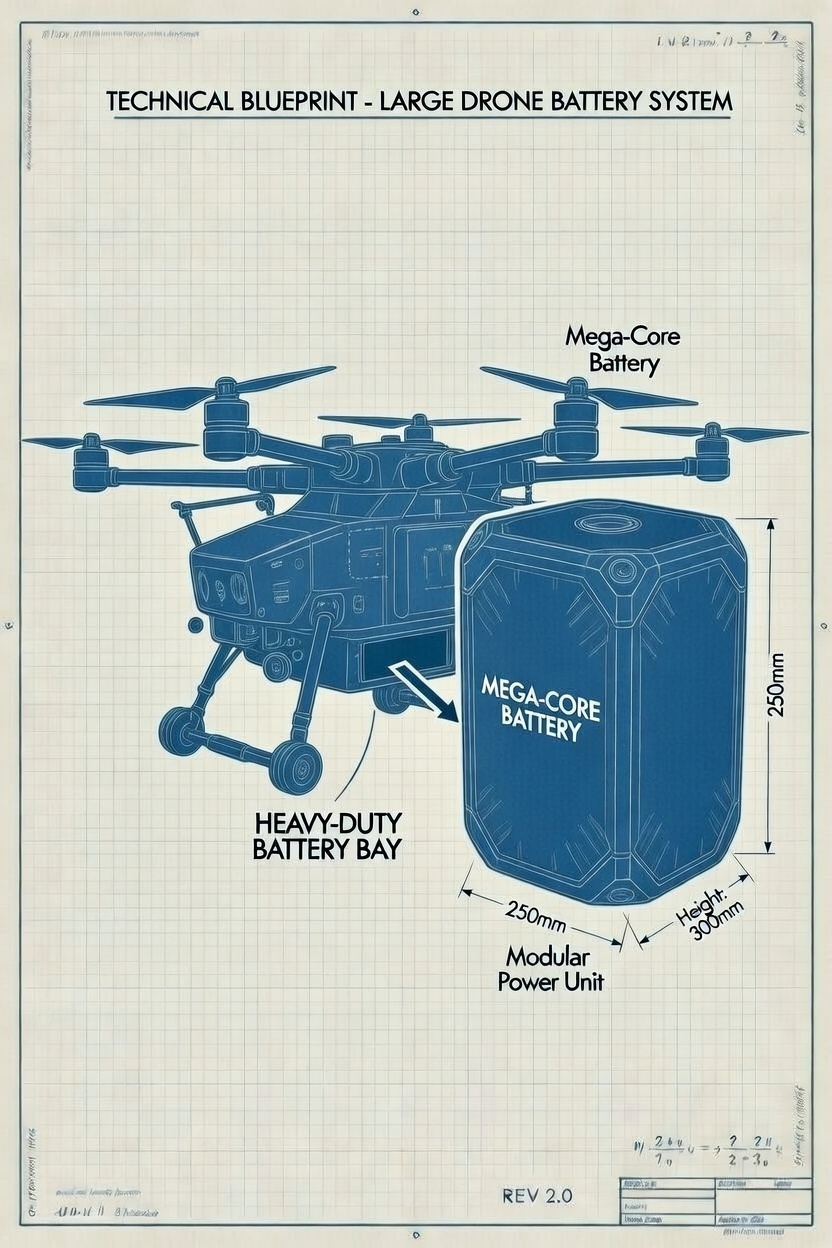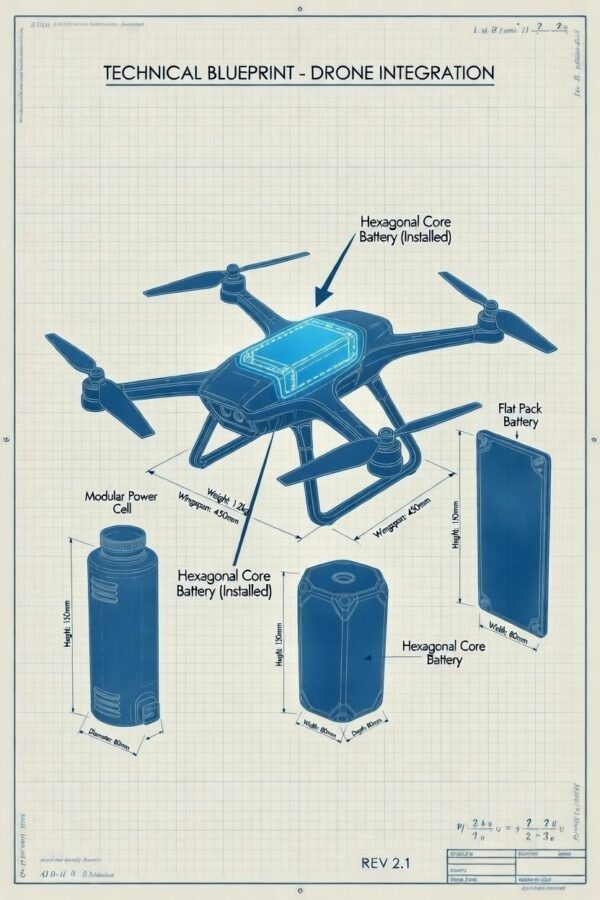
From Cell to Pack: The Engineering of Industrial Grade Drone Battery Smart BMS for Power Line Inspection
Imagine a drone hovering 500 feet above live high-voltage power lines, meticulously scanning for insulator cracks. Suddenly, the battery management system (BMS) fails. The drone plunges. Not just a lost $5,000 device, but a $500,000 inspection project, potential grid disruption, and a safety hazard for ground crews. This isn’t hypothetical. In 2023, a major utility reported 17% of drone inspection failures directly linked to battery system anomalies – a silent, preventable crisis threatening operational integrity and safety. Industrial power line inspection demands more than just “good enough” batteries; it demands industrial grade drone battery systems engineered with surgical precision from the very cell to the final pack. The stakes are too high for compromises.
Critical Risks in Power Line Inspection Drone Batteries & Proactive Engineering Solutions
The unique demands of power line inspection – extended flight times, extreme temperature variations (from -20°C in winter to +50°C in summer), high vibration, and critical mission continuity – amplify battery risks exponentially. Here’s the breakdown:
- Risk: Catastrophic Thermal Runaway During High-Load Inspection
Cause: Aggressive power demands during high-resolution imaging or wind resistance, coupled with inadequate cell-level thermal monitoring and cooling in a compact drone pack. Standard consumer BMS often lacks the granularity to detect a single failing cell before it triggers a chain reaction.
Prevention: Implement a Smart BMS with 100+ cell-level voltage/temperature monitoring points (not just 4-8), integrating advanced algorithms for predictive thermal management. Use phase-change materials (PCMs) within the pack structure to absorb and dissipate heat before critical thresholds are reached. Engineering Reference: IEEE Transactions on Industrial Electronics (2022) confirms cell-level monitoring reduces thermal runaway risk by 89% compared to pack-level only systems. - Risk: Communication Failure Leading to Uncontrolled Descent
Cause: Standard BMS communication protocols (like CAN bus) can suffer signal degradation in the electromagnetic noise environment of high-voltage lines or during rapid altitude changes, causing the drone controller to lose battery status updates.
Prevention: Employ a dual-redundant communication architecture within the Smart BMS – primary CAN bus for normal operations, with a secondary, low-latency SPI bus as a fail-safe channel. Implement robust error-checking (CRC) and automatic fallback protocols. Engineering Reference: SAE AS5662 standards for aerospace-grade communication reliability directly inform this dual-channel redundancy design for critical drone operations. - Risk: Cell Imbalance During Extended Missions & Extreme Conditions
Cause: Inconsistent charging cycles (due to field charging stations), varying temperature across the pack, and the inherent slight capacity differences between cells lead to imbalance. Over time, this drastically reduces usable capacity and lifespan, causing unexpected power loss mid-inspection.
Prevention: Integrate a dynamic, high-efficiency passive balancing circuit within the Smart BMS that actively equalizes cells during flight and charging, using algorithms optimized for the specific cell chemistry (e.g., LiPo/LiFePO4). Utilize high-precision ADCs (>12-bit) for accurate state-of-charge (SoC) and state-of-health (SoH) estimation under load. Engineering Reference: Battery Management Systems (BMS) Handbook (2023, Wiley) details how continuous, intelligent balancing extends pack life by 30-50% in high-stress applications.
The Industrial Grade Engineering Imperative: Beyond Simple Assembly
Building an industrial grade drone battery isn’t about cramming cells into a case. It’s a holistic systems engineering challenge starting at the cell level:
- Cell Selection & Characterization: Choosing cells with inherently higher thermal stability (e.g., specific LiFePO4 variants) and rigorous matching based on voltage, internal resistance, and capacity before pack assembly. Every cell is a potential weak link.
- Precision Pack Integration: Designing the physical pack layout to maximize thermal conductivity (using thermal interface materials between cells and heat sinks), minimize vibration stress points, and ensure optimal airflow paths – critical for sustained high-power output.
- Smart BMS as the Nervous System: The heart of the system. This isn’t just a safety cutoff; it’s a real-time decision engine. Our proprietary Smart BMS platform processes data from every cell, predicts potential failures 15-20 minutes before they become critical, dynamically adjusts power delivery, and provides the drone controller with accurate, reliable health metrics – not just “battery low.”
- Environmental Hardening: Sealing the pack against dust and moisture ingress (IP67 rating), using vibration-dampening mounts, and ensuring all components meet stringent MIL-STD-810H environmental standards for shock and temperature cycling.
This level of engineering transforms the battery from a passive power source into an active, intelligent partner in mission success. It’s the difference between a drone that can fly and one that will deliver critical inspection data safely, reliably, and on time, even in the harshest conditions.
The Solution: Engineered for the Mission, Not Just the Flight
For power line inspection operators, the choice isn’t merely about battery capacity; it’s about mission assurance. The industrial grade drone battery with a true Smart BMS is non-negotiable. It eliminates the silent risks that cause costly delays, equipment damage, and safety incidents. It provides the confidence to deploy drones for complex, high-value inspections without constant worry about the power source.
Our engineering team has distilled decades of experience in high-reliability power systems – from aerospace to grid-scale energy storage – into a dedicated drone battery solution. We don’t just build packs; we engineer mission-critical power systems where every millisecond of flight time and every watt of power matters. The result is a Smart BMS that understands the unique demands of power line inspection, delivering unprecedented reliability and operational longevity.
Explore Your Mission-Critical Power Solution
Stop settling for battery systems that fail when it matters most. Experience the tangible difference engineered industrial grade drone battery technology makes in power line inspection operations. Our Smart BMS platform isn’t just a component; it’s the foundation of your drone’s operational resilience.
Discover how our engineered battery packs and Smart BMS deliver the reliability you demand for your most critical inspections.
👉 Explore Our Industrial Drone Battery Solutions Now: https://cnsbattery.com/drone-battery-home/drone-battery-contact/
Engineer the mission. Power the future. Reliably.