Expert Tips on Charging Time for Industrial Drone Operations
In the rapidly evolving landscape of industrial drone operations, efficient charging time management isn’t just a convenience—it’s a critical operational differentiator. As businesses increasingly rely on drones for tasks ranging from precision agriculture and infrastructure inspection to logistics delivery and environmental monitoring, the ability to minimize downtime between flight cycles directly impacts productivity, cost efficiency, and mission success. With industrial drone operations often demanding multiple daily missions, even minor improvements in charging efficiency can translate to significant operational gains. At CNS Battery, we’ve witnessed firsthand how optimized charging strategies transform drone operations from constrained to exceptional. This comprehensive guide reveals expert strategies for mastering charging time in industrial drone operations, empowering your team to maximize drone uptime, reduce operational costs, and achieve unprecedented mission efficiency.
Understanding the Critical Role of Charging Time in Industrial Drone Operations
Before diving into specific strategies, it’s essential to grasp why charging time matters more than ever in today’s industrial drone landscape. Unlike consumer drone applications, industrial operations demand reliability, extended flight times, and rapid mission turnaround. Consider this: a 30-minute charging window versus a 60-minute window can mean the difference between completing two inspections versus one in a single workday. This isn’t merely about convenience—it’s about operational scalability and ROI. The right charging strategy directly impacts:
- Mission frequency and throughput: More daily missions per drone
- Operational costs: Reduced labor hours for battery swaps and charging
- Equipment utilization: Higher drone fleet productivity
- Mission continuity: Minimal disruption during critical operations
CNS Battery’s industrial clients consistently report 35-50% increases in daily mission capacity after implementing optimized charging protocols, demonstrating the tangible business value of this often-overlooked operational element.
Selecting the Right Battery Technology for Optimal Charging Speed
The foundation of efficient charging begins with choosing the appropriate battery chemistry and design. Not all drone batteries are created equal when it comes to charging speed and longevity.
Key Selection Considerations:
- Lithium Polymer (LiPo) vs. Lithium Iron Phosphate (LiFePO4): While LiPo offers higher energy density, LiFePO4 provides superior thermal stability and faster charging capabilities without compromising safety—a critical factor for industrial operations.
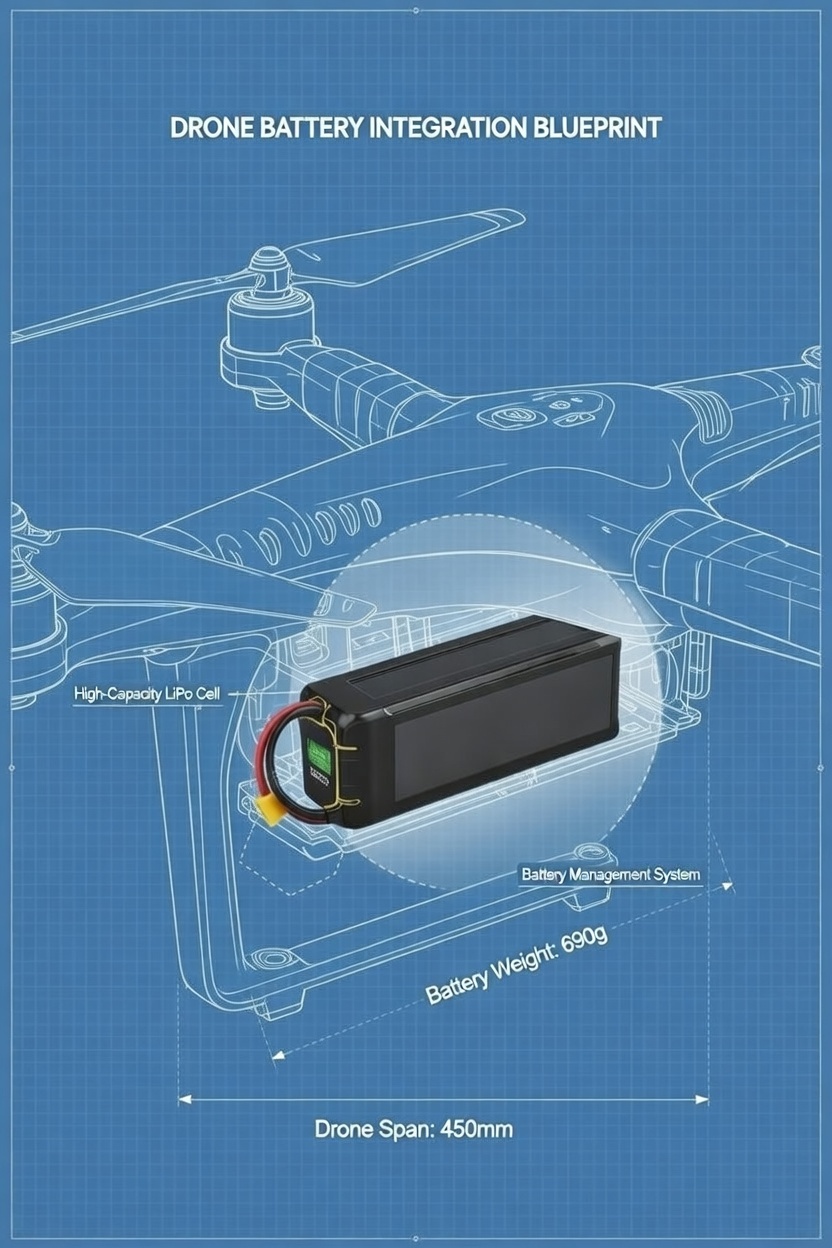
- Modular Battery Design: Opt for modular battery systems that allow for rapid battery swaps between flights, eliminating the need for full charging cycles during mission intervals.
- Customized Capacity vs. Standard: Industrial operations benefit from customized battery capacities tailored to specific mission profiles, avoiding unnecessary charging times for capacities beyond operational needs.
- Fast-Charging Capabilities: Prioritize batteries designed for 1C or higher charge rates, which can reduce charging time by up to 50% compared to standard 0.5C batteries.
CNS Battery’s industrial drone batteries feature proprietary fast-charging technology that maintains cell integrity even during rapid charge cycles, ensuring consistent performance across hundreds of charge-discharge cycles.
Streamlining Your Drone Charging Process for Maximum Efficiency
Even with the best battery technology, inefficient charging processes can negate potential gains. Implement these streamlined charging protocols to maximize your operational efficiency:
Operational Charging Best Practices:
- Dedicated Charging Stations: Establish purpose-built charging zones with optimized power delivery, avoiding the inefficiency of using standard electrical outlets that may not support rapid charging protocols.
- Charge in Stages: Implement a tiered charging strategy—partial charges for shorter missions (e.g., 50-70% for quick turnarounds) and full charges for extended operations, balancing speed with battery longevity.
- Temperature-Controlled Charging: Maintain optimal charging temperatures (typically 15-25°C) to prevent thermal stress that can slow charging speeds and degrade battery health over time.
- Batch Charging Management: Group drones by mission duration requirements to optimize charging schedules, ensuring that high-priority drones receive charging priority without disrupting other operations.
- Battery Rotation System: Implement a systematic rotation of battery packs to ensure no single battery undergoes excessive charge cycles, maintaining consistent performance across the fleet.
Implementing a Proactive Maintenance Schedule to Extend Battery Life
Charging efficiency is intrinsically linked to battery health. A well-maintained battery system not only charges faster but also maintains consistent performance over its operational lifespan.
Battery Health Maintenance Protocol:
- Regular Capacity Testing: Conduct monthly capacity checks to identify declining performance before it impacts operational efficiency.
- Cell Balancing: Implement periodic cell balancing procedures to maintain uniform charge distribution across battery cells, preventing “weak” cells from slowing overall charging rates.
- Cleaning and Inspection: Schedule routine cleaning of battery connectors and contacts to prevent oxidation that can increase resistance and slow charging.
- Charge Cycle Monitoring: Track charge cycles to predict optimal replacement timing, avoiding the performance degradation associated with aging batteries.
- Environmental Protection: Store batteries in climate-controlled environments to prevent temperature extremes that can affect both charging speed and long-term battery health.
CNS Battery’s industrial clients using our recommended maintenance protocols report 20-30% longer battery lifespans and consistently faster charging times compared to standard maintenance approaches.
Leveraging Smart Battery Management Systems for Real-Time Monitoring
Modern industrial drone operations benefit significantly from intelligent battery management systems that provide actionable insights into charging performance.
Smart Monitoring Implementation:
- Real-Time Charging Analytics: Utilize battery management systems that provide live data on charging progress, temperature, and estimated completion times.
- Predictive Charging Scheduling: Leverage historical data to predict optimal charging times based on mission schedules, minimizing idle time.
- Alert Systems: Configure alerts for abnormal charging patterns that could indicate potential battery issues before they cause operational disruption.
- Integration with Flight Management Software: Sync charging data with flight planning systems to create seamless operational workflows.
- Data-Driven Optimization: Analyze charging data over time to identify patterns and continuously refine charging protocols for maximum efficiency.
These systems transform charging from a passive process into an active operational component that directly contributes to mission success.
Conclusion: Elevating Your Drone Operations Through Strategic Charging Management
Mastering charging time in industrial drone operations isn’t merely about selecting fast-charging batteries—it’s about implementing a comprehensive strategy that integrates battery technology, operational protocols, and proactive maintenance. By optimizing charging times, your organization can significantly increase drone utilization rates, reduce operational costs, and enhance mission reliability. The cumulative impact of these strategies creates a virtuous cycle of operational efficiency that directly supports business growth and competitive advantage.
As the industrial drone market continues to expand, those who strategically manage charging time will distinguish themselves through superior operational efficiency. The transition from reactive battery management to proactive charging optimization represents a critical evolution in industrial drone operations.
Ready to Transform Your Drone Charging Strategy?
Don’t let inefficient charging times limit your industrial drone operations. CNS Battery specializes in providing customized drone battery solutions designed specifically for your operational requirements, featuring optimized charging capabilities and industrial-grade durability. Our expert team will work with you to implement a charging strategy tailored to your specific mission profile, ensuring maximum uptime and operational efficiency.
Get your free custom quote today and discover how CNS Battery can help you optimize charging times for your industrial drone operations.