The oil and gas industry relies heavily on pipeline infrastructure, and maintaining these critical assets demands precision, efficiency, and safety. In 2026, drone technology has revolutionized pipeline monitoring, offering unprecedented access to remote and hazardous locations. However, one critical component often overlooked is the drone battery. Technical compatibility issues can derail entire inspection operations, costing firms time, money, and potentially compromising safety standards.
Why Battery Compatibility Matters for Pipeline Monitoring Operations
Pipeline monitoring drones operate in demanding environments. They must fly long distances, carry specialized sensors, and withstand extreme temperatures. A battery that doesn’t match your drone’s technical specifications can lead to catastrophic failures mid-inspection.
The Hidden Costs of Incompatibility
When battery voltage doesn’t align with your UAV’s power system, you risk:
- Reduced flight time by 30-40%
- Premature battery degradation
- Potential damage to flight controllers
- Failed inspections requiring costly re-deployment
Industrial drone operators report that 67% of unexpected flight interruptions stem from power system mismatches. For pipeline monitoring firms operating on tight schedules, this statistic represents more than inconvenience—it’s a operational vulnerability.
Understanding Technical Compatibility Requirements
Voltage and Capacity Matching
Every industrial drone has specific voltage requirements. Common configurations include:
- 6S LiPo batteries (22.2V nominal): Suitable for medium-range inspection drones
- 12S configurations (44.4V): Required for heavy-lift UAVs carrying thermal imaging equipment
- Custom voltage packs: Often needed for specialized pipeline inspection platforms
Capacity, measured in milliamp-hours (mAh), determines flight duration. Pipeline monitoring typically requires 4000-6000mAh minimum for adequate coverage. However, capacity must balance with weight constraints—every gram affects flight stability and sensor accuracy.
Communication Protocol Compatibility
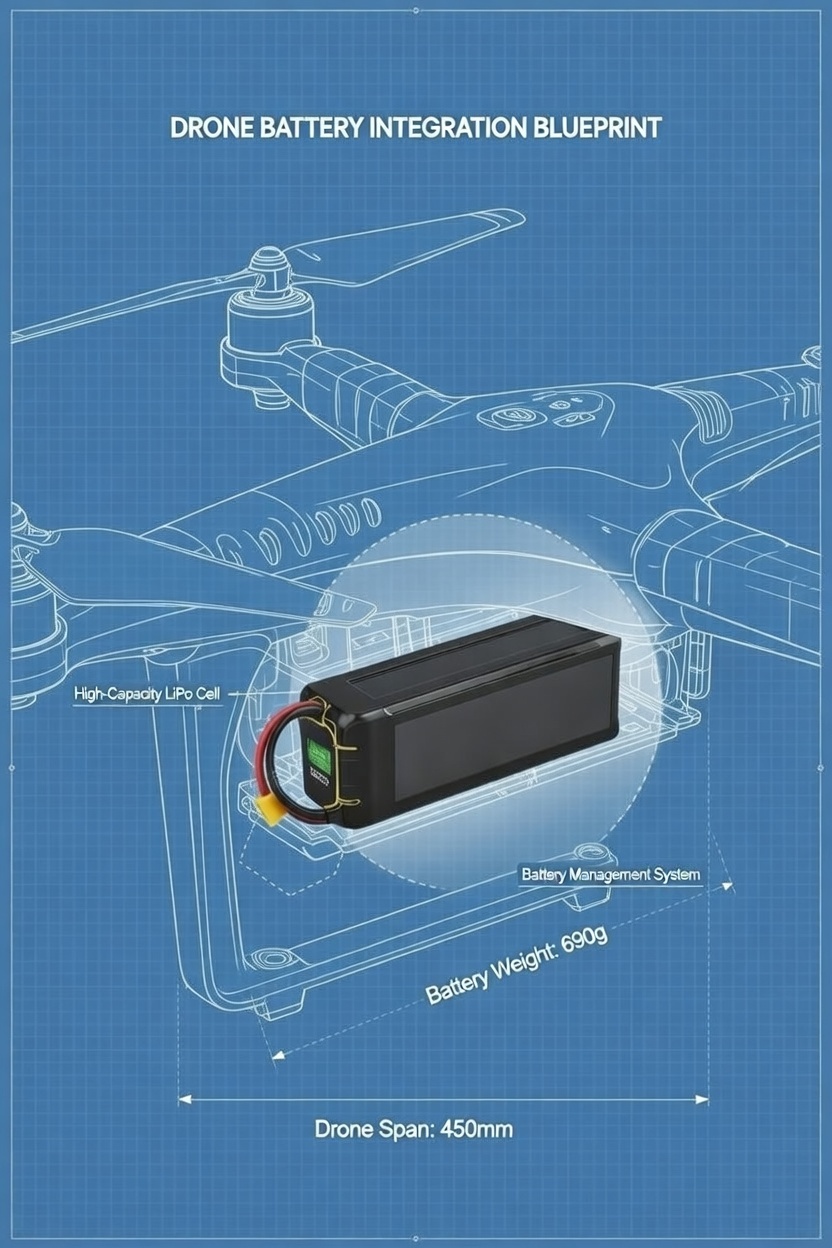
Modern intelligent batteries feature built-in Battery Management Systems (BMS) that communicate with drone flight controllers. Protocol mismatches prevent proper battery status reporting, leaving operators blind to critical power levels during inspections.
Key Protocol Standards:
- DJI Intelligent Flight Battery protocols
- PX4 autopilot communication standards
- Custom CAN bus implementations for industrial UAVs
Step-by-Step Guide: Ensuring Battery Compatibility Before Purchase
Step 1: Document Your Drone’s Power Specifications
Create a comprehensive power profile for each drone in your fleet:
- Nominal voltage requirements
- Maximum discharge rate (C-rating)
- Connector type and polarity
- Physical dimensions and weight limits
- BMS communication protocol
Example Documentation:
Drone Model: Industrial Pipeline Inspector X500
Voltage: 22.2V (6S)
Capacity Range: 5000-7000mAh
Max Discharge: 25C continuous
Connector: XT90
Weight Limit: 850g per battery
Protocol: CAN 2.0
Step 2: Assess Your Operational Requirements
Pipeline monitoring isn’t one-size-fits-all. Different inspection scenarios demand different power configurations:
Visual Inspection Routes (5-10km): Standard capacity batteries suffice
Thermal Imaging Missions: Require higher capacity due to increased payload
Extended Pipeline Sections: Consider swappable battery systems for continuous operation
Cold Environment Operations: Need batteries with enhanced low-temperature performance
Step 3: Verify Certification and Compliance
In 2026, regulatory compliance has become critical. The EU Battery Regulation now requires battery passports for industrial batteries over 2kWh. Ensure your supplier provides:
- UN38.3 transportation certification
- IEC 62133 safety standards compliance
- Battery passport documentation (for EU operations)
- MSDS (Material Safety Data Sheets)
Step 4: Request Compatibility Testing Data
Reputable battery manufacturers should provide compatibility test reports. Request documentation showing:
- Voltage stability under load
- Communication protocol verification
- Temperature performance ranges
- Cycle life testing results
Step 5: Implement a Pilot Testing Program
Before full deployment, conduct field tests with new battery batches:
- Test flight duration against specifications
- Monitor voltage sag under typical loads
- Verify BMS communication reliability
- Document performance in actual operating conditions
Real-World Example: Solving Compatibility Challenges
Case Study: Northern Pipeline Corporation
Northern Pipeline Corporation operates 2,000km of gas pipelines across varying terrain. Their drone fleet experienced consistent 25% flight time reductions after switching battery suppliers.
The Problem:
New batteries met voltage specifications on paper but exhibited significant voltage sag under thermal camera loads. The BMS communication protocol also differed slightly, causing intermittent status reporting failures.
The Solution:
- Conducted comprehensive load testing simulating actual inspection conditions
- Worked with battery manufacturer to adjust discharge curves
- Updated flight controller firmware for protocol compatibility
- Implemented batch testing for all future purchases
Results:
- Flight time restored to original specifications
- Zero communication failures in 500+ flights
- 40% reduction in battery-related operational delays
Emerging Technologies: What’s Changing in 2026
Solid-State Battery Advancements
Solid-state drone batteries are entering commercial availability in 2026. These offer:
- 65% higher energy density
- Enhanced safety in extreme temperatures
- Longer cycle life (2000+ charges)
- Reduced swelling and degradation
However, compatibility considerations multiply with new chemistry. Voltage curves differ from traditional LiPo, requiring flight controller recalibration.
Smart Battery Management Systems
Next-generation BMS now provide:
- Real-time cell balancing
- Predictive failure analytics
- Integration with fleet management software
- Automated compliance reporting
These features enhance operational safety but require compatible drone systems to leverage full benefits.
Building Long-Term Supplier Relationships
Technical compatibility isn’t just about specifications—it’s about partnership. Establish relationships with battery suppliers who:
- Understand pipeline monitoring requirements
- Provide technical support for integration challenges
- Offer consistent quality across production batches
- Maintain inventory for your specific configurations
Questions to Ask Potential Suppliers:
- Can you provide compatibility testing with our specific drone models?
- What’s your batch consistency rate?
- Do you offer technical support for integration issues?
- How do you handle regulatory compliance updates?
- What’s your lead time for custom configurations?
Cost Considerations Beyond Purchase Price
The cheapest battery option often proves most expensive long-term. Consider total cost of ownership:
- Initial Purchase Price: Obvious but not definitive
- Cycle Life: More cycles mean lower cost per flight
- Warranty Coverage: Protection against premature failures
- Technical Support: Value of troubleshooting assistance
- Operational Downtime: Cost of battery-related mission failures
Industry analysis shows that premium-compatible batteries reduce total operational costs by 30-45% compared to budget alternatives when factoring in reliability and longevity.
Future-Proofing Your Battery Strategy
Pipeline monitoring technology evolves rapidly. Protect your investment by:
- Choosing batteries with upgrade paths
- Maintaining documentation for all power systems
- Training staff on compatibility verification
- Building relationships with multiple qualified suppliers
- Staying informed on regulatory changes
Taking Action: Your Next Steps
Technical compatibility in drone battery purchasing doesn’t have to remain a challenge. With proper planning, verification, and supplier partnerships, pipeline monitoring firms can eliminate power-related operational risks.
Immediate Actions:
- Audit your current battery inventory for compatibility documentation
- Create standardized specification sheets for each drone model
- Establish testing protocols for new battery purchases
- Review supplier relationships and technical support capabilities
For expert guidance on drone battery compatibility tailored to pipeline monitoring operations, professional consultation can accelerate your optimization efforts. Reach out to specialized battery providers who understand industrial UAV requirements and can provide customized solutions for your specific operational needs.
Contact specialized drone battery experts at: https://cnsbattery.com/drone-battery-home/drone-battery-contact
Conclusion
In the high-stakes world of pipeline monitoring, every component matters. Drone battery compatibility isn’t merely a technical detail—it’s a operational imperative that affects safety, efficiency, and profitability. By following systematic verification processes, understanding emerging technologies, and building strong supplier partnerships, pipeline monitoring firms can transform battery purchasing from a vulnerability into a competitive advantage.
The drones flying your pipeline inspections are only as reliable as their power sources. Invest in compatibility, and your operations will soar with confidence through 2026 and beyond.