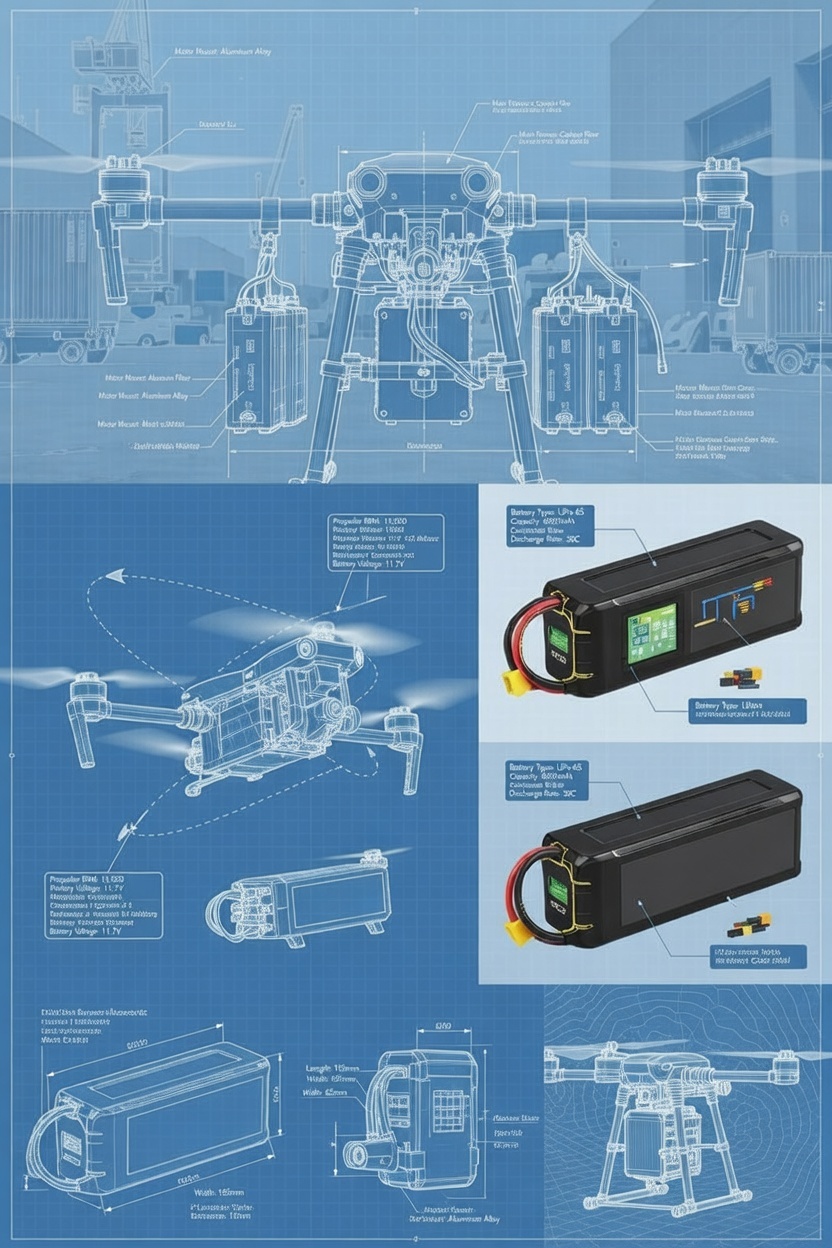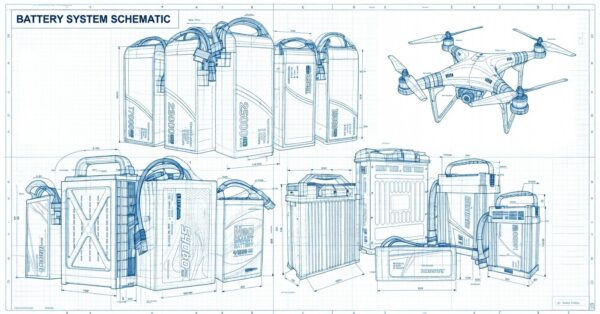
Every construction mapping company knows the frustration: you’re mid-flight on a critical site survey, and your drone battery dies prematurely. The data collection stops, the project timeline extends, and costs spiral. This scenario plays out daily across the industry, costing firms thousands in lost productivity and compromised deliverables.
The root cause often traces back to inadequate drone battery performance testing during the purchasing process. Construction mapping operations demand reliable, high-capacity power sources that can withstand demanding flight conditions while maintaining consistent performance throughout extended projects. Yet many companies still purchase drone batteries based solely on price or manufacturer claims without proper validation.
This comprehensive guide reveals the expert strategies that leading surveying firms use to overcome performance testing challenges and make informed battery purchasing decisions that protect their operations and bottom line.
Understanding the Critical Role of Battery Performance in Construction Mapping
Construction mapping drones operate in uniquely challenging environments. Unlike recreational photography drones, surveying UAVs carry heavy payloads including LiDAR sensors, high-resolution cameras, and RTK modules that significantly increase power consumption. The stakes are higher too—interrupted flights mean incomplete data sets, requiring costly re-flights and potentially delaying entire construction phases.
Key Performance Metrics That Matter
When evaluating drone batteries for construction mapping applications, several technical specifications demand careful attention:
- Capacity (mAh): Determines flight time; construction mapping typically requires 5000-6000mAh minimum
- Discharge Rate (C-Rate): Affects power delivery during demanding maneuvers; 15C-25C recommended for professional surveying
- Voltage Configuration: Most mapping drones use 4S-6S LiPo configurations
- Cycle Life: Quality batteries should deliver 300-500 full charge cycles before significant degradation
- Weight-to-Power Ratio: Critical for maximizing flight time while staying within payload limits
Industry standards from organizations like UL Solutions specify rigorous testing protocols for lithium battery safety and performance. UL 1642 covers individual lithium cells, while UL 2054 addresses battery packs used in commercial applications—both essential certifications for professional drone operations.
Common Performance Testing Challenges in Battery Procurement
Construction mapping companies face several recurring obstacles when attempting to properly test drone batteries before purchase. Understanding these challenges is the first step toward overcoming them.
Challenge 1: Inconsistent Manufacturer Specifications
Many battery manufacturers provide optimistic specifications that don’t reflect real-world performance. A battery advertised as 6000mAh might deliver only 5200mAh under actual load conditions. This discrepancy becomes apparent only after purchase, when projects are already scheduled and deadlines loom.
Solution: Implement independent capacity testing using professional battery analyzers. Measure actual discharge curves under loads matching your drone’s power consumption profile. Document results and compare against manufacturer claims before approving suppliers.
Challenge 2: Temperature Sensitivity in Field Conditions
Construction sites present extreme environmental conditions—from scorching summer heat to cold winter mornings. LiPo battery performance varies significantly with temperature, yet standard testing often occurs only in climate-controlled environments.
Solution: Conduct performance testing across your expected operating temperature range. Professional testing should include:
- Cold weather performance (0°C to 10°C)
- Standard operating conditions (20°C to 25°C)
- High temperature scenarios (35°C to 45°C)
Challenge 3: Lack of Standardized Testing Protocols
Unlike consumer electronics, the drone battery industry lacks universally accepted performance testing standards. Each manufacturer uses different methodologies, making direct comparisons difficult and purchasing decisions risky.
Expert Testing Framework for Construction Mapping Battery Purchases
Leading construction mapping companies have developed comprehensive testing frameworks that ensure battery reliability before committing to large purchases. This systematic approach minimizes risk and maximizes operational efficiency.
Phase 1: Pre-Purchase Laboratory Testing
Before placing any bulk order, conduct thorough laboratory evaluation of sample batteries:
- Capacity Verification: Use professional battery analyzers to measure actual capacity at rated discharge rates
- Internal Resistance Testing: Lower resistance indicates better power delivery and less heat generation
- Cycle Life Simulation: Accelerated testing to estimate long-term performance degradation
- Safety Certification Review: Verify UL, CE, or other relevant safety certifications
Phase 2: Field Performance Validation
Laboratory testing must be complemented by real-world field trials:
- Deploy test batteries on actual mapping missions
- Monitor voltage sag during high-power maneuvers
- Track flight time consistency across multiple cycles
- Document performance in various weather conditions
Phase 3: Long-Term Monitoring
Establish ongoing performance tracking for all batteries in your fleet:
- Log cycle counts for each battery pack
- Record capacity degradation over time
- Identify underperforming units before they cause operational issues
- Maintain replacement schedules based on actual performance data
Case Study: Regional Surveying Firm Reduces Battery Failures by 73%
A mid-sized construction mapping company operating across the southwestern United States faced recurring battery failures that disrupted critical infrastructure surveys. Their fleet of 25 drones experienced an average of 8-10 premature battery failures monthly, causing project delays and client dissatisfaction.
The Problem: The company purchased batteries primarily based on price and manufacturer reputation without systematic performance testing. Battery specifications varied significantly between batches, and field performance proved inconsistent.
The Solution: Working with battery performance specialists, the firm implemented a three-tier testing protocol:
- Incoming Inspection: Every battery batch underwent capacity and internal resistance testing before acceptance
- Rotation System: Batteries were rotated through high and low-demand applications to balance wear
- Predictive Replacement: Performance data informed proactive replacement before failures occurred
The Results: Within six months, battery-related flight interruptions dropped by 73%. Project completion rates improved by 31%, and the company reduced overall battery procurement costs by 18% through optimized replacement scheduling rather than emergency purchases.
Safety and Compliance Considerations
Construction mapping companies bear significant liability for drone operations. Battery safety isn’t just about performance—it’s about protecting personnel, equipment, and reputation.
Essential Safety Certifications
When purchasing drone batteries, verify these critical certifications:
- UL 2054: Household and commercial battery safety standard
- UL 1642: Lithium cell safety requirements
- IEC 62133: International battery safety standard
- UN 38.3: Transportation safety testing for lithium batteries
Storage and Handling Protocols
Proper battery management extends beyond purchasing decisions:
- Store batteries at 40-60% charge for extended periods
- Maintain temperature-controlled storage environments
- Implement fire-safe storage containers for large battery inventories
- Train all operators on proper charging and handling procedures
Building Supplier Relationships Based on Performance Data
The most successful construction mapping companies treat battery suppliers as strategic partners rather than commodity vendors. This approach requires transparent communication about performance expectations and testing results.
Key Supplier Evaluation Criteria
When selecting battery suppliers, consider these factors beyond price:
- Technical Support Availability: Can they provide performance data and troubleshooting assistance?
- Warranty Terms: What coverage exists for premature degradation or defects?
- Consistency Track Record: Do multiple batches meet identical specifications?
- Customization Options: Can they tailor battery configurations to your specific drone platforms?
Negotiating Performance-Based Agreements
Leading firms increasingly negotiate contracts that tie pricing to verified performance metrics:
- Capacity guarantees with replacement provisions for underperforming units
- Volume discounts based on long-term partnership commitments
- Priority support arrangements for critical project periods
Making the Investment Decision
Quality drone batteries represent a significant capital investment for construction mapping companies. However, viewing batteries as operational infrastructure rather than consumable supplies shifts the decision framework toward long-term value rather than short-term cost savings.
Total Cost of Ownership Analysis
Calculate true battery costs by factoring in:
- Initial purchase price
- Expected cycle life and replacement frequency
- Operational downtime from failures
- Project delays and potential penalties
- Safety incident risks and liability exposure
A battery costing 30% more upfront but delivering 50% longer service life and 80% fewer failures typically provides superior long-term value.
Conclusion: Transform Your Battery Procurement Strategy
Performance testing challenges in drone battery purchasing don’t have to undermine your construction mapping operations. By implementing systematic testing protocols, building data-driven supplier relationships, and prioritizing long-term value over short-term savings, your company can achieve reliable, cost-effective battery performance that supports consistent project delivery.
The construction mapping industry continues evolving rapidly, with increasing demands for accuracy, efficiency, and safety. Your battery procurement strategy should reflect these priorities through rigorous performance validation and ongoing monitoring.
Ready to optimize your drone battery procurement process? Our team specializes in helping construction mapping companies implement comprehensive battery testing frameworks and connect with verified suppliers who meet stringent performance standards. Contact us today to discuss your specific operational requirements and discover how systematic battery performance testing can transform your project outcomes.
Contact Our Battery Solutions Team for customized consultation on drone battery selection, testing protocols, and supplier verification services tailored to construction mapping applications.
For additional resources on drone battery management and performance optimization, explore our comprehensive guides on battery maintenance best practices and industry certification requirements.