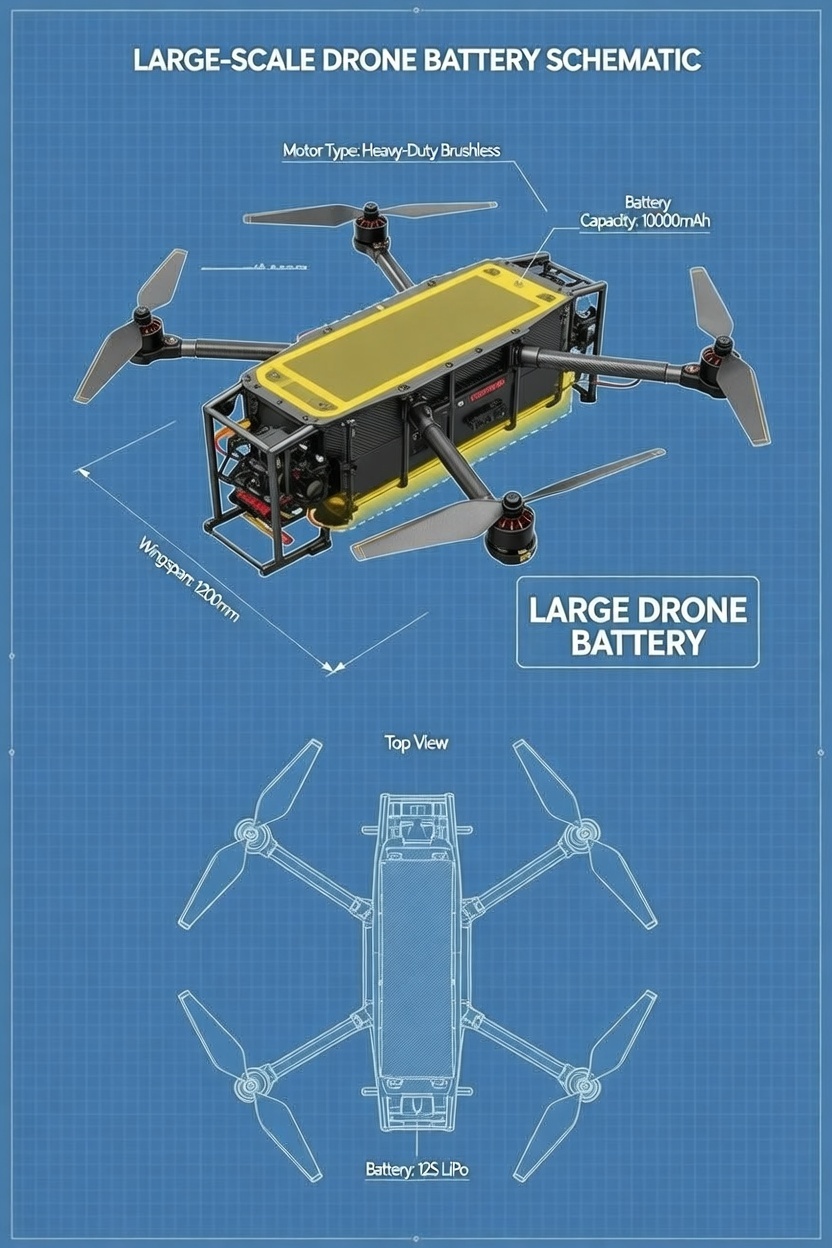
Expert Advice: Overcoming BMS Features in Drone Battery Purchasing for Power Grid Utilities
Introduction
In 2026, power grid utilities increasingly rely on industrial drones for infrastructure inspection, maintenance, and monitoring. These aerial workhorses demand reliable, high-performance battery systems that can withstand demanding operational conditions. However, one critical component often overlooked during procurement is the Battery Management System (BMS). Understanding BMS features is essential for utilities seeking to maximize drone uptime, ensure safety, and optimize total cost of ownership. This comprehensive guide provides expert insights on navigating BMS complexities when purchasing drone batteries for power grid applications.
Why BMS Matters for Power Grid Drone Operations
The BMS serves as the brain of any lithium-ion battery pack, monitoring cell voltage, temperature, current, and state of charge (SOC). For power grid utilities operating drones in remote or hazardous environments, BMS functionality directly impacts:
- Operational Safety: Prevents thermal runaway and overcharging incidents
- Flight Reliability: Ensures consistent power delivery during critical inspections
- Battery Longevity: Extends cycle life through intelligent cell balancing
- Regulatory Compliance: Meets 2026 transportation and safety standards (DGR 67, IMDG CODE 42-24)
Key BMS Features to Evaluate
1. Cell Monitoring Precision
What to Look For:
- Voltage monitoring accuracy within ±5mV per cell
- Temperature sensing at multiple points across the battery pack
- Real-time data transmission capabilities
Expert Tip: Utilities should request BMS data logs from suppliers to verify monitoring consistency across temperature ranges (-20°C to 60°C for outdoor grid inspections).
2. Protection Mechanisms
| Protection Type | Industry Standard | Utility Requirement |
|---|---|---|
| Overcharge Protection | 4.25V per cell | 4.20V per cell (extended life) |
| Over-discharge Protection | 2.5V per cell | 3.0V per cell (safety margin) |
| Over-current Protection | 2C continuous | 3C continuous (burst capability) |
| Temperature Protection | 60°C cutoff | 55°C cutoff (conservative) |
3. Communication Protocols
Modern BMS systems support various communication interfaces:
- CAN Bus: Ideal for integration with enterprise drone fleet management systems
- RS485: Reliable for long-distance data transmission in substation environments
- Bluetooth/Wireless: Convenient for field technicians but requires encryption
- UART: Basic debugging and configuration access
Procurement Recommendation: Prioritize CAN Bus or RS485 for utility-scale deployments requiring centralized battery monitoring.
Step-by-Step BMS Evaluation Process
Step 1: Define Operational Requirements
Document your specific use cases:
- Flight duration expectations (typically 35-45 minutes for inspection drones)
- Environmental conditions (temperature extremes, humidity, electromagnetic interference near power lines)
- Charging infrastructure availability (field charging vs. base station)
- Fleet size and rotation schedules
Step 2: Request Technical Documentation
Ask suppliers for:
- BMS architecture diagrams
- Protection threshold specifications
- Communication protocol documentation
- Certification records (UN38.3, IEC 62133, CE, FCC)
- Cycle life test data at various discharge rates
Step 3: Conduct Comparative Testing
Evaluation Criteria:
- Capacity Retention: Measure after 100, 300, and 500 cycles
- Balance Accuracy: Verify cell voltage variance remains under 10mV after full charge
- Thermal Performance: Monitor temperature rise during high-current discharge
- Communication Reliability: Test data transmission in electromagnetic interference conditions
Step 4: Assess Supplier Support
Critical questions for vendors:
- What is the warranty period for BMS components?
- Is firmware upgradable in the field?
- What technical support is available for integration?
- Are replacement BMS modules available separately?
Common BMS Challenges and Solutions
Challenge 1: Inaccurate SOC Estimation
Problem: Drone operators experience unexpected battery depletion during critical inspections.
Solution:
- Select BMS with coulomb counting combined with voltage-based SOC algorithms
- Require calibration procedures specific to your discharge profiles
- Implement regular BMS firmware updates from the manufacturer
Challenge 2: Cell Imbalance During Fast Charging
Problem: Rapid field charging creates voltage disparities between cells, reducing overall capacity.
Solution:
- Choose BMS with active cell balancing (not passive)
- Specify balancing current of at least 100mA per cell
- Allow sufficient balancing time before deployment (typically 30-60 minutes)
Challenge 3: Electromagnetic Interference Near Power Lines
Problem: High-voltage transmission lines create EMI that disrupts BMS communication.
Solution:
- Request shielded communication cables
- Verify BMS meets industrial EMC standards (IEC 61000-6-2, IEC 61000-6-4)
- Test batteries in actual operating environments before full deployment
2026 Regulatory Considerations
Power grid utilities must ensure drone battery procurement aligns with current regulations:
- Transportation Standards: 2026 air/sea/land transport certifications (DGR 67th Edition, IMDG CODE Amendment 42-24)
- Carbon Footprint Reporting: Battery carbon footprint declaration requirements (per 2025 MIIT guidelines)
- Safety Certifications: UN38.3 testing mandatory for all lithium battery shipments
- Data Security: Encrypted BMS communication for critical infrastructure applications
Cost-Benefit Analysis Framework
When evaluating BMS features, consider total cost of ownership rather than upfront price:
| Factor | Basic BMS | Advanced BMS | ROI Impact |
|---|---|---|---|
| Initial Cost | $50-80 per pack | $120-180 per pack | – |
| Cycle Life | 300-400 cycles | 600-800 cycles | +50% savings |
| Failure Rate | 3-5% annually | 0.5-1% annually | +80% reduction |
| Downtime Cost | High (unexpected failures) | Low (predictive alerts) | Significant |
| Integration Cost | Higher (custom work) | Lower (standard protocols) | +30% savings |
Expert Insight: Advanced BMS typically delivers 18-24 month payback period for utility fleets operating 20+ drones.
Best Practices for Utility Procurement Teams
- Establish BMS Specifications Early: Include detailed BMS requirements in RFP documents
- Require Sample Testing: Evaluate 3-5 battery packs before committing to large orders
- Negotiate Firmware Support: Ensure long-term BMS software maintenance agreements
- Plan for Scalability: Choose BMS platforms that support future fleet expansion
- Document Everything: Maintain detailed records of BMS performance for warranty claims
Key Takeaways
- BMS quality directly impacts drone operational reliability and safety for power grid inspections
- Advanced BMS features justify higher upfront costs through extended battery life and reduced downtime
- Communication protocol compatibility is critical for enterprise fleet management integration
- 2026 regulatory requirements demand comprehensive certification documentation
- Supplier technical support capability matters as much as hardware specifications
Call to Action
Navigating BMS complexities requires expert guidance tailored to your utility’s specific operational needs. Our team specializes in industrial drone battery solutions with advanced BMS features designed for power grid applications.
Ready to optimize your drone battery procurement strategy?
Contact our specialists today for a comprehensive BMS evaluation and customized procurement recommendations. Visit our contact page at https://cnsbattery.com/drone-battery-home/drone-battery-contact to schedule a consultation with our battery technology experts.
Let us help you build a reliable, efficient, and compliant drone battery fleet that keeps your power grid operations flying safely in 2026 and beyond.