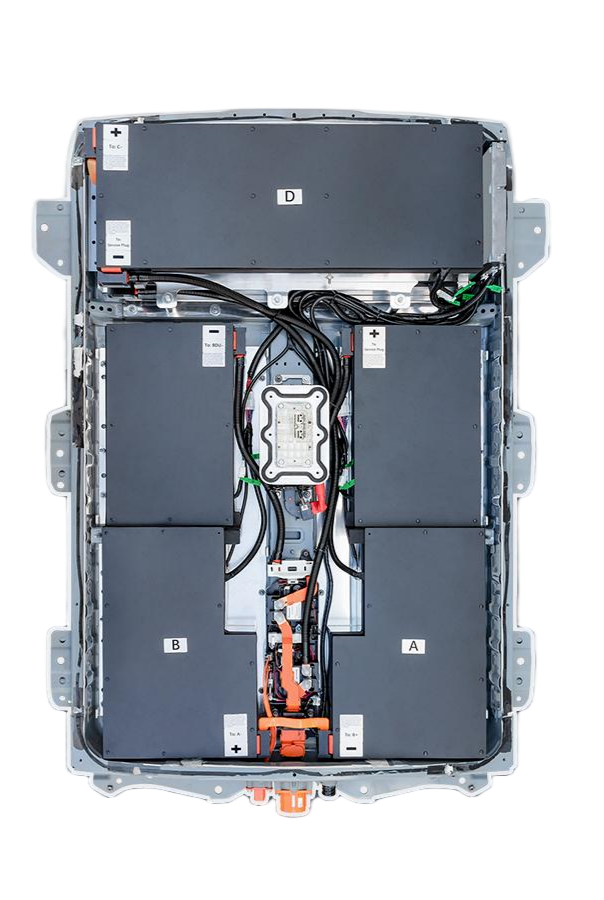
Essential Hacks for BMW i3 Battery Registration: A Complete Guide
Owning a BMW i3 is a unique experience, blending iconic design with electric efficiency. However, like all electric vehicles, the battery pack has a finite lifespan. When the time comes to replace or upgrade your BMW i3 battery, one of the most daunting challenges mechanics and owners face is Battery Registration.
Unlike simply bolting in a new engine, an EV battery requires complex software integration. If the registration fails, your car might not start, or the battery won’t charge. At CNS BATTERY, we specialize in OEM-compatible solutions for BMW and Nissan. Based on our technical expertise, here are the essential hacks to ensure a smooth BMW i3 battery registration process.
Why is BMW i3 Battery Registration So Critical?
Before diving into the hacks, it’s crucial to understand why registration is necessary.
The BMW i3 uses a sophisticated communication network between the Battery Management System (BMS) and the vehicle’s Body Control Module (BCM). When you install a new battery, the car needs to:
- Verify the Hardware: Confirm the battery voltage, capacity (kWh), and cell chemistry.
- Authorize the Software: Assign a unique Vehicle Identification Number (VIN) lock to the new BMS.
- Calibrate the System: Reset the battery health state (SOH) and range calculations.
The Consequence of Skipping Registration: Without proper registration, the vehicle will typically display errors like “High Voltage Battery Fault,” “Check Control Message,” or simply refuse to enter “Ready to Drive” mode.
Essential Hack #1: VIN Coding is the Key
The most common reason for registration failure is the VIN lock.
BMW batteries are coded to the specific vehicle they were installed in at the factory. When you purchase an aftermarket battery (even a brand-new OEM-spec pack like those from CNS BATTERY), the BMS inside the battery still carries the “ghost” of a previous vehicle code or a generic code.
The Hack:
You cannot register the battery until the BMS is “cleared” or “unlocked” to accept your vehicle’s VIN. This requires specialized diagnostic software.
- Software Required: ISTA/D or equivalent professional coding software.
- The Process:
- Connect the diagnostic tool (e.g., KDS, ISTA, or Autel) to the OBD port.
- Navigate to the High Voltage Battery module.
- Perform a “Delete Old Data” or “EOL (End of Line) Preparation” function.
- Do not proceed to “Registration” yet. This step simply unlocks the BMS to accept new data.
Expert Tip: If you are doing this yourself, ensure you have a stable power supply to the vehicle (via a 12V charger) during this process. A voltage drop can brick the BMS.
Essential Hack #2: The “Dummy Key” Method for Pre-2017 Models
For older BMW i3 models (specifically those with the 60Ah battery, pre-2017), the registration process can be particularly tricky due to the way BMW handled battery swaps.
The Challenge:
The car expects the “old” battery’s data to be present before it allows the “new” battery data to be written. If the old battery is already removed, the car has nothing to compare against, leading to coding errors.
The Hack: The Dummy Key Connection
This is an advanced technique used by professional mechanics.
- The Setup: You need access to the old, degraded battery (or a known good donor battery).
- The Connection: Connect the 12V auxiliary battery of the car to the 12V terminals of the old battery. Simultaneously, connect the high-voltage (HV) negative cable from the new CNS BATTERY pack to the car.
- The Logic: The car detects the “old” BMS via the 12V auxiliary line (tricking it into thinking the old battery is still present) while the diagnostic tool writes the new data to the “new” physical battery connected via the HV line.
- The Switch: Once the registration coding is complete, you can safely disconnect the old battery and connect the remaining HV cables of the new battery.
Note: This method requires careful handling of HV components. If you are not a certified technician, contact CNS BATTERY for technical support before attempting this.
Essential Hack #3: Choosing the Right Hardware Matters Most
No amount of software hacking can fix a hardware incompatibility. This is where choosing the right supplier is the ultimate “hack.”
At CNS BATTERY, we understand that compatibility is 90% of the battle. Our BMW i3 battery packs are engineered to meet Original Equipment Manufacturer (OEM) standards.
Why Hardware Compatibility Prevents Registration Issues:
- Original Protocols: Our BMS units use the exact communication protocols (K-CAN, D-Bus) as the original BMW systems.
- Plug-and-Play Design: We utilize the original BMW housing and connector shells. This ensures that the physical connection between the car and the battery is seamless, which is the first step in successful registration.
- No “Frankenstein” Wiring: Many cheap aftermarket batteries require cutting and splicing wires. This almost guarantees a communication failure during registration.
CNS BATTERY Advantage: We use brand-new CATL battery cells, ensuring the voltage curves and internal resistance match BMW’s specifications perfectly. This consistency is vital for the BMS to pass the final calibration checks after registration.
Essential Hack #4: The “ISTA/D” vs. “ISTA/P” Distinction
Understanding the difference between these two BMW diagnostic programs can save you hours of frustration.
- ISTA/D (Diagnosis): This is used for finding faults and coding modules. It is essential for the initial unlock and registration steps.
- ISTA/P (Programming): This is used for installing long coding data, such as the actual battery capacity file.
The Hack:
If your registration gets stuck or times out, you likely need to use ISTA/P to install the specific “Energy Storage” data package for your battery size (e.g., 94Ah or 120Ah).
- Run ISTA/D to initiate the registration wizard.
- When prompted, switch to ISTA/P.
- Search for the “Energy Storage” component.
- Install the latest long coding data relevant to your BMW i3 year and battery capacity.
- Return to ISTA/D to complete the registration.
Essential Hack #5: Post-Registration Calibration
Registration isn’t complete when the car starts. The final hack is the 24-Hour Calibration Cycle.
After successful registration, the BMS needs to learn the new battery’s characteristics.
- First Charge: Charge the battery to 100% using a standard Level 1 or Level 2 charger. Do not use DC fast charging immediately.
- Driving Cycle: Drive the car until the range display hits 0 km/miles (or as close as safely possible).
- Final Charge: Charge the battery back to 100% again.
- Rest: Let the car sit for 2-4 hours with the ignition off.
After this cycle, the BMS will update the battery health (SOH) to 100%, and your range display will be accurate.
Frequently Asked Questions (FAQ)
Q1: Can I register a BMW i3 battery myself?
While it is technically possible if you have the correct diagnostic hardware (like a KDS or Autel MaxiCOM) and software (ISTA/D), it is highly complex. We recommend consulting a professional mechanic. However, if you encounter issues during the process, CNS BATTERY offers free video call technical guidance to walk you through the steps.
Q2: What if the registration fails?
Common failure points include voltage drops during coding or incompatible BMS firmware. If the registration fails, do not panic. Disconnect the 12V battery for 10 minutes to reset the BCM, ensure your diagnostic tool is updated, and check your connections. If problems persist, contact our technical team.
Q3: Do CNS BATTERY packs come pre-coded?
No, for security and compatibility reasons, our batteries come in a “blank” or “unlocked” state. This allows them to be registered to your specific vehicle. We do not pre-code them to a random VIN, as that would lock you out.
Q4: How much does it cost to register a BMW i3 battery?
If you are doing it yourself, the cost is the price of the diagnostic software subscription (if you don’t own it). If you take it to a mechanic, labor costs typically range from $100 to $300, depending on the shop and whether the “Dummy Key” method is required.
Ready to Restore Your BMW i3’s Range?
Replacing your BMW i3 battery doesn’t have to be a nightmare. By following these essential hacks and ensuring you have the right hardware, you can save thousands compared to dealership prices.
At CNS BATTERY, we don’t just sell batteries; we provide OEM-compatible solutions backed by a 24-month / 80,000 km warranty. Whether you drive a 2014 i3 or a later model, we have the right battery pack for you.
Need Help with Your Project?
Our technical experts are ready to assist you with compatibility checks and installation advice.