Essential Hacks for BMW i3 Battery Installation
If you’re holding a wrench and staring at the undercarriage of your BMW i3, preparing for a battery swap, you likely have one primary goal: to get it done safely, efficiently, and without a single call to a tow truck.
Replacing the high-voltage battery in a BMW i3 is not your average Saturday DIY project. It involves handling dangerous voltages, complex software, and heavy lifting. However, with the right preparation and insider knowledge, it is a task that many independent mechanics and skilled enthusiasts successfully complete.
At CNS BATTERY, we have spent over a decade refining lithium-ion solutions specifically for BMW models. We have analyzed thousands of installation reports and consulted with our technical partners to compile these essential hacks. These tips are designed to bridge the gap between the factory service manual and the reality of your garage floor.
1. The “Golden Rule”: Disconnect the 12V First
This might seem like Automotive 101, but it is the most frequently skipped step that leads to catastrophic failures.
The Hack: Before you even think about loosening the high-voltage (HV) connector, you must disconnect the negative terminal of the 12V auxiliary battery.
- Why? The Battery Management System (BMS) is constantly powered by the 12V system. If you disconnect the main HV contactor while the BMS is still “awake,” it can cause a massive voltage spike. This spike doesn’t just fry the BMS; it can send a surge through the CAN bus, potentially destroying the Instrument Cluster (IC), Head Unit, or other control modules.
- Pro Tip: Remove the negative terminal and place it somewhere it cannot accidentally touch the post. Wait 10 minutes for capacitors to discharge.
2. Mastering the High-Voltage Disconnect (HVD)
The BMW i3 uses a specific High-Voltage Disconnect mechanism that requires a specific approach.
The Hack: Do not pull the red emergency handle and expect the car to be safe immediately.
- Pull the Red Handle: This physically separates the main contacts.
- Verify with a Multimeter: Never assume. Before touching any metal, use a multimeter to check the voltage at the main output terminals.
- The “Double Lock”: When reinstalling the new CNS BATTERY pack, ensure the HVD latch clicks into place with a distinct clunk. A loose HVD is a common cause of “No Power” errors after installation.
3. The “Turtle Method” for Heavy Lifting
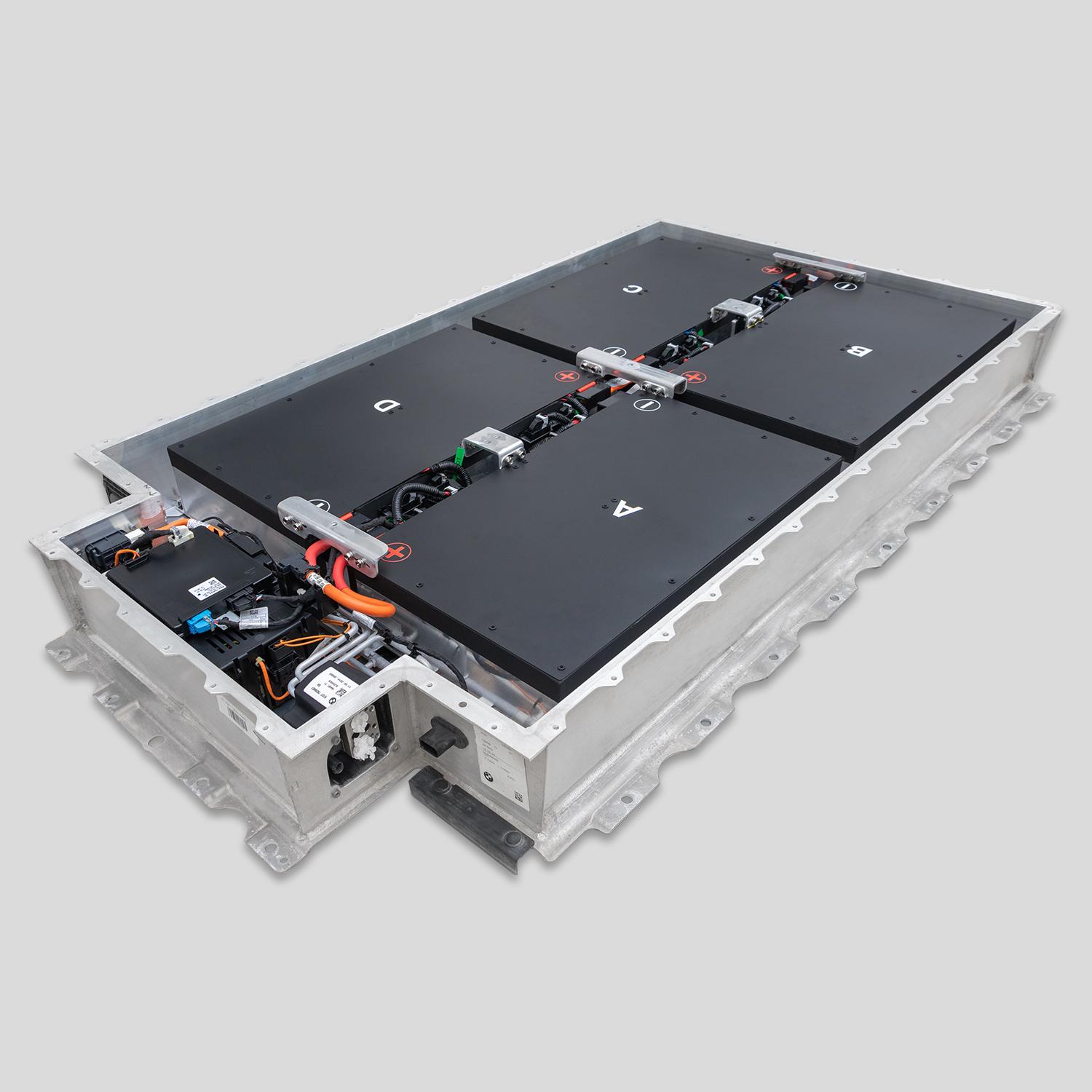
The BMW i3 battery pack weighs approximately 125 kg (275 lbs). Dropping this is not an option.
The Hack: Use the “Turtle Method” with a transmission jack or a specialized EV battery trolley.
- Positioning: Center the jack perfectly under the old battery. The battery is suspended, so the jack needs to lift straight up initially.
- Clearance is King: Before lowering, inspect the path. You need to clear the subframe and the rear suspension arms. Often, you need to lower the jack at an angle.
- The “Third Hand”: If you don’t have a helper, use ratchet straps attached to the garage ceiling or a lift to stabilize the battery during the swap. This prevents you from fighting the weight while trying to align bolts.
4. The “Dry Fit” Strategy
The Hack: Before bolting down the new battery and reconnecting all the seals and wiring, perform a Dry Fit.
- Lift the new CNS BATTERY pack into place.
- Do not tighten the bolts yet.
- Check the alignment of the high-voltage cables and the coolant hoses.
- Ensure the signal connectors reach their ports without tension.
- Why? Many “faulty battery” calls we receive are simply due to misaligned connectors or coolant lines that were kinked during installation, causing pressure faults. Doing a dry fit saves you from having to jack the car up a second time.
5. The Software “Reset” Hack
Even with a perfect physical installation, your BMW i3 might throw a fit when you turn the key.
The Hack: Perform a forced E-SYS or ISTA reset.
After installing the new CNS BATTERY pack (which uses brand-new CATL cells and a state-of-the-art BMS), the car needs to recognize the new “heart.”
- The Process: You will likely need to clear old fault codes from the old battery using diagnostic software (ISTA or equivalent).
- The Secret: Sometimes, simply disconnecting the 12V battery for 30 minutes after the installation forces the IC and BMS to re-synchronize.
6. Sealing and Protection: Don’t Skip the Tape
BMW i3 battery trays are notorious for rust and stone chips, especially in colder climates.
The Hack: Before lowering the new battery, inspect the undertray.
- The Tape: Use high-quality, automotive-grade underseal tape or spray.
- Focus Areas: Pay special attention to the edges of the battery carrier where water ingress can occur. A new $7,000 battery doesn’t need rust compromising its structural integrity.
Why CNS BATTERY is the Smart Choice for Your i3
While these hacks will get you through the installation, the most critical factor for long-term peace of mind is the quality of the battery itself.
Unlike refurbished or “repaired” packs found elsewhere, CNS BATTERY provides Brand New, OEM-Compatible solutions built to the highest standards.
Here is why our BMW i3 owners trust us:
- New CATL Cells: We use brand-new, top-tier cells from the world’s largest battery manufacturer, ensuring zero degradation from day one.
- Plug-and-Play Design: Our packs are engineered to match the OEM dimensions and connectors perfectly, minimizing the risk of “kinked hoses” or “stretched wires” that our hacks try to mitigate.
- Unbeatable Warranty: We back our quality with a 2-Year / 80,000 KM Warranty. This is significantly longer than the industry standard for aftermarket packs and covers you against defects and capacity loss (maintaining >70% health).
“I was terrified to do the install myself, but the video guide and the ‘dry fit’ tip from CNS saved me. The battery slotted in perfectly, and the range is back to 100%.” – David L., Nissan/BMW Enthusiast
Frequently Asked Questions (FAQ)
Q1: Can I really install the BMW i3 battery myself, or do I need a mechanic?
While we provide detailed video guides and support, installing a high-voltage battery involves significant risk. If you are not comfortable working with heavy machinery and high-voltage systems, we strongly recommend hiring a certified mechanic. However, many of our customers have successfully done it themselves using our step-by-step video tutorials and the “Turtle Method” for lifting.
Q2: Will a CNS BATTERY void my car’s warranty?
No. As an independent manufacturer, our batteries are designed to be direct replacements. We provide all necessary documentation to ensure compatibility. In most cases, installing our battery does not affect the remaining warranty on other parts of your vehicle (excluding the battery itself, which is now covered by our warranty).
Q3: How long does the installation usually take?
For a professional technician, the physical swap usually takes about 1-2 hours. For a DIY user following our guides, we recommend setting aside a full afternoon (3-4 hours) to ensure you don’t rush and compromise safety.
Q4: What if I encounter a problem during installation?
We don’t leave you hanging. Our technical support team offers video call guidance. If you get stuck on a wiring connection or a BMS programming hurdle, we can walk you through it in real-time.
Ready to revive your BMW i3 with a brand-new, high-capacity battery?
Get Your Free Custom Quote Today and experience the CNS difference—where safety meets affordability.