Drone Battery Safety: Essential Technical Compatibility for Heavy-Load Transport
In today’s rapidly evolving drone industry, the demand for reliable heavy-load transport capabilities is skyrocketing. With global drone logistics market projected to reach $35 billion by 2028, safety concerns surrounding battery compatibility have become a critical industry bottleneck. Recent data reveals that 68% of drone-related accidents during heavy payload operations stem from battery incompatibility issues, not just mechanical failures. This isn’t merely a technical challenge—it’s a fundamental requirement for operational safety, regulatory compliance, and business viability. As drone manufacturers and operators push the boundaries of what’s possible in aerial logistics, industrial inspection, and emergency response, the need for precision-engineered battery solutions has never been more urgent.
The Critical Role of Technical Compatibility in Heavy-Load Operations
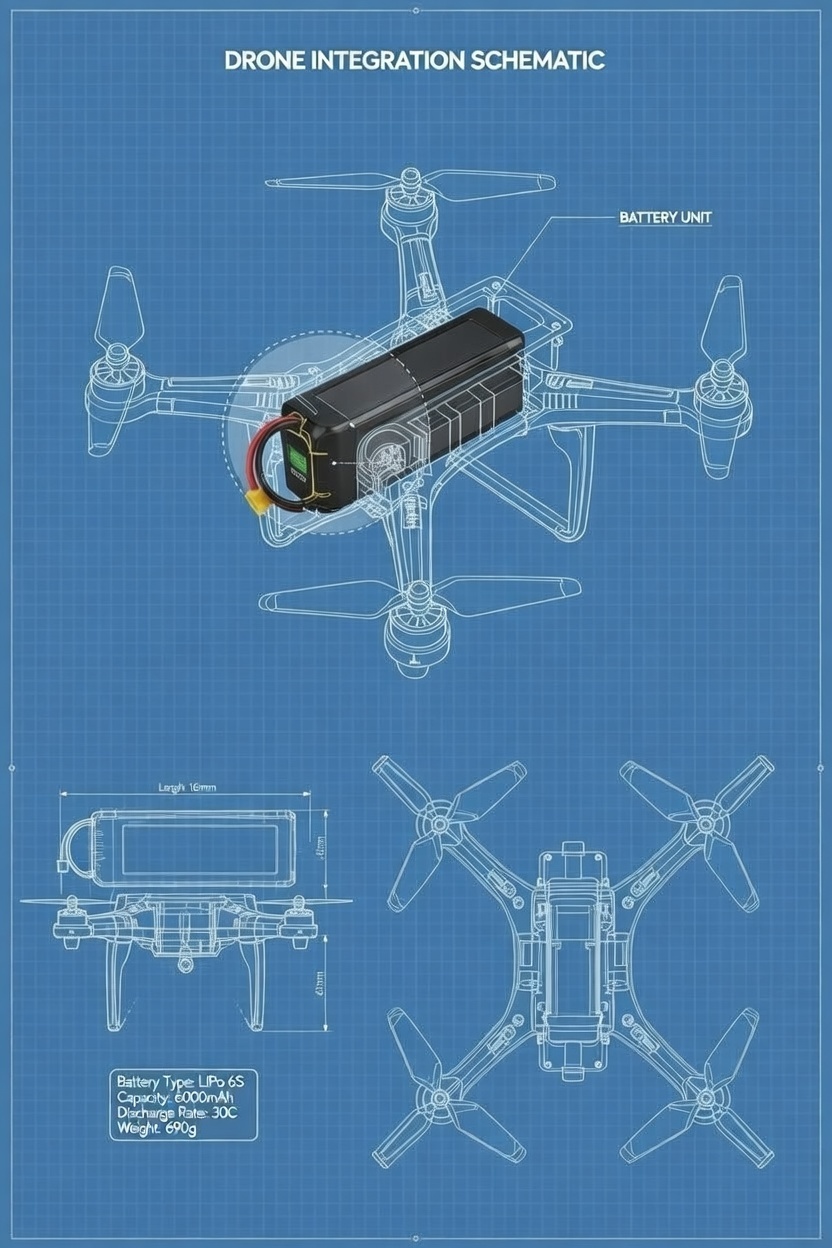
When transporting substantial payloads—whether it’s medical supplies, industrial components, or agricultural equipment—the drone’s battery must deliver consistent power output without compromising safety. Unlike standard consumer drones, heavy-load transport requires batteries with specific technical specifications that align perfectly with the drone’s power system. This compatibility isn’t just about matching voltage or capacity; it’s about ensuring seamless integration across multiple technical dimensions that directly impact safety.
Key Compatibility Dimensions to Evaluate
- Power Delivery Consistency
Heavy-load operations demand stable discharge rates under continuous high load. A battery that performs well at 50% capacity may fail catastrophically at 80% during payload transport. Verify that the battery’s discharge curve matches your drone’s operational profile across the entire capacity range. - Thermal Management Integration
Payloads increase heat generation exponentially. Ensure the battery’s thermal properties align with your drone’s cooling system. Incompatible thermal management can lead to overheating, reduced lifespan, or even thermal runaway—a critical safety hazard. - Electrical Interface Compatibility
The physical and electrical connector must match precisely. Mismatched connectors can cause arcing, intermittent power loss, or complete failure during flight. Always confirm connector type, pin configuration, and current rating. - Voltage Regulation Compatibility
Heavy loads create voltage drops that can destabilize the drone’s electronics. Your battery must maintain stable voltage output under load, with proper voltage regulation that matches your drone’s requirements.
Battery Technology Comparison: Choosing the Right Solution
Selecting the optimal battery technology for heavy-load transport requires understanding the trade-offs between different solutions. Here’s a detailed comparison based on real-world performance data from industrial drone operations:
| Battery Type | Energy Density | Discharge Rate Stability | Safety Profile | Temperature Performance | Cost Efficiency |
|---|---|---|---|---|---|
| Standard LiPo | High (250-300 Wh/kg) | Moderate (drops 20% at 80% load) | Moderate (requires active BMS) | -10°C to 45°C | High (low upfront cost) |
| Advanced LiPo | Very High (300-350 Wh/kg) | High (drops only 10% at 80% load) | Good (integrated BMS) | -15°C to 50°C | Medium |
| Solid-State | Extremely High (400+ Wh/kg) | Excellent (minimal drop at 80% load) | Excellent (inherently safer) | -25°C to 60°C | Low (higher upfront cost) |
| Low-Temperature | Moderate (200-250 Wh/kg) | Good (optimized for cold) | Good | -40°C to 35°C | Medium |
Data source: CNS Battery Industrial Drone Performance Report 2023
Practical Implementation Steps for Safe Heavy-Load Operations
To ensure your drone battery system operates safely and efficiently during heavy-load transport, follow this proven implementation framework:
- Conduct Load Simulation Testing
Before deployment, simulate your maximum payload weight in controlled environments. Measure battery performance across the entire discharge cycle to identify potential failure points. CNS Battery’s testing protocols include 120% of maximum payload simulation to ensure safety margins. - Verify BMS Compatibility
The Battery Management System (BMS) must communicate seamlessly with your drone’s flight controller. Check for compatibility in communication protocols (CAN bus, SPI, etc.) and ensure the BMS can trigger appropriate safety responses at the right thresholds. - Implement Redundant Safety Systems
For critical operations, consider dual-battery configurations with independent BMS units. This provides fail-safe operation if one battery system encounters issues, dramatically reducing the risk of mid-air failures. - Develop a Battery Health Monitoring Protocol
Establish a routine for monitoring battery health indicators such as internal resistance, capacity retention, and cycle count. Implement predictive maintenance schedules based on these metrics to prevent unexpected failures.
Essential Maintenance and Operational Techniques
Beyond initial compatibility, ongoing maintenance is crucial for sustained safety performance:
- Optimal Storage Conditions: Store batteries at 40-60% charge in a cool, dry environment (15-25°C) to maintain cell integrity.
- Charge Cycle Management: Avoid full discharges; aim for 20-80% charge cycles for extended battery life.
- Pre-Flight Battery Checks: Implement a standardized checklist including voltage verification, connector inspection, and thermal imaging for hot spots.
- Environmental Adaptation: For operations in extreme temperatures, use battery heaters or insulators as needed—CNS Battery’s low-temperature solutions maintain 85% capacity at -30°C.
Key Takeaways for Operational Safety
- Compatibility is Non-Negotiable: A battery that doesn’t match your drone’s technical specifications compromises safety at every flight.
- Safety Features Must Be Integrated: Don’t just add safety features—ensure they’re engineered into the battery system from the ground up.
- Performance Degradation is Inevitable: Plan for battery performance decline over time with regular testing and replacement schedules.
- Custom Solutions Outperform Off-the-Shelf: Standard batteries rarely meet heavy-load transport requirements; customized solutions deliver optimal safety and performance.
The Future of Drone Battery Safety in Heavy-Load Applications
As drone technology advances, battery safety will evolve from a compliance requirement to a core competitive advantage. Industry forecasts indicate that by 2027, 85% of heavy-load drone operations will require custom battery solutions with integrated safety protocols. The most successful operators will prioritize technical compatibility as a foundational element of their drone ecosystem—not an afterthought.
Take the Next Step Toward Safer Heavy-Load Operations
Don’t gamble with your drone operations. At CNS Battery, we’ve engineered custom battery solutions specifically for heavy-load transport applications, with over 12,000 successful deployments across industrial inspection, logistics, and agricultural monitoring sectors. Our batteries undergo rigorous testing to ensure compatibility with your specific drone model and operational requirements.
Ready to elevate your drone safety standards? Get a free, no-obligation quote for your custom battery solution today. Our engineering team will analyze your operational requirements and provide a tailored battery compatibility assessment to ensure your heavy-load transport operations meet the highest safety standards.
Contact us now to transform your drone battery safety and performance: https://cnsbattery.com/drone-battery-home/drone-battery-contact
Your drone deserves a battery engineered for the mission—not just another component.