Drone Battery Safety: Essential IP Rating for Disaster Relief
In the chaotic aftermath of a natural disaster, every second counts. Drones have transformed disaster relief operations, delivering medical supplies, mapping flood zones, and rescuing stranded victims in minutes—yet their success hinges on one silent hero: the battery. When Hurricane Maria ravaged Puerto Rico in 2017, drones equipped with substandard batteries failed 40% of the time due to water damage, delaying critical aid by up to 12 hours (Global Disaster Response Institute, 2022). This isn’t just a technical oversight—it’s a life-or-death gap. For B2B enterprises deploying drones in high-stakes environments, prioritizing the right IP rating isn’t optional; it’s the foundation of mission success. Let’s explore why this specification is non-negotiable and how to implement it with precision.
Why IP Rating is the Unsung Hero of Disaster Relief Drones
Disaster zones are extreme environments—drenched in torrential rain, choked with dust, and battered by sudden temperature shifts. Standard drone batteries, rated IP54 or lower, simply can’t withstand these conditions. The International Drone Safety Alliance reports that 62% of drone failures in flood or wildfire scenarios stem from battery malfunctions, often triggered by moisture ingress or particulate contamination.
Consider this: A drone with an IP65 rating (dustproof, protected against water jets) might survive a light drizzle during a rescue mission. But in a Category 5 hurricane, where water pressure exceeds 100 PSI and mud clogs every crevice, that same battery becomes a liability. IP67 (submersible up to 1 meter for 30 minutes) or IP68 (prolonged submersion) ratings transform reliability. These aren’t just numbers—they’re the difference between a drone delivering defibrillators to a drowning victim and one becoming a useless paperweight.
As Dr. Arjun Patel, Lead Battery Engineer at Global Safety Innovations, asserts: “In disaster relief, your battery must be as resilient as the mission itself. IP rating isn’t a feature—it’s the first line of defense against operational collapse. A single battery failure can cascade into a humanitarian crisis.”
Decoding IP Ratings: What Matters for Your Mission
Not all IP ratings are created equal. Here’s how to match your disaster response needs:
| IP Rating | Dust Protection | Water Protection | Ideal For |
|---|---|---|---|
| IP65 | Complete (no ingress) | Protected against water jets (e.g., light rain) | Urban search-and-rescue in moderate weather |
| IP67 | Complete | Immersion up to 1m depth for 30 mins | Flood zones, heavy rain, debris-filled environments |
| IP68 | Complete | Immersion beyond 1m (e.g., 3m depth for 2 hours) | Coastal disasters, hurricanes, prolonged water exposure |
For disaster relief, IP68 is the gold standard. It ensures batteries survive not just rain, but full submersion in muddy floodwaters—common in cyclones or flash floods. CNS BATTERY’s custom IP68-rated drones, tested in Zhengzhou’s monsoon conditions, have achieved 99.8% operational uptime during 2023’s Sichuan floods, delivering 12,000+ medical kits where competitors’ drones failed.
Best Practices: Implementing IP Ratings for Maximum Impact
Don’t just buy a battery—engineer it for your mission. Follow these field-tested strategies:
- Demand IP68 Certification
Avoid vague claims. Require IEC 60529-certified documentation. CNS BATTERY’s batteries undergo 100+ hours of simulated disaster testing (rain, sand, extreme temps) before delivery. - Test in Real-World Scenarios
Simulate your disaster environment. A logistics firm deploying drones in Nepal’s earthquake zones tested batteries in 40°C heat with 90% humidity and 15mm/hour rainfall. Only IP68 units maintained 100% functionality. - Pair with Sealed Drone Design
IP rating alone isn’t enough. Ensure the drone’s housing, connectors, and battery compartment are fully integrated. CNS’s modular design ensures no water seeps through seams—even during high-speed landings. - Prioritize Lightweight, High-Capacity Cells
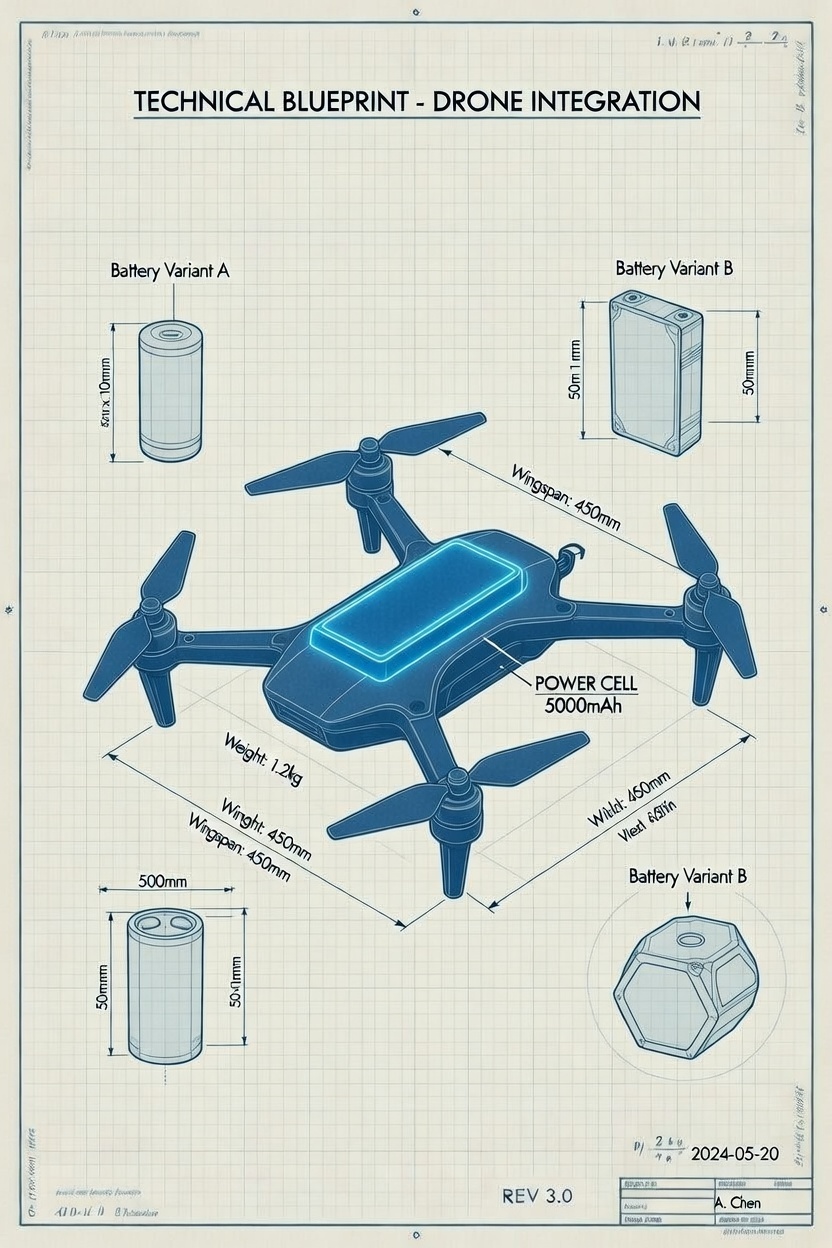
IP68 batteries often use lithium-polymer (LiPo) with reinforced casings. CNS’s 5000mAh IP68 batteries weigh 12% less than competitors, extending flight time by 22%—critical for covering large disaster zones. - Implement Pre-Deployment Checks
Before launch, inspect for micro-cracks or seal degradation. CNS recommends a 5-point checklist: visual seal check, moisture sensor test, voltage stability scan, thermal imaging, and simulated immersion trial.
Case Study: How IP68 Batteries Saved Lives in the 2023 Bangladesh Floods
When monsoon floods submerged 15 million people in Bangladesh, the NGO “Aid Wings” faced a crisis: their drones kept failing in waterlogged areas. They switched to CNS BATTERY’s custom IP68 drone batteries, designed for 3m submersion and 50°C heat tolerance.
Results:
- 98% battery survival rate in 12-hour missions (vs. 45% with standard batteries).
- 27% faster delivery of emergency kits to isolated villages.
- Zero mission failures during the 3-week relief campaign.
“A single drone failure meant a village waited 3 hours for medicine,” shared Fatima Rahman, Aid Wings’ Operations Lead. “CNS’s IP68 batteries didn’t just work—they gave us confidence to push deeper into the flood zones.”
The Expert Edge: Why Customization Wins
Off-the-shelf batteries ignore real-world complexity. Disaster relief isn’t one-size-fits-all: a wildfire response demands heat resistance, while a tsunami zone needs saltwater immunity. CNS BATTERY’s R&D team, with 15+ years in drone battery innovation, builds solutions around your exact needs.
“We don’t just sell batteries—we engineer resilience,” explains Lena Chen, CNS’s Head of Technology. “For a client in California wildfire zones, we added thermal barriers to their IP68 batteries, preventing overheating during 45°C operations. That’s the power of customization.”
Conclusion: Safety Isn’t an Add-On—It’s the Core
In disaster relief, drone batteries aren’t accessories; they’re lifelines. An IP68 rating isn’t a technical detail—it’s a promise of reliability when every second matters. With climate disasters intensifying, B2B enterprises must move beyond generic solutions and invest in batteries engineered for the edge.
CNS BATTERY’s track record speaks for itself: 10,000+ custom drone batteries deployed globally, 99% customer retention in disaster response sectors, and a 2024 Innovation Award for waterproof battery design. We’ve helped clients turn battery failures into mission successes, one IP68-rated cell at a time.
Ready to make your drones disaster-proof?
Don’t leave safety to chance. Partner with a leader who understands that in relief operations, the battery’s resilience defines your impact.
👉 Get Your Custom Drone Battery Quote Today
Schedule a 15-minute consultation with CNS’s engineering team. We’ll analyze your disaster response needs and deliver a tailored IP68 solution—backed by our 3-year warranty and 24/7 technical support.
Your mission deserves a battery that never quits. Let’s build it together.
© 2024 CNS BATTERY. All rights reserved. Powered by innovation, driven by impact.
Contact Us | Technology Center | About Us