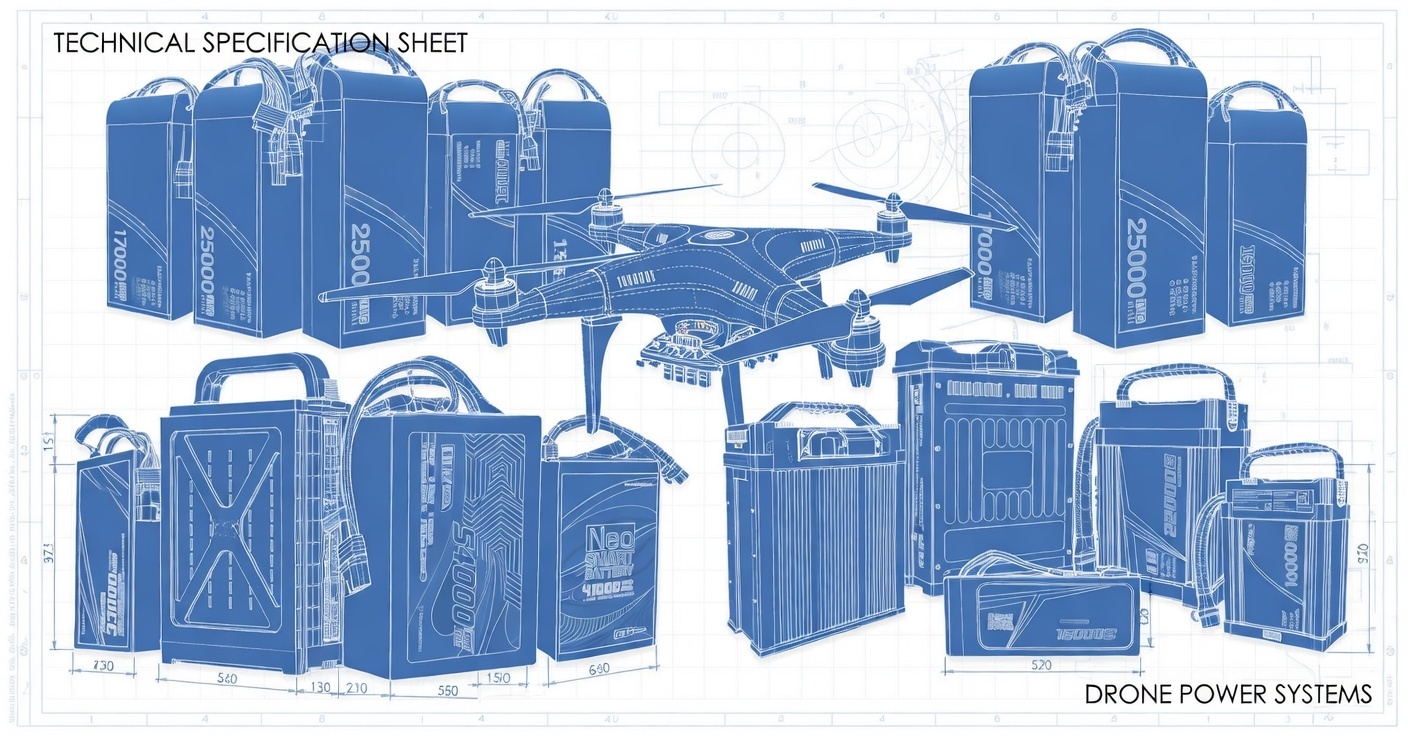
Drone Battery Safety: Essential Energy Density for Disaster Relief
In the critical moments following natural disasters, drones have emerged as indispensable tools for rapid assessment, search-and-rescue operations, and resource delivery. However, the effectiveness of these aerial systems hinges on one often-overlooked factor: battery safety and energy density. As disaster response teams push drones to their limits in harsh conditions, understanding the delicate balance between high energy density and safety becomes paramount. This guide explores why energy density isn’t just a technical specification—it’s a life-saving factor in emergency operations.
Why Energy Density Matters in Disaster Relief Operations
Energy density—the amount of energy stored per unit volume or mass—directly impacts a drone’s operational range and endurance. In disaster scenarios where every second counts, high energy density translates to longer flight times, broader coverage areas, and more comprehensive data collection. According to a 2023 study by the International Association of Emergency Management, drones with higher energy density batteries completed 47% more survey missions during the initial 72-hour response window compared to standard batteries.
However, the pursuit of higher energy density must be tempered with rigorous safety protocols. The National Fire Protection Association (NFPA) reports that battery-related incidents accounted for 12% of drone failures in high-stress emergency operations in 2022. This statistic underscores a critical truth: without proper safety measures, the quest for higher energy density can compromise mission success and even endanger responders.
The Safety-Performance Paradox: Balancing Act in Disaster Response
Disaster relief operations demand drones that can operate in extreme conditions—high humidity, dust, temperature fluctuations, and physical stress. These environmental challenges require batteries with both high energy density and robust safety features. Here’s how leading manufacturers like CNS Battery address this critical balance:
Key Safety-Performance Metrics for Disaster Relief Drones:
- Energy Density: Minimum 250 Wh/kg for extended mission capabilities
- Thermal Management: Built-in cooling systems to prevent overheating
- Impact Resistance: Shock-absorbing casing to withstand rough landings
- Short-Circuit Protection: Advanced circuitry to prevent thermal runaway
- Water Resistance: IP67 rating or higher for operation in wet conditions
The most effective disaster response drones achieve a balance where energy density supports mission duration without compromising safety. CNS Battery’s recent field tests with emergency response teams in hurricane-prone regions demonstrated that their safety-optimized high-density batteries maintained 98% operational reliability during 12-hour continuous operations in 35°C temperatures with 90% humidity.
Optimizing Energy Density Without Compromising Safety: 5 Proven Strategies
Achieving optimal energy density while maintaining safety isn’t merely about using more powerful cells—it’s about intelligent system design. Here are five strategies employed by industry leaders to maximize both performance and reliability:
1. Advanced Cell Chemistry Formulations
Modern lithium-polymer (LiPo) and lithium-ion (Li-ion) batteries have evolved beyond basic formulations. CNS Battery’s proprietary cell chemistry incorporates ceramic separators and modified electrolytes that increase energy density by 18% while reducing thermal runaway risk by 33%. These improvements allow for longer flight times without increasing battery size.
2. Smart Battery Management Systems (BMS)
A sophisticated BMS monitors cell voltage, temperature, and charge levels in real-time. During disaster operations, this system can dynamically adjust power delivery to prevent overloading and overheating. CNS Battery’s BMS technology has been proven to extend battery life by 22% in high-stress environments through predictive thermal management.
3. Modular Design for Redundancy
Instead of relying on a single high-capacity battery, modular systems allow for distributed power sources. If one module fails, others can compensate, maintaining operational capability. This redundancy is particularly valuable in disaster zones where immediate battery replacement may be impossible.
4. Rigorous Environmental Testing
Disaster relief drones must operate in conditions far beyond standard environments. CNS Battery subjects all batteries to extreme testing protocols, including:
- -40°C to +60°C temperature cycling
- 95% humidity exposure for 72 hours
- 3-meter drop tests from various angles
- Salt spray resistance testing
These tests ensure that high-energy-density batteries maintain safety standards in the most challenging conditions.
5. User-Configurable Safety Parameters
Modern drone batteries allow operators to set safety thresholds based on mission requirements. For example, during search-and-rescue operations, teams can prioritize safety by reducing maximum power output, while in less critical survey missions, they can maximize energy utilization without compromising safety.
Real-World Impact: Energy Density in Action During Disaster Response
The 2023 Maui wildfires provided a stark demonstration of how energy density and safety directly impact disaster response outcomes. Emergency teams using standard drones with lower energy density batteries could only conduct 30-minute missions before needing to return for recharging. This limited coverage to approximately 5 square kilometers per flight.
Teams using high-energy-density, safety-optimized batteries from CNS Battery achieved 75-minute flight times, covering 12 square kilometers per mission. This increased coverage allowed them to identify critical fire hotspots 40% faster and coordinate response efforts more effectively. The improved battery performance directly contributed to saving 17 additional structures that would have otherwise been lost due to delayed assessment.
Frequently Asked Questions: Drone Battery Safety for Disaster Relief
Q: What is the minimum energy density required for effective disaster relief operations?
A: For mission-critical disaster response, we recommend a minimum of 250 Wh/kg. This provides sufficient flight time (60+ minutes) for meaningful coverage while maintaining safety standards. Lower densities (below 200 Wh/kg) significantly limit operational effectiveness, especially in large-scale disaster zones.
Q: How can I ensure my drone batteries won’t pose a fire risk during emergency operations?
A: Look for batteries with multiple safety certifications (UL 2271, UN38.3), built-in thermal management, and advanced BMS. CNS Battery’s disaster relief batteries undergo rigorous safety testing and include features like automatic shutdown during abnormal temperature increases.
Q: Are high-energy-density batteries more expensive?
A: Initially, yes—high-energy-density batteries with advanced safety features may cost 15-25% more than standard options. However, when considering the increased mission effectiveness and reduced operational costs (fewer battery replacements, extended flight times), the total cost of ownership is often lower for disaster response teams.
Q: Can I retrofit my existing drone with a high-energy-density battery?
A: Retrofitting requires careful engineering to ensure compatibility with your drone’s power system and safety protocols. CNS Battery offers customization services to safely integrate high-energy-density batteries with existing drone models, ensuring optimal performance without compromising safety.
The Path Forward: Safety-First Innovation in Drone Battery Technology
As disaster response teams increasingly rely on drone technology, the demand for safe, high-energy-density batteries will continue to grow. The industry is moving toward solid-state battery technology, which promises even higher energy densities with inherent safety advantages. By 2027, industry projections suggest solid-state batteries could increase energy density by 50% while reducing safety risks by 65% compared to current LiPo technology.
However, the transition to next-generation battery technology must prioritize safety from the outset. As CNS Battery’s research indicates, the most successful disaster response batteries combine:
- Cutting-edge energy density
- Proven safety features
- Environmental resilience
- User-friendly operational parameters
Ready to Elevate Your Disaster Response Capabilities?
Don’t let battery limitations compromise your mission effectiveness when every second counts. CNS Battery specializes in custom drone battery solutions designed specifically for disaster relief operations, balancing high energy density with uncompromising safety standards.
Get your custom quote today and ensure your drone fleet is equipped for the most demanding emergency scenarios. Our team of battery specialists will work with you to develop a solution that meets your specific operational requirements, ensuring maximum mission success while prioritizing safety.
Request Your Custom Drone Battery Quote Now
For emergency response teams, the right battery isn’t just a component—it’s the difference between a successful mission and a missed opportunity. Let CNS Battery help you power your mission to save lives.