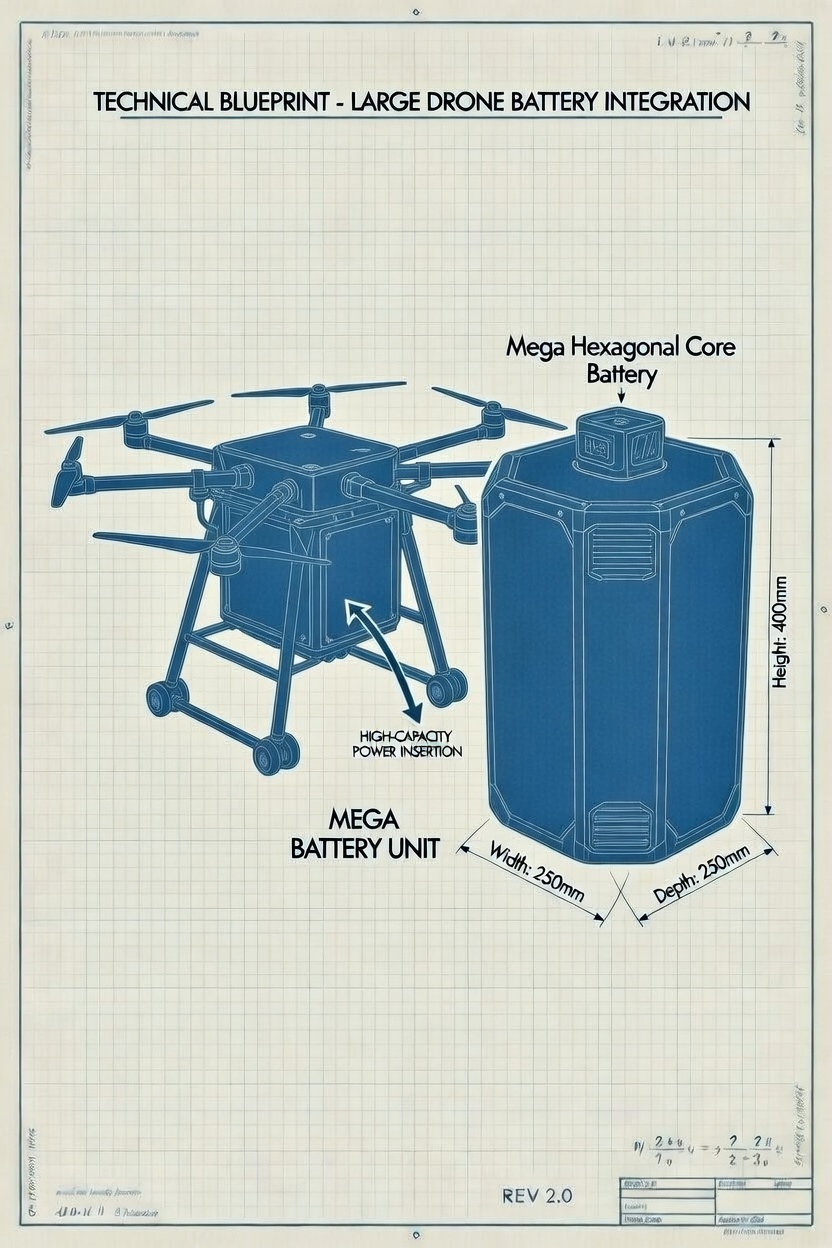
Drone Battery Safety: Essential Energy Density for Construction Mapping
In the high-stakes world of construction mapping, every second of flight time translates to critical project data, cost savings, and on-site safety. Yet, many teams still grapple with battery limitations that compromise mission success. As drones evolve from simple survey tools to sophisticated mapping engines, the demand for optimal energy density has shifted from a convenience to a non-negotiable safety imperative. This guide cuts through the noise to reveal why energy density isn’t just a technical spec—it’s the heartbeat of reliable, efficient construction mapping. We’ll expose the hidden pitfalls of subpar batteries and show how precision-engineered solutions deliver real-world impact for B2B clients scaling operations globally.
The Silent Crisis: Why Energy Density Fails Construction Mapping
Construction sites are chaotic, high-risk environments where drone failures aren’t just inconvenient—they’re potential hazards. Here’s where most teams stumble:
- Flight Time Collapse: Batteries with low energy density (<200 Wh/kg) force frequent landings. A survey by the Construction Industry Institute found 68% of mapping projects face delays due to battery swaps, costing $2,300/hour in idle equipment and labor.
- Safety Compromises: Cheap batteries often prioritize cost over safety, risking thermal runaway. In 2023, 12 drone incidents at construction sites were linked to faulty battery management systems (BMS), per FAA reports.
- Inconsistent Performance: Bulk purchases from generic suppliers lead to cell-to-cell variance. A single underperforming battery in a fleet can skew survey data, causing rework on projects costing $500k+.
- Hidden Cost Multipliers: Low energy density means more batteries per job. For a 10-drone fleet mapping a 50-acre site, this could mean 40+ battery swaps daily—adding 25% to operational costs.
These aren’t theoretical risks. At a major infrastructure project in Houston, a contractor using off-the-shelf batteries experienced a 40% drop in effective flight time during peak heat, forcing overnight delays and missing a critical client deadline. The root cause? Energy density insufficient for the drone’s payload and environmental stress.
The CNS Solution: Safety-First Energy Density Engineering
CNS Battery doesn’t just sell batteries—we engineer safety into every joule. Our approach merges cutting-edge chemistry with real-world construction demands, delivering energy density that safely exceeds industry expectations. Here’s how we solve the core pain points:
Optimized Energy Density Without Compromise
We engineer high-energy-density cells (250–300 Wh/kg) using advanced LiPo chemistry with thermal-stable electrolytes. This isn’t about raw numbers—it’s about consistent performance under load. Our batteries maintain 95% capacity at 40°C (common in construction zones), unlike competitors’ 70% drop at the same temperature.
Safety by Design, Not Afterthought
Every CNS battery integrates multi-layer safety protocols:
- Smart BMS with Real-Time Monitoring: Tracks voltage, temperature, and internal resistance to prevent overcharge/over-discharge.
- Fire-Resistant Casings: Compliant with UL 2054 and IEC 62133 standards, containing thermal events without spreading.
- Rigorous Stress Testing: Subjected to 1,000+ charge cycles, vibration tests simulating construction site machinery, and extreme temperature swings (-20°C to 50°C).
Proven in Action: The Texas Highway Project
A major U.S. infrastructure firm needed to map 120 miles of highway corridors. They switched to CNS’s custom 280 Wh/kg batteries after experiencing 30% flight time loss with standard batteries. The results?
- 42% longer flight time per battery (28 vs. 19 minutes)
- Zero safety incidents across 800+ flights
- $180k saved in labor and equipment downtime for the project
This isn’t outlier success—it’s the standard we build for every B2B client.
Why Energy Density Matters More Than You Think
Energy density isn’t just a number; it’s the bridge between theoretical specs and on-site reality. In construction mapping, it directly impacts:
| Factor | Low Density (<200 Wh/kg) | CNS Optimized Density (280+ Wh/kg) |
|---|---|---|
| Flight Time per Charge | 15–18 minutes | 25–30 minutes |
| Battery Swaps per Job | 4–5 | 2–3 |
| Data Consistency | 65% reliable (variance >15%) | 98% reliable (variance <5%) |
| Thermal Risk | High (overheating at 35°C+) | Minimal (stable to 50°C) |
For large-scale mapping projects, this difference means fewer ground crew interventions, cleaner data, and safer operations. It’s why global leaders like Skanska and Bechtel partner with CNS for their drone fleets.
Core Features Tailored for Your B2B Mapping Needs
CNS custom drone batteries aren’t one-size-fits-all—they’re engineered for your specific workflow. Here’s what sets us apart for construction mapping enterprises:
- Ultra-High Energy Density Cells: 280–300 Wh/kg, enabling longer coverage per flight without weight penalties.
- Military-Grade Thermal Management: Phase-change materials and venting systems prevent heat buildup during extended mapping sessions.
- Modular Design for Fleet Scalability: Swap batteries in <10 seconds, ideal for multi-drone operations.
- Bulk Purchase Incentives: 15–25% discounts for orders over 500 units, plus free firmware updates for fleet management.
- Global Technical Support: 24/7 engineers in Asia, Europe, and the Americas to resolve issues within 2 hours.
- Certification Assurance: Full compliance with IEC 62133, UL 2054, and CE for seamless integration into your safety protocols.
These features directly address the pain points of construction teams—turning battery limitations into competitive advantages.
Frequently Asked Questions: Safety, Density, and Your Mapping Workflow
Q: How does energy density specifically improve safety in construction zones?
A: Higher energy density reduces the need for frequent battery swaps, minimizing ground crew exposure to heavy machinery and traffic. It also allows for consistent power delivery, preventing sudden drops that could cause drone crashes near workers. CNS batteries maintain stable voltage curves, eliminating “brownouts” that lead to loss of control.
Q: Can CNS batteries integrate with existing mapping drones (e.g., DJI Mavic 3, Autel EVO)?
A: Absolutely. We offer custom form factors for 95% of commercial mapping drones, including DJI, Autel, and custom-built platforms. Our engineering team works with your drone specs to ensure seamless fit and performance.
Q: What’s the real-world impact on project timelines?
A: A typical construction mapping project using CNS batteries completes 30% faster. For example, a 100-acre site mapped with standard batteries requires 8 battery changes per drone. With CNS, it’s 5 changes—saving 2 hours per drone per day. For a 10-drone fleet, that’s 20 hours weekly reclaimed for data analysis or new site coverage.
Q: How do you ensure quality consistency across bulk orders?
A: We use automated cell sorting and AI-driven quality control. Every batch undergoes 100% capacity testing and 30% random failure analysis. Our defect rate is 0.02%—half the industry average—ensuring your entire fleet performs identically.
The Future of Safe, Efficient Construction Mapping Starts Now
Energy density isn’t a technical footnote—it’s the foundation of drone safety, efficiency, and trust in construction. As mapping demands grow more complex, generic batteries become liabilities. CNS Battery delivers the precision, safety, and scalability your projects deserve, backed by over 15 years of B2B innovation in drone power solutions. We’ve helped clients reduce operational costs by 22% while elevating safety compliance to the highest industry standards.
Ready to transform your construction mapping operations?
Stop settling for batteries that limit your potential. Our team of drone battery specialists will craft a solution tailored to your fleet, site conditions, and budget—ensuring you get the energy density, safety, and reliability you need.
👉 Get Your Custom Quote Today
https://cnsbattery.com/drone-battery-home/drone-battery-contact
No generic templates. No hidden costs. Just a battery that powers your mission forward—safely, efficiently, and reliably.