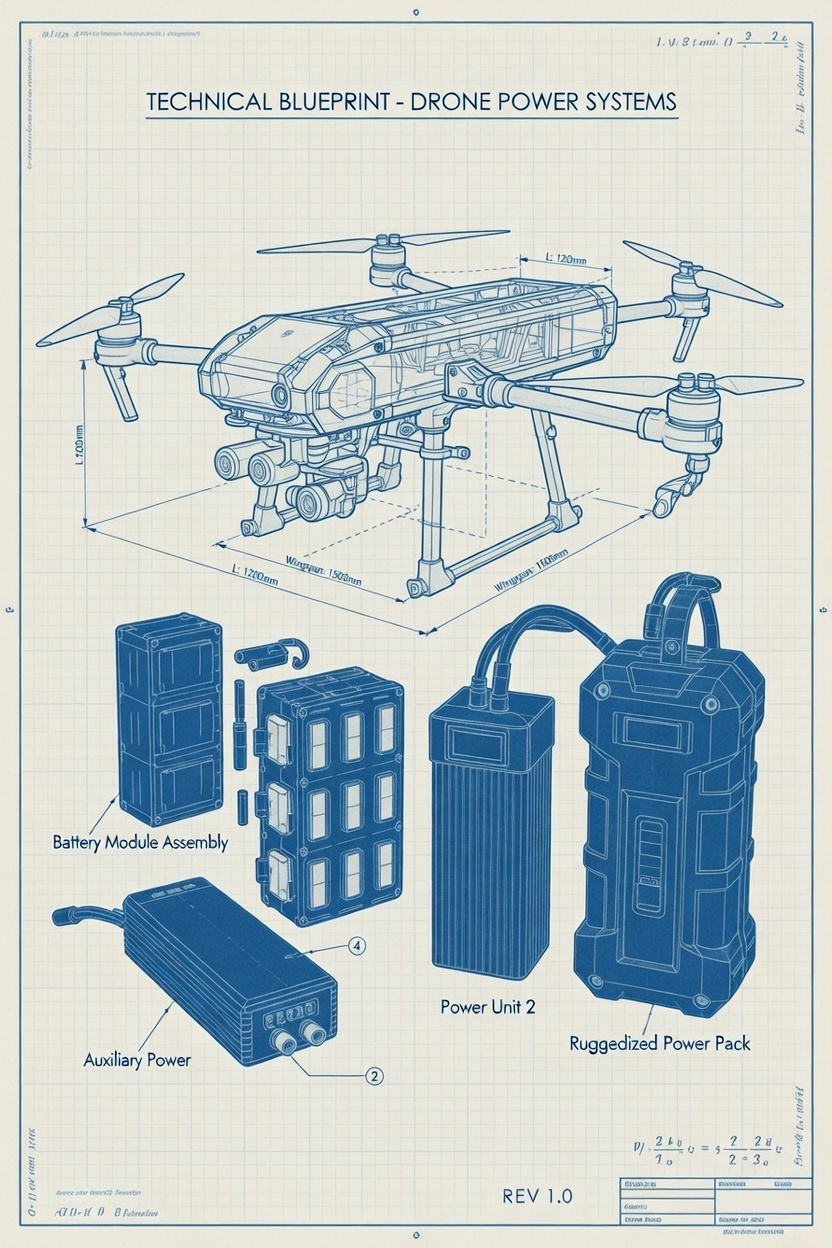
Drone Battery Safety: Essential Battery Life Cycles for Public Safety
Have you ever wondered why your drone suddenly loses power mid-flight, or worse, why some drone batteries become potential safety hazards? You’re not alone. As drone operations expand across public safety, emergency response, and commercial sectors, understanding battery life cycles has become critical—not just for performance, but for protecting lives and property below.
The stakes have never been higher. With new 2026 regulations from the FAA, EASA, and IATA tightening lithium battery transport and safety standards, drone operators must master battery management or face serious consequences. This guide delivers actionable insights to keep your operations safe, compliant, and efficient.
Why Battery Life Cycles Matter for Public Safety Operations
Public safety drones—used by fire departments, police units, search-and-rescue teams, and emergency medical services—operate in high-stakes environments where battery failure isn’t just inconvenient; it’s dangerous. A drone losing power over a crowded area, a wildfire zone, or during a critical rescue mission can have catastrophic outcomes.
According to recent industry data, one in every 15 fires is now caused by lithium-ion batteries. This statistic underscores why understanding battery degradation, proper charging cycles, and storage protocols is essential for any organization deploying drones in public safety roles.
The Hidden Danger: Battery Degradation Over Time
Lithium polymer (LiPo) batteries, the standard for most commercial and public safety drones, don’t last forever. Each charge-discharge cycle gradually reduces capacity. Most quality drone batteries maintain optimal performance for 300-500 complete cycles before showing significant degradation. However, improper handling can cut this lifespan in half.
| Battery Cycle Count | Expected Capacity Retention | Risk Level | Recommended Action |
|---|---|---|---|
| 0-100 cycles | 95-100% | Low | Normal operation |
| 100-300 cycles | 85-95% | Low-Medium | Monitor closely |
| 300-500 cycles | 75-85% | Medium | Plan replacement |
| 500+ cycles | Below 75% | High | Replace immediately |
2025-2026 Regulatory Changes You Must Know
The regulatory landscape for drone batteries has shifted dramatically. Starting January 1, 2026, IATA’s 66th Edition Dangerous Goods Regulations mandate that lithium-ion batteries exceeding 2.7Wh must be transported at no more than 30% state of charge (SoC). This affects how public safety agencies ship spare batteries between stations or to training facilities.
Additionally, the FAA and EASA have issued joint statements clarifying that existing Technical Standard Order (TSO) C179b is insufficient for propulsion battery evaluation in larger drone systems. New industry standards for Propulsion Battery Systems (PBS) are being developed, meaning organizations must stay ahead of compliance requirements.
Key Compliance Deadlines
- January 1, 2026: Mandatory 30% SoC limit for air transport of lithium batteries over 2.7Wh
- March 31, 2025: Transition deadline for UN3171 battery-powered vehicle shipping codes
- Ongoing: Enhanced thermal runaway testing requirements for public safety drone fleets
Best Practices for Extending Battery Life and Ensuring Safety
1. Smart Charging Protocols
Never leave batteries charging unattended overnight. Use smart chargers with automatic shutoff features. Charge batteries to 80-90% for regular operations and only charge to 100% immediately before critical missions. This reduces stress on battery cells and extends overall lifespan.
2. Proper Storage Conditions
Storage temperature dramatically impacts battery health. Keep batteries in climate-controlled environments between 15-25°C (59-77°F). For long-term storage (over 2 weeks), maintain batteries at 40-60% charge rather than fully charged or depleted.
3. Regular Inspection Routines
Before every flight, visually inspect batteries for:
- Swelling or deformation
- Damaged connectors or wires
- Unusual heat during charging
- Voltage imbalance between cells
Any battery showing these warning signs should be removed from service immediately and disposed of according to local hazardous materials regulations.
4. Cycle Tracking and Documentation
Maintain detailed logs for each battery in your fleet. Track:
- Purchase date and initial capacity
- Number of charge cycles
- Flight hours per charge
- Any incidents or anomalies
- Retirement date
This data helps predict failures before they occur and supports compliance audits.
Understanding Thermal Runaway: The Greatest Risk
Thermal runaway occurs when a battery cell overheats, triggering a chain reaction that can lead to fire or explosion. This risk increases with:
- Physical damage from crashes
- Overcharging or using incompatible chargers
- Exposure to extreme temperatures
- Age and cycle degradation
Public safety operators must implement thermal management protocols, including fire-resistant storage cabinets and designated charging areas away from personnel and critical equipment. Recent standards now require battery safety cabinets with fire suppression capabilities for organizations storing multiple drone batteries.
Building a Battery Safety Culture
Technology alone won’t prevent accidents. Organizations must foster a safety-first culture where:
- All personnel receive battery safety training
- Standard operating procedures are documented and enforced
- Near-misses are reported and investigated
- Regular safety audits are conducted
- Replacement budgets account for battery lifecycle costs
Quick Reference: Battery Safety Checklist
✓ Store batteries in fire-resistant containers
✓ Never charge unattended or overnight
✓ Inspect before and after every flight
✓ Track cycle counts meticulously
✓ Retire batteries at 500 cycles or 75% capacity
✓ Follow 2026 IATA 30% SoC transport rules
✓ Train all operators on emergency procedures
✓ Maintain compliance documentation
The Cost of Cutting Corners
Ignoring battery safety isn’t just risky—it’s expensive. Battery-related incidents can result in:
- Equipment loss ($5,000-$50,000+ per drone)
- Liability claims from property damage or injuries
- Regulatory fines and operational restrictions
- Reputational damage affecting funding and public trust
- Mission failures during critical emergencies
Investing in proper battery management systems, training, and replacement schedules costs far less than dealing with the aftermath of a preventable incident.
Moving Forward: Your Next Steps
Drone technology continues evolving rapidly, with solid-state batteries and advanced battery management systems on the horizon. However, today’s operators must master current best practices while preparing for tomorrow’s standards.
Don’t wait for an incident to take battery safety seriously. Review your current protocols, update your training programs, and ensure your fleet meets the latest 2026 regulatory requirements.
Need Expert Guidance on Drone Battery Safety?
Navigating battery lifecycle management and regulatory compliance can be complex. Our team specializes in industrial drone battery solutions with comprehensive support for public safety operations.
Contact Our Battery Safety Experts for personalized consultation on:
- Battery selection for your specific drone platforms
- Lifecycle management programs
- Compliance with 2025-2026 regulations
- Emergency response protocols
Explore Our Industrial Drone Battery Specifications to find the right power solutions for your public safety missions.
Learn Battery Maintenance Best Practices through our comprehensive resource center.
Visit Our Homepage for more information on cutting-edge drone battery technology.
Your commitment to battery safety protects not just your equipment, but the communities you serve. Make every cycle count.