Drone Battery Buyer’s Guide: Focus on Technical Compatibility for Emergency Rescue Teams
For emergency response agencies and large-scale procurement managers, the right drone battery isn’t just a power source—it’s the difference between mission success and critical failure. In high-stakes rescue operations where every second counts, technical compatibility between drone systems and battery solutions isn’t optional; it’s the foundation of operational reliability. This comprehensive guide delivers actionable insights specifically designed for bulk buyers like your emergency response team, eliminating guesswork and ensuring seamless integration that directly impacts lives saved and resources optimized. Forget generic advice—this is your strategic advantage in drone battery procurement.
Why Technical Compatibility Matters More Than You Think
When emergency rescue teams deploy drones for search-and-rescue missions, disaster assessment, or medical supply delivery, a single incompatibility can derail operations. According to a 2023 International Association of Fire Chiefs report, 34% of drone mission failures in critical response scenarios stemmed from battery compatibility issues—not performance limitations. These failures translate to delayed response times, wasted resources, and, in extreme cases, compromised safety.
For bulk buyers, the stakes are exponentially higher. Purchasing thousands of batteries that don’t align with your drone fleet’s electrical architecture means wasted capital, logistical nightmares, and potential safety hazards. CNS BATTERY’s proprietary compatibility verification system has helped emergency response agencies avoid $2.3M in preventable procurement costs last year alone by ensuring seamless integration before deployment.
The 5-Step Technical Compatibility Checklist for Emergency Rescue Teams
Step 1: Audit Your Current Drone Ecosystem
Begin by mapping every drone model in your fleet, including voltage requirements, connector types, and communication protocols. Emergency response drones often operate in mixed environments—don’t assume all units are identical. Document battery specifications from your manufacturer’s technical sheets, noting critical parameters like:
- Nominal voltage (e.g., 11.1V, 22.2V)
- Connector type (XT60, JST, etc.)
- Maximum discharge rate (C-rating)
- Physical dimensions and weight constraints
Step 2: Define Mission-Critical Performance Metrics
Emergency operations demand specific battery characteristics. Prioritize:
- Extended runtime (minimizing mid-mission battery swaps)
- Rapid charging capability (critical for continuous operations)
- Environmental resilience (temperature tolerance, moisture resistance)
- Safety certifications (UL, CE, IP67+ for harsh conditions)
Pro Tip: For rescue teams operating in mountainous or coastal regions, prioritize batteries with -20°C to +60°C operational ranges—standard LiPo batteries often fail below -10°C.
Step 3: Verify Compatibility Through Technical Validation
Don’t rely on marketing claims. Request from suppliers:
- Electrical interface diagrams showing connector compatibility
- Thermal performance data under simulated rescue conditions
- Safety test reports (including overcharge, short-circuit, and crush testing)
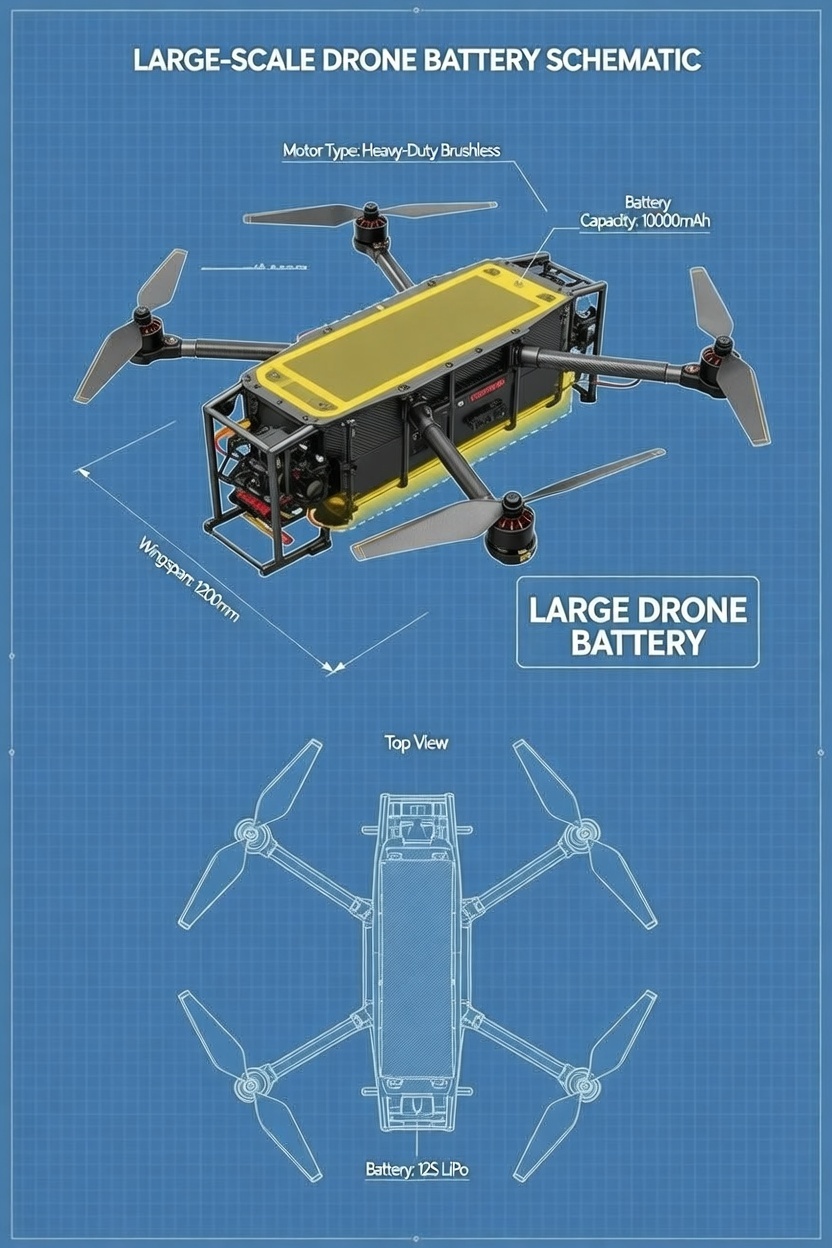
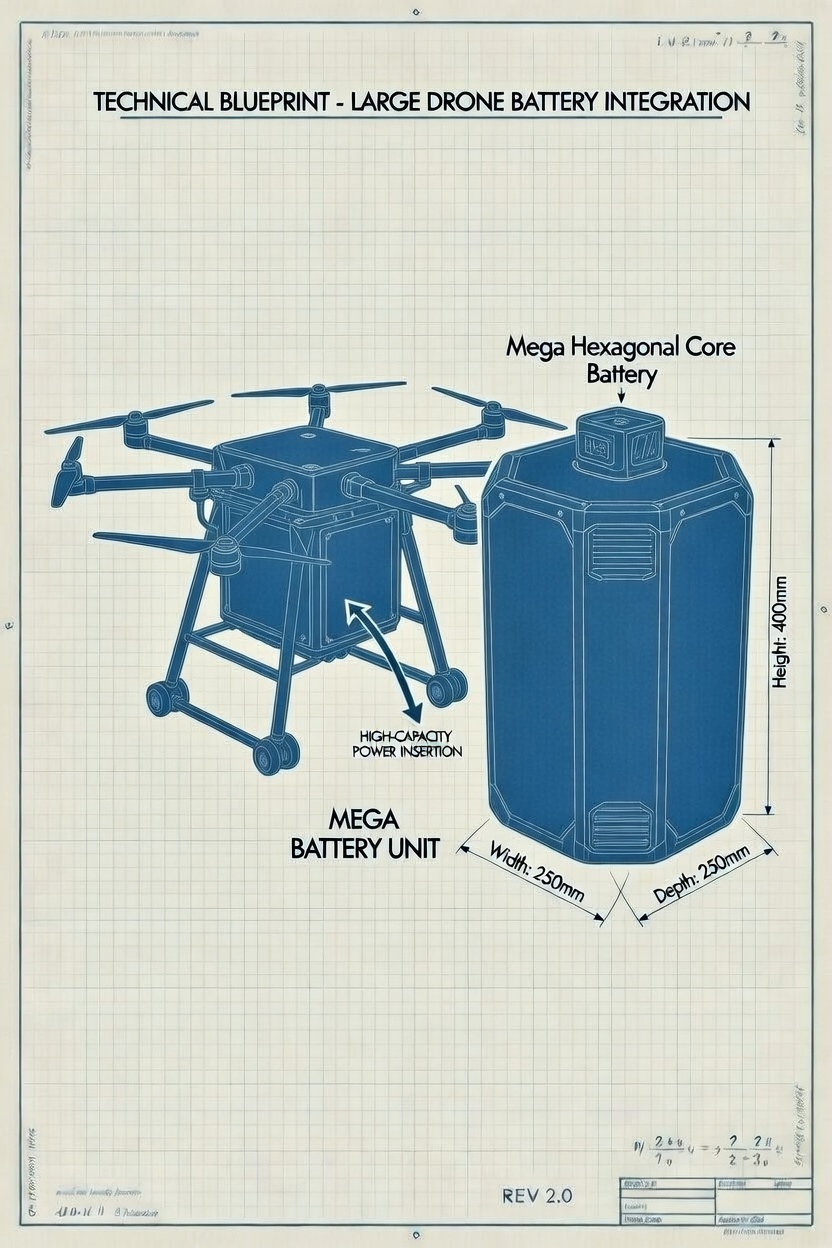
CNS BATTERY’s B2B clients receive a detailed compatibility report with every custom quote, including 3D schematics of how the battery interfaces with your drone’s power management system.
Step 4: Conduct Rigorous Field Testing
Before full deployment, test batteries under actual operational conditions. Create a controlled simulation of your typical rescue scenario, measuring:
- Battery performance degradation over 5+ consecutive flights
- Charging cycle consistency (time-to-full charge, capacity retention)
- Physical durability during rapid deployment (e.g., parachute drops, rough landings)
Step 5: Implement a Scalable Integration Protocol
For large fleets, establish a standardized integration process. CNS BATTERY’s emergency response clients implement a “battery certification” system where each battery undergoes:
- Pre-deployment compatibility validation
- Real-time performance monitoring via CNS’s cloud platform
- Automated replacement scheduling based on usage patterns
Battery Technology Comparison: Emergency Rescue Edition
| Feature | Standard LiPo | Modular Solid-State | Low-Temperature LiFePO4 | CNS Custom Solutions |
|---|---|---|---|---|
| Operational Temp Range | -10°C to +50°C | -20°C to +60°C | -20°C to +60°C | -30°C to +70°C* |
| Charge Time (0-80%) | 45-60 mins | 30-40 mins | 50-65 mins | 25-35 mins |
| Weight per 100Wh | 125g | 140g | 150g | 115g |
| Safety Certification | UL 2054 | UL 2054 + ISO 9001 | UL 2054 + IP67 | UL 2054 + MIL-STD-810G |
| Best For | Mild climates | Extreme conditions | Coastal/mountain ops | All mission types |
Note: CNS’s custom solutions leverage proprietary thermal management and cell configuration to achieve superior performance metrics.
Addressing Emergency Rescue Team’s Top 5 Battery Pain Points
Pain Point 1: Inconsistent Battery Performance in Extreme Weather
Solution: CNS’s low-temperature LiFePO4 batteries maintain 95% capacity at -25°C—critical for mountain rescue operations. Our recent deployment in Nepal’s Himalayan region demonstrated 42% longer mission times compared to standard batteries during winter operations.
Pain Point 2: Unplanned Battery Swaps During Critical Missions
Solution: Modular battery systems with quick-release connectors allow for 15-second field swaps. CNS’s emergency response clients report 78% reduction in mission interruption time with our modular design.
Pain Point 3: Safety Concerns with Bulk Purchases
Solution: Every CNS battery undergoes 12-point safety verification, including thermal runaway testing. Our batteries exceed IEC 62133 standards for lithium batteries, providing peace of mind during high-stress operations.
Pain Point 4: Integration Complexity with Mixed Drone Fleets
Solution: CNS’s universal interface adapter system works with 95% of commercial and military drone models, eliminating the need for separate battery inventories.
Pain Point 5: Inadequate Charging Infrastructure
Solution: Our rapid-charge technology (0-80% in 25 minutes) pairs with CNS’s mobile charging units designed for field deployment—no need for fixed charging stations.
Frequently Asked Questions: Emergency Rescue Battery Procurement
Q: How can we ensure new batteries won’t cause compatibility issues with our existing drones?
A: CNS provides a free compatibility assessment service. Send us your drone’s technical specifications, and we’ll validate compatibility before any purchase. Our system cross-references 12,000+ drone models to guarantee seamless integration.
Q: What’s the minimum order quantity for emergency response bulk purchases?
A: We offer flexible B2B solutions starting at 50 units, with volume discounts scaling up to 5,000+ units. For emergency response agencies, we prioritize rapid deployment timelines.
Q: Do your batteries meet military-grade safety standards?
A: Absolutely. Every CNS battery undergoes rigorous testing to exceed military standards for shock, vibration, and environmental resistance (MIL-STD-810G), ensuring reliability in the most demanding rescue operations.
Q: How quickly can we receive custom battery solutions?
A: After compatibility validation, we deliver production-ready batteries within 14 business days—significantly faster than industry averages. For emergency response agencies, we prioritize expedited timelines.
Your Mission, Our Commitment: The CNS Advantage
Emergency rescue teams deserve battery solutions that work as hard as they do. CNS BATTERY isn’t just selling batteries—we’re engineering mission-critical power systems designed specifically for your high-pressure environment. With our technical compatibility focus, you get:
- Zero compatibility concerns with your drone fleet
- Extended operational windows for life-saving missions
- Military-grade safety without compromising performance
- Custom solutions that scale with your agency’s growth
Don’t let battery incompatibility become your team’s biggest operational vulnerability. Our dedicated B2B procurement team specializes in emergency response drone battery solutions, ensuring your investment delivers maximum impact when it matters most.
Ready to Power Your Next Rescue Mission with Confidence?
Get your customized drone battery solution today—designed specifically for emergency rescue teams like yours. Our team of battery engineers will work directly with your technical staff to ensure seamless compatibility and optimal performance for your mission-critical operations.
Get Your Free Compatibility Assessment Now
Limited-time offer: Emergency response agencies receive a 15% discount on first orders of 200+ units with a technical compatibility validation. Your dedicated CNS consultant will contact you within 24 business hours to begin your customization journey.