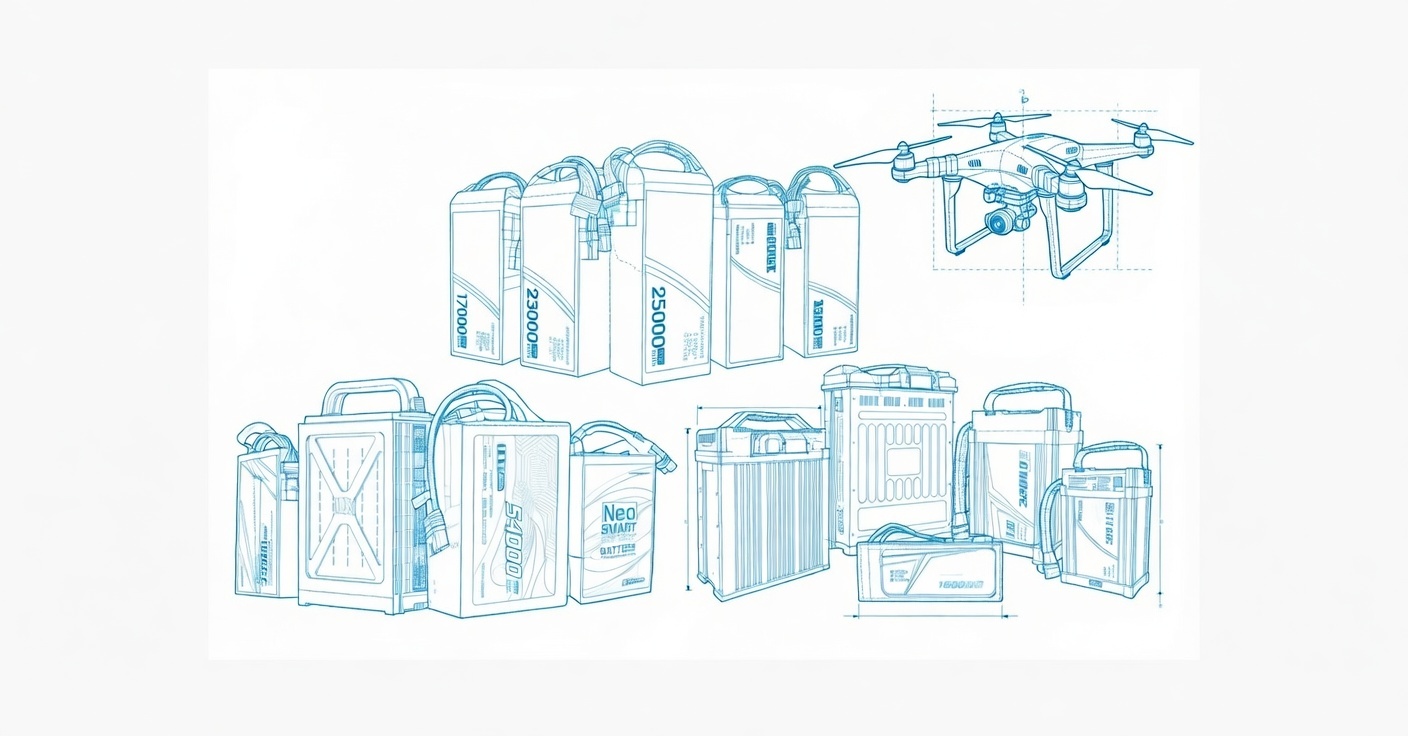
The electric vertical takeoff and landing (eVTOL) industry is experiencing unprecedented growth, with most manufacturers expected to receive Type Certification (TC) between 2025 and 2026. As this revolutionary transportation sector takes flight, battery safety has become the cornerstone of operational reliability. This comprehensive guide helps eVTOL manufacturers and drone battery buyers navigate the critical safety certification landscape.
Why Safety Certifications Matter for eVTOL Battery Selection
Battery safety isn’t just a regulatory requirement—it’s the foundation of public trust in aerial mobility. With new standards like GB38031-2025 implementing “no fire, no explosion” requirements from July 2026, the industry faces its most stringent safety expectations yet.
Key Statistics:
- TC certification cycles average approximately 3 years for manned eVTOL aircraft
- Amazon removed 17,000 uncertified battery products in March 2025 alone
- UN38.3 certification is mandatory for all lithium battery air transportation
Essential Safety Certifications for eVTOL Batteries
UN38.3: The Transportation Safety Passport
UN38.3 represents the first mandatory safety threshold for global lithium battery transportation. This United Nations standard ensures batteries withstand extreme conditions during shipping without fire or explosion risks.
Eight Core Testing Requirements:
- Altitude Simulation – Tests seal integrity at 11.6kPa pressure (equivalent to 15,000 meters)
- Thermal Testing – Evaluates performance under extreme temperature variations
- Vibration Test – Simulates transportation vibration stresses
- Shock Test – Assesses impact resistance during handling
- External Short Circuit – Verifies protection against electrical faults
- Crush Test – Tests structural integrity under 13kN pressure
- Overcharge Test – Validates charging safety mechanisms
- Forced Discharge – Ensures stability during reverse polarity scenarios
IEC 62133: Global Consumer Safety Standard
IEC 62133 covers portable sealed secondary batteries and serves as mandatory certification for North American, European, and Asian markets. The 2025 version replaced transportation testing references with direct vibration and shock requirements, eliminating multi-standard loopholes.
Critical Testing Components:
- Continuous charging at manufacturer-specified current for 28 days
- 55°C short circuit testing with resistance ≤100mΩ
- Forced discharge to 0V followed by reverse charging verification
- 13 comprehensive tests covering full battery lifecycle risks
UL 2054: Household and Commercial Battery Safety
Underwriters Laboratories UL 2054 certification covers general-purpose lithium-ion battery safety, particularly important for commercial eVTOL operations where passenger safety is paramount.
Emerging Standards for 2026
The new GB38031-2025 standard introduces seven additional requirements:
- Thermal runaway prevention without fire or explosion
- Bottom impact testing for battery pack protection
- Fast-charge cycle safety verification
- Smoke emission controls protecting occupants
Choosing the Right Battery Supplier: A Certification Checklist
When evaluating eVTOL battery manufacturers, verify these critical credentials:
Documentation Requirements:
- ✓ Valid UN38.3 test reports for each battery model
- ✓ IEC 62133 certification from accredited laboratories
- ✓ UL 2054 or equivalent regional safety marks
- ✓ Manufacturing quality management system certification (ISO 9001)
- ✓ Traceability documentation for all battery cells
Technical Verification:
- ✓ Independent third-party testing results
- ✓ Thermal management system validation
- ✓ Battery management system (BMS) safety features
- ✓ Cycle life testing under operational conditions
- ✓ Emergency discharge and isolation protocols
Common Safety Certification Mistakes to Avoid
Mistake 1: Assuming One Certification Covers All Markets
Different regions require specific certifications. European operations need CE marking, while North American markets require UL standards.
Mistake 2: Overlooking Transportation Requirements
Even certified batteries need UN38.3 documentation for air freight. Missing this certification causes shipping delays and regulatory violations.
Mistake 3: Ignoring Update Cycles
Safety standards evolve continuously. The 2026 GB38031-2025 implementation demonstrates how requirements tighten over time.
Mistake 4: Accepting Expired Certifications
Certification validity periods vary. Always verify current status before procurement decisions.
Building E-E-A-T Through Certification Compliance
Experience: Work with suppliers demonstrating proven eVTOL battery deployment history.
Expertise: Choose manufacturers with dedicated aviation battery engineering teams.
Authoritativeness: Prioritize suppliers recognized by aviation authorities and industry associations.
Trustworthiness: Verify certifications through official databases and accredited testing laboratories.
Frequently Asked Questions
Q: How long does UN38.3 certification take?
A: Complete UN38.3 testing typically requires 4-6 weeks, including sample preparation, testing, and report generation. Expedited services may reduce this timeline.
Q: Can eVTOL batteries use automotive certification standards?
A: While automotive standards like GB38031-2025 provide valuable safety frameworks, eVTOL applications require additional aviation-specific testing for altitude, vibration, and emergency scenarios.
Q: What happens if my battery fails certification testing?
A: Failed tests require manufacturer remediation followed by retesting. Common failure points include vibration, shock, crush, and external short circuit tests, often resulting from structural design defects or insufficient protection systems.
Q: Are solid-state batteries subject to different certification requirements?
A: Yes. Expected 2026 UN38.3 updates will include solid electrolyte permeability testing for emerging battery technologies. Manufacturers should monitor regulatory changes closely.
Q: How often must certifications be renewed?
A: UN38.3 requires retesting when battery design changes occur. IEC 62133 certifications typically remain valid for 3-5 years, depending on the issuing body and standard version.
Making the Final Decision: Your Safety-First Action Plan
Selecting the right eVTOL battery partner requires systematic evaluation beyond price considerations. Safety certifications represent verified commitment to operational excellence and passenger protection.
Implementation Steps:
- Request complete certification documentation from potential suppliers
- Verify certifications through official testing laboratory databases
- Conduct independent sample testing for critical applications
- Establish ongoing compliance monitoring protocols
- Maintain certification update tracking systems
Ready to Elevate Your eVTOL Battery Safety Standards?
The eVTOL revolution demands battery solutions that exceed conventional safety expectations. Partner with manufacturers who understand aviation’s unique certification landscape and commit to continuous compliance excellence.
Contact our battery specialists today to discuss your eVTOL battery certification requirements and discover how proper safety validation accelerates your path to commercial operation.
Get in touch: https://cnsbattery.com/drone-battery-home/drone-battery-contact
Our team provides comprehensive certification guidance, testing coordination, and compliance documentation support tailored to eVTOL manufacturer needs. Don’t let certification complexities delay your flight testing schedule—expert support is just one conversation away.
This guide reflects current safety certification requirements as of 2026. Standards continue evolving; always verify latest regulatory requirements with appropriate aviation authorities and testing laboratories before making procurement decisions.