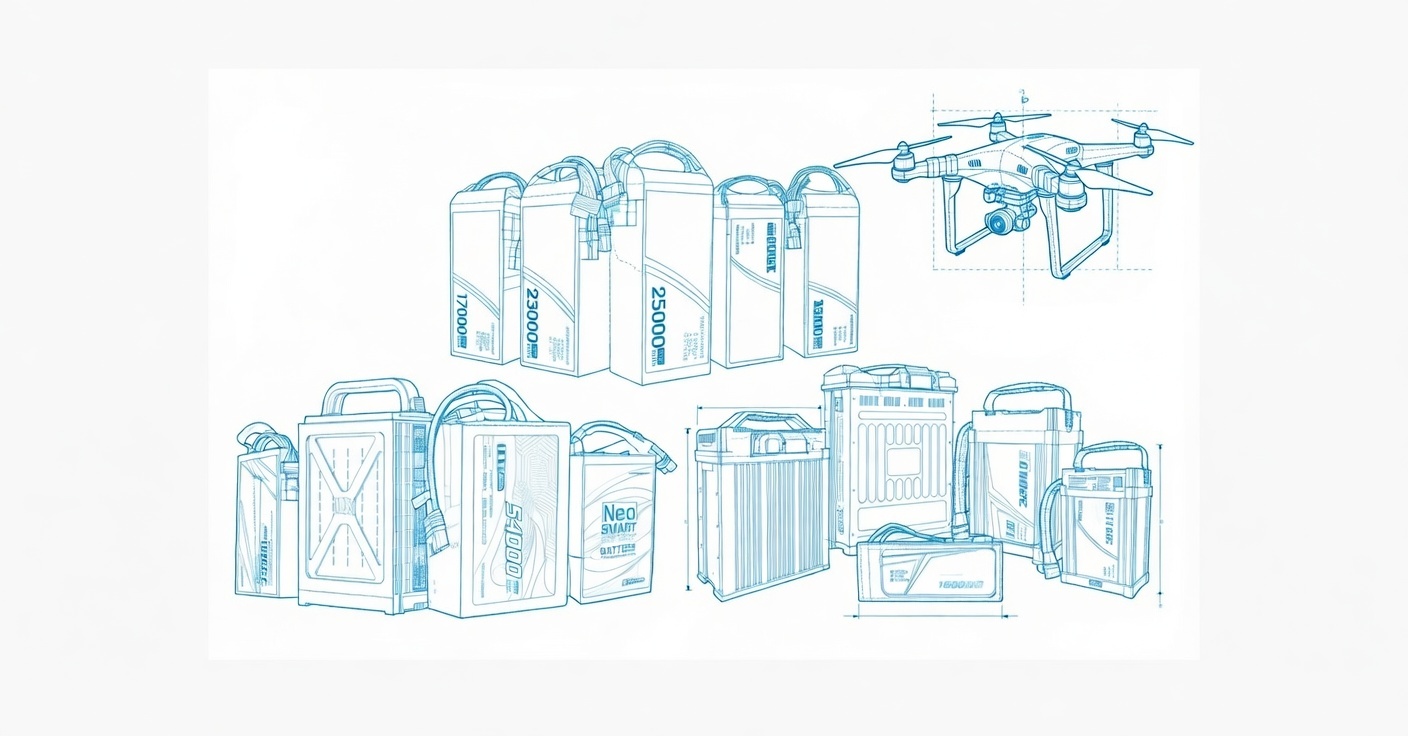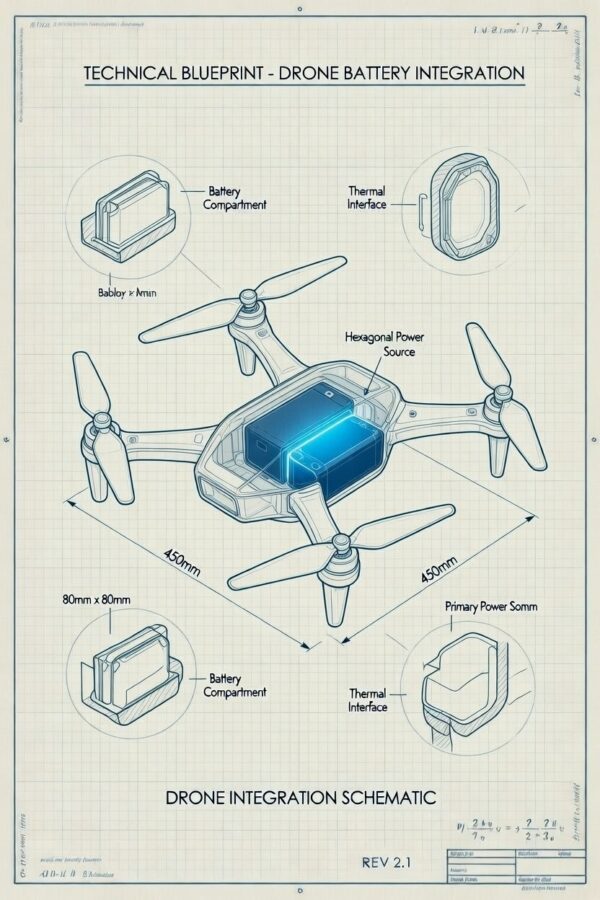
In the high-stakes world of aerial cinematography, the difference between a masterpiece and a catastrophic loss often comes down to a single component: the battery. For professionals operating heavy-lift drones equipped with cinema-grade cameras like the ARRI Alexa or RED Komodo, power failure is not merely an inconvenience; it is a financial and safety liability. A sudden voltage sag during a critical shot can result in the loss of thousands of dollars in equipment, not to mention the irreversible loss of irreplaceable footage. More critically, thermal runaway in Lithium Polymer (LiPo) cells poses a genuine fire risk, endangering crew and location. Understanding the engineering behind drone battery performance is no longer optional—it is a fundamental requirement for any serious aerial filming operation.
The Hidden Dangers: Risk Causes and Prevention
Before diving into technical specifications, professionals must acknowledge the inherent risks associated with high-discharge battery packs. The consequences of neglecting battery health are severe. Below is a summary of the primary risk factors and the necessary preventive measures to mitigate them.
- Risk: Voltage Sag Under Load
- Cause: High current draw from cinema payloads exceeds the battery’s continuous discharge rating (C-rating), causing voltage to drop below the flight controller’s low-voltage cutoff.
- Prevention: Always select batteries with a C-rating at least 20% higher than the maximum current draw of your motor and payload configuration. Perform load testing before every shoot.
- Risk: Thermal Runaway and Swelling
- Cause: Internal short circuits, physical damage, or charging at temperatures outside the safe operating range (typically 0°C to 45°C) can lead to gas buildup and cell swelling.
- Prevention: Implement strict visual inspection protocols. Discard any pack showing signs of puffing. Use smart chargers with temperature monitoring and never leave charging batteries unattended.
- Risk: Cycle Life Degradation
- Cause: Repeated deep discharges below 3.0V per cell or storing batteries at 100% charge for extended periods accelerates chemical aging.
- Prevention: Adopt a storage voltage protocol (3.8V-3.85V per cell) when batteries are not in use. Track cycle counts and retire packs after 300-400 cycles, even if they appear functional.
- Risk: Cell Imbalance
- Cause: Variations in internal resistance between cells in a series pack lead to uneven discharge, causing the weakest cell to hit the cutoff voltage prematurely.
- Prevention: Use balance chargers for every cycle. Regularly measure individual cell voltage under load to identify weak cells before they cause in-flight failures.
Engineering Deep Dive: Performance Testing Parameters
For aerial filming professionals, marketing claims are insufficient. True battery safety and reliability are verified through rigorous performance testing. When evaluating a drone battery for professionals, you must look beyond capacity (mAh) and voltage (S-count). The core of reliability lies in internal resistance and discharge curve consistency.
Internal Resistance (IR) is the most critical metric for predicting voltage sag. As indicated by engineering data from PX4 Autopilot guidelines and battery health monitoring tools, a typical healthy LiPo cell should exhibit an internal resistance of approximately 5mΩ or lower. As a battery ages, chemical degradation increases this resistance. When IR rises, the voltage drop under load (V = I × R) becomes significant. For a drone drawing 60 amps, an increase of just 2mΩ per cell in a 6S pack can result in a noticeable power loss and premature low-voltage warnings. Professionals should invest in chargers or analyzers capable of measuring IR per cell, rejecting any pack where the variance between cells exceeds 1-2mΩ.
Discharge Curve Analysis is another essential engineering reference point. A high-quality aerial filming battery should maintain a flat discharge curve until the final 15% of capacity. Sudden drops indicate poor cell quality or damage. In 2026, advanced testing protocols involve simulating flight profiles on a load tester rather than just static voltage checks. This ensures the battery can handle the dynamic current spikes required for emergency maneuvers or wind resistance without triggering a failsafe landing.
Temperature Management is often overlooked in LiPo testing. Lithium polymer chemistry is highly sensitive to thermal conditions. Operating in cold environments (below 10°C) increases internal resistance temporarily, reducing available power. Conversely, operating in high heat accelerates degradation. Professional workflows should include pre-heating batteries in cold climates and ensuring adequate airflow around the battery compartment during flight to dissipate heat generated by high C-rate discharges.
Solutions and Best Practices for Professionals
To ensure mission success, aerial filming teams must integrate battery management into their standard operating procedures. Relying on the drone’s telemetry alone is reactive; a professional approach is proactive.
First, implement a Battery Log System. Every pack should be labeled and tracked. Record the date of purchase, number of cycles, storage voltage history, and any incidents of high-temperature operation. This data allows you to predict end-of-life before failure occurs. Second, adopt a Rotation Strategy. Never fly with a single set of batteries. Rotate through multiple sets to prevent any single pack from accumulating excessive cycles quickly. This also ensures that if one batch has a manufacturing defect, it is identified early without grounding the entire fleet.
Third, invest in Industrial-Grade Charging Infrastructure. Consumer-grade chargers often lack the precision required for cinema drones. Use chargers that support advanced balancing algorithms and can handle high wattage inputs to reduce charge time without compromising cell health. Finally, establish a Quarantine Protocol. Any battery that experiences a hard landing, physical impact, or unusual heating event should be immediately removed from service and placed in a fire-resistant storage bag until it can be fully tested or safely disposed of.
Conclusion and Product Exploration
The sky is no longer the limit; it is the workplace. For aerial filming professionals, the integrity of the drone battery is the foundation upon which every shot is built. By prioritizing performance testing, understanding engineering parameters like internal resistance, and adhering to strict safety protocols, you protect your investment and ensure the safety of those on the ground. Do not leave your most critical power source to chance.
If you are looking for battery solutions engineered for the demands of professional cinematography, it is time to explore options that prioritize verified performance over marketing specs. We invite you to discuss your specific power requirements with our engineering team.
Ready to elevate your aerial power standards?
Contact us today for specialized drone battery consultations and high-performance solutions tailored for cinema drones.
Contact Page: https://cnsbattery.com/drone-battery-home/drone-battery-contact
Ensure your next flight is powered by precision. Choose reliability. Choose safety. Choose CNS Battery.