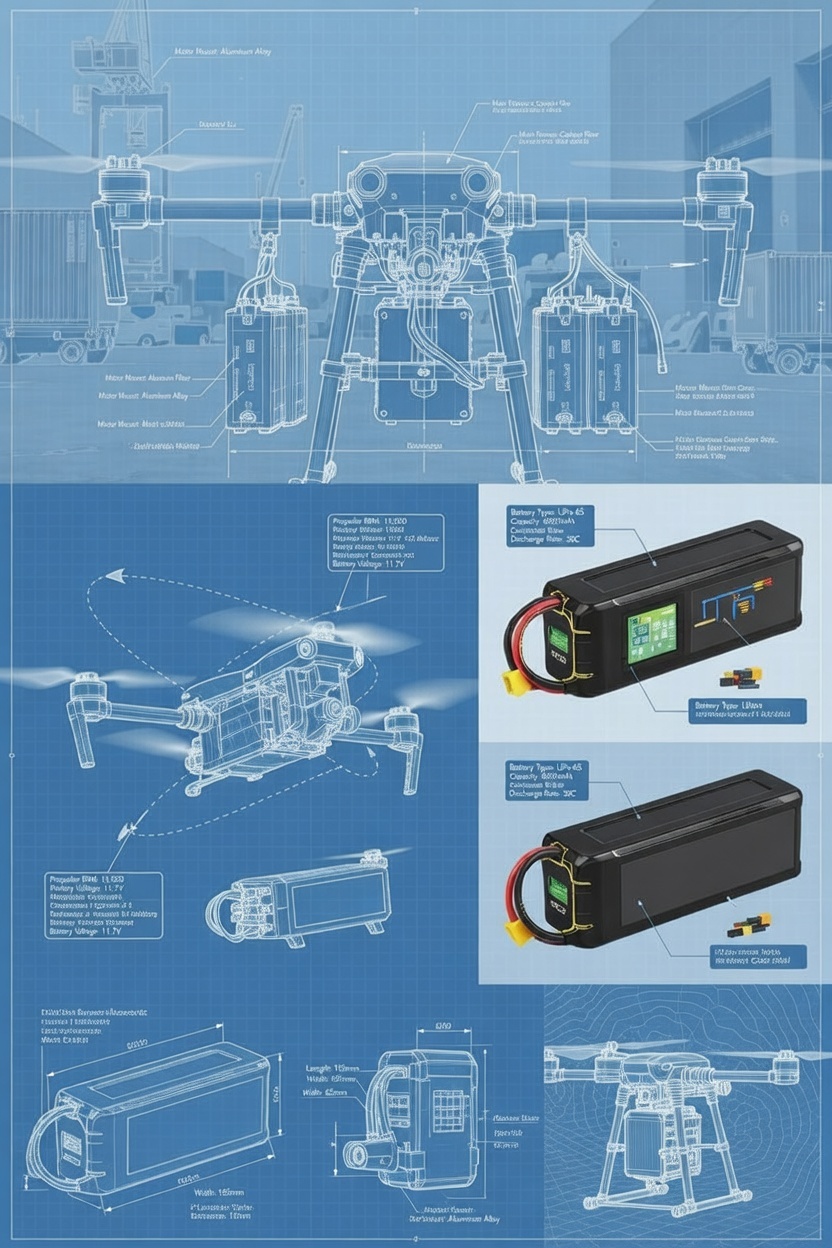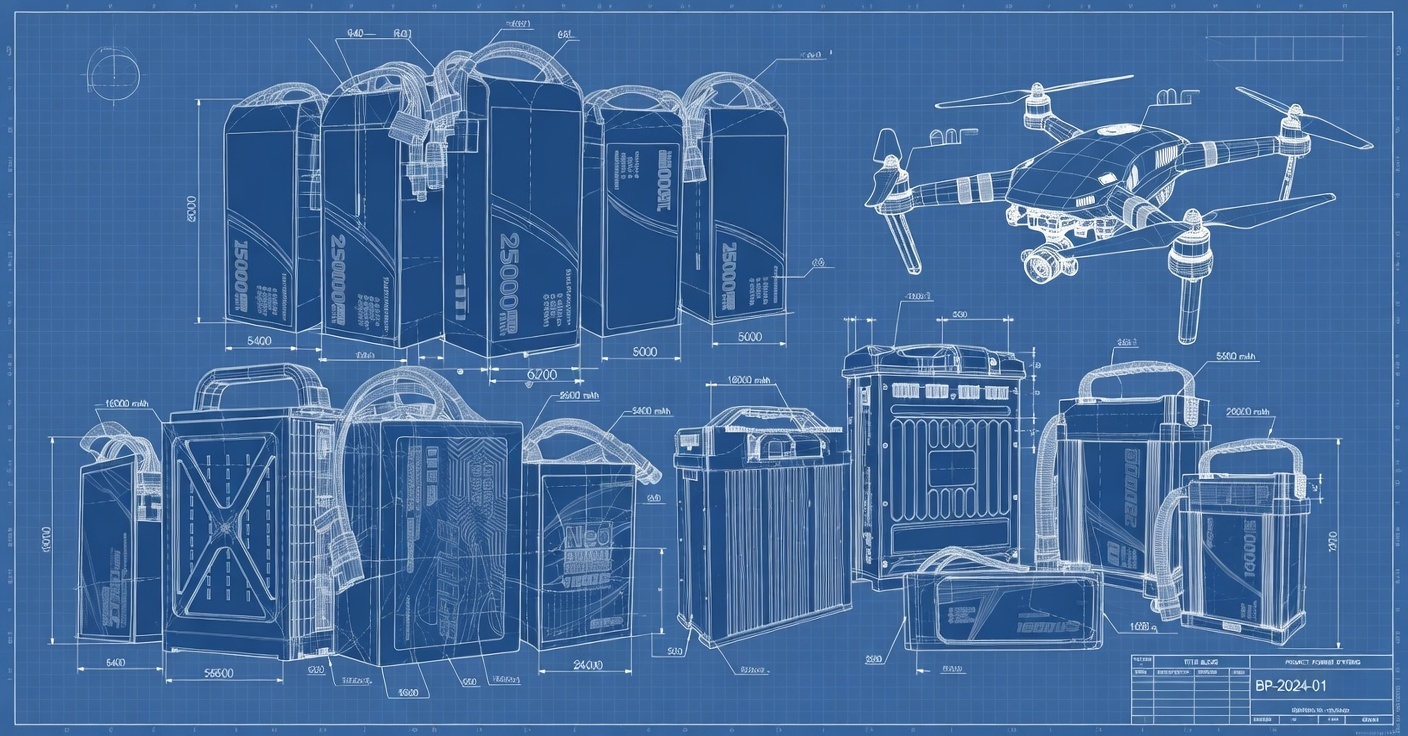
Border Patrol operations demand the ultimate in reliability. You’re not just flying a drone; you’re monitoring national security, tracking illegal movements, and operating in harsh, remote environments where failure is not an option. Yet, many teams struggle with battery limitations that cut missions short, lack the power for heavy sensor payloads, or fail in extreme temperatures.
This guide dives deep into the specific battery technology trends and solutions engineered for heavy-lift border patrol drones. We’ll explore how to diagnose power issues and fix them with the right high-capacity, ruggedized battery systems.
The Heavy-Lift Dilemma: Why Standard Batteries Fail in Border Security
Border patrol drones are workhorses. They carry heavy payloads like high-resolution FLIR cameras, radar systems, and powerful communication relays. Standard Lithium Polymer (LiPo) batteries often fall short due to energy density limitations and safety concerns.
The Shift to Semi-Solid State and High-Density Lithium
To keep your surveillance drones airborne for the 4-6 hours often required for border sweeps, the industry is shifting toward Semi-Solid State and High-Voltage Lithium technologies. These aren’t just buzzwords; they represent a 30% increase in flight time and significantly better thermal stability—critical when your drone is exposed to the scorching sun or freezing mountain passes.
Key Insight: For heavy-lift operations, energy density (measured in Wh/kg) is king. Standard batteries offer around 200 Wh/kg, but the latest semi-solid state solutions can reach up to 380 Wh/kg. This means you can carry heavier cameras without sacrificing flight time.
Diagnosing Common Power Issues
If your border patrol drones are experiencing the following, it’s a sign your battery technology is outdated:
- “Bricking” in Cold Weather: Standard batteries lose capacity rapidly below freezing.
- Voltage Sag: Your drone loses power (and altitude) when you activate high-power sensors.
- Swelling: Batteries physically expand after a few dozen cycles, indicating poor cell stacking technology.
Top 3 Battery Technologies for Modern Border Patrol
To fix these issues, you need to look beyond generic drone batteries. Here is a comparison of the technologies solving these problems today.
| Technology Type | Energy Density | Best Use Case | Durability |
|---|---|---|---|
| Standard LiPo | 200 Wh/kg | Short-range, light payload | Low (Swells easily) |
| High-Voltage LiPo | 240 Wh/kg | Extended range, medium payload | Medium |
| Semi-Solid State | 380 Wh/kg | Heavy-lift, long-endurance | High (Thermal stability) |
1. Semi-Solid State Batteries: The Future of Long-Range Surveillance
For border patrol, the Semi-Solid State Drone Battery is becoming the gold standard. These batteries utilize NMC 811 chemistry (80% Nickel, 10% Manganese, 10% Cobalt), which allows for an exceptional energy density of up to 380 Wh/kg. This translates directly to longer loiter times over remote border areas.
- Extreme Temperature Resilience: Unlike standard batteries that fail in the cold, these are designed for wide operating ranges (-30°C to 60°C).
- Safety: The semi-solid electrolyte reduces the risk of fire, a critical factor when flying over dry, brush-covered border regions.
2. Smart BMS: Turning Data into Action
Border patrol isn’t just about flying; it’s about data collection. A Smart Battery Management System (BMS) is no longer optional. It monitors every cell in real-time, preventing over-discharge and balancing the load.
- Real-Time Health Monitoring: Using a Bluetooth app, your team can check the State of Health (SOH) before takeoff, ensuring the battery won’t fail mid-mission.
- Anti-Spark Technology: Essential for safety during rapid battery swaps in the field.
3. Ruggedized & Waterproof Design
Border environments are unforgiving. You need batteries with an IP67 rating to withstand rain, dust, and humidity. Look for batteries with explosion-proof casings and robust connectors that won’t vibrate loose during long flights.
How to Fix Your Current Power Limitations
If your current fleet is struggling, here is how to upgrade your power strategy.
Step 1: Calculate Your True Energy Needs
Don’t guess. Border patrol drones often require 10,000mAh to 40,000mAh capacities. Use the following checklist to evaluate your needs:
- Payload Weight: Add the weight of your camera, radar, and comms gear.
- Desired Flight Time: Double your standard mission time to account for search patterns.
- Environmental Factors: Add 20% capacity if you operate in high altitudes or cold climates.
Step 2: Choose the Right Configuration
For heavy-lift applications, 6S (22.2V) and 12S (44.4V) configurations are the most common. However, ultra-high voltage series (like 3.95V per cell) are now available to squeeze even more power out of the same size battery.
Step 3: Implement a Smart Charging Protocol
Fast charging is tempting, but for longevity, border patrol teams should utilize 1C-3C charging rates. This extends the battery cycle life to over 600 cycles, saving your department thousands in replacement costs.
The CNS Drone Battery Solution for Border Security
At CNS Drone Battery, we understand that border patrol operations require military-grade reliability. We don’t just sell batteries; we provide custom drone battery solutions designed for B2B excellence.
Why Border Patrol Teams Choose CNS:
- Customization: We don’t force your drone into a standard battery mold. We customize the voltage, capacity, size, and shape to fit your specific heavy-lift airframe.
- Rigorous Testing: Every battery undergoes 100% testing for cycle life and safety compliance before it leaves our factory in Zhengzhou.
- Global Supply Chain: We support worldwide shipping, ensuring your remote border stations are never grounded due to lack of power.
Whether you need a standard LiPo upgrade or the cutting-edge Semi-Solid State technology, we have the expertise to keep your surveillance eyes in the sky.
Don’t let power limitations compromise your border security missions. Contact us today for a free consultation and get a personalized assessment report for your heavy-lift drone fleet.
Contact Us for a Free Custom Quote
Explore more resources to optimize your drone operations:
- Learn about our Industrial Drone Battery Specifications: Drone Battery Products
- Find troubleshooting guides and maintenance best practices: Battery Help Center