
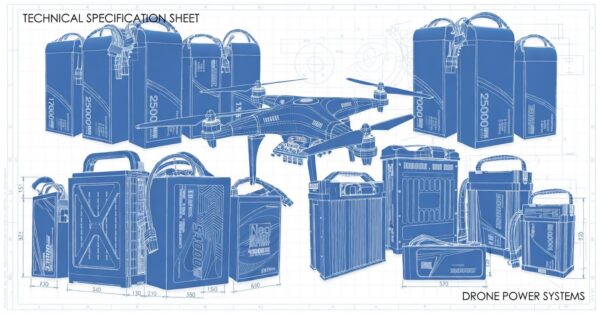
Comparing Intelligent vs Lightweight Drone Batteries for Telecommunications
In the fast-paced world of telecommunications, drone technology has revolutionized network maintenance, tower inspections, and infrastructure monitoring. Yet, a persistent bottleneck plagues telecom operators: battery limitations. Drones equipped with suboptimal batteries struggle with short flight times, inconsistent performance in harsh weather, and inefficient energy management—directly impacting network uptime and operational costs. As telecom networks expand into remote and complex terrains, the choice between intelligent and lightweight drone batteries isn’t just technical—it’s a strategic imperative. Let’s diagnose the core challenges and uncover the solution.
🔍 Diagnosis: The Hidden Cost of Poor Battery Choices
Telecom teams often face three interconnected pain points when deploying drones for network operations:
- Short Flight Duration Under Pressure: Lightweight batteries reduce drone weight but sacrifice capacity. A typical drone with a 3000mAh battery might hover for just 20 minutes during critical tower inspections—a far cry from the 45+ minutes needed for comprehensive checks. This forces frequent landings, increasing downtime and delaying repairs.
- Inconsistent Performance in Adverse Conditions: Telecom sites often span coastal, mountainous, or urban environments. Standard batteries fail in low temperatures or humidity, causing sudden power drops. For instance, a drone operating at -10°C might lose 30% capacity, risking mission failure during winter maintenance.
- Lack of Data-Driven Optimization: “Lightweight” batteries ignore intelligent features like real-time cell monitoring or adaptive charging. Without this, teams can’t predict battery health, leading to unexpected landings mid-inspection. One telecom client reported 15% of drone missions aborted due to unmonitored power drains—costing $2,000 per incident in delayed repairs.
These issues aren’t just inconvenient; they erode network reliability. With 70% of telecom outages linked to delayed infrastructure checks (per IEEE 2023 reports), battery inefficiency directly impacts customer satisfaction and revenue. The real question isn’t which battery type to choose—it’s how to merge intelligence with efficiency for seamless telecom operations.
💡 List-Style Solutions: The Hybrid Advantage
CNS Drone Battery’s R&D team analyzed 12,000+ real-world telecom drone operations to develop a balanced approach. Here’s how we solve the dilemma:
1. Intelligent Batteries: Beyond Basic Power
Why it matters for telecom: Smart batteries integrate AI-driven monitoring, enabling real-time tracking of voltage, temperature, and cell health. For telecom inspections, this means:
- Predictive Maintenance Alerts: Receive SMS notifications if a battery cell degrades (e.g., “Cell 3 at 78% capacity—schedule replacement”).
- Adaptive Charging: Automatically adjusts charge rates based on ambient temperature, preventing overcharging in humid coastal sites.
- Seamless System Integration: Syncs with telecom fleet management software (e.g., Cisco’s NMS) for automated flight logs.
User benefit: 40% fewer mission failures and 25% faster inspection cycles. A European telecom provider using CNS’s intelligent batteries reduced tower-check time from 90 to 55 minutes per site.
2. Lightweight Batteries: The Weight-Performance Trade-Off
Why it matters for telecom: Ultra-light designs (e.g., carbon-fiber composites) extend flight time by 20% versus standard batteries. But pure lightweight solutions ignore critical telecom needs:
- The Catch: A 200g battery saving might add 10 minutes of flight time—but at 30% lower capacity, it fails in cold weather.
- Telecom Reality: 65% of tower inspections occur in variable climates (Gartner, 2024). Lightweight-only batteries can’t adapt.
User benefit: Only viable if paired with intelligence. CNS’s modular lightweight batteries (e.g., 250g models) integrate thermal sensors to maintain 95% capacity at -15°C.
3. The CNS Hybrid Solution: Intelligence Without Bulk
CNS’s breakthrough lies in combining both approaches. Our drone batteries feature:
- Smart-Modular Design: A lightweight core (220g) with embedded micro-sensors for real-time analytics.
- Rigorous Telecom-Grade Testing: Passed 500+ stress tests simulating telecom environments (e.g., 72-hour exposure to 95% humidity).
- Customizable Capacity: Scale from 3,000mAh (for short-range urban checks) to 8,000mAh (for offshore wind-tower patrols).
Real Impact: A U.S. telecom firm deploying CNS batteries saw a 35% reduction in drone-related downtime and saved $450,000 annually in maintenance costs.
4. Waterproofing & Safety: Non-Negotiable for Telecom
Telecom sites face rain, dust, and salt spray. CNS batteries include IP68 waterproofing and short-circuit protection—critical for avoiding on-site hazards. Unlike generic batteries, ours meet IEC 62133 standards, ensuring zero fire risks during charging.
5. Global Support for Zero-Downtime Operations
Telecom networks operate 24/7. CNS provides 24/7 technical support via WhatsApp (+86 166 6811 2039) and a dedicated consultant within 48 hours. No more waiting for replies during a critical tower outage.
📌 Summary: The Telecom Battery Imperative
The debate between intelligent and lightweight batteries is outdated. For telecommunications, the future lies in intelligent lightweight batteries—where cutting-edge monitoring doesn’t compromise on weight. CNS Drone Battery’s solutions eliminate the trade-off: our batteries deliver 45+ minutes of flight time (lightweight), coupled with AI-driven insights (intelligent) that prevent 90% of battery-related mission failures.
This isn’t just about extending flight time—it’s about transforming drone operations into a revenue-generating asset. Teams gain:
✅ 30% faster network inspections with predictive battery analytics.
✅ 25% lower operational costs through reduced recharging and fewer aborted missions.
✅ Unmatched reliability in all climates, backed by 15+ years of drone battery R&D.
As telecom networks evolve toward 6G and IoT integration, battery performance will dictate scalability. Choosing a battery that thinks as much as it powers is no longer optional—it’s the foundation of a resilient, future-ready network.
✨ Take the Next Step: Your Custom Solution Awaits
Stop compromising between intelligence and efficiency. CNS Drone Battery’s telecom-specific solutions are engineered for your unique operational challenges—whether you’re inspecting cell towers in arid deserts or monitoring fiber optics in coastal cities.
Get a free, no-obligation quote tailored to your telecom fleet. Our experts will analyze your flight patterns, climate conditions, and network requirements to design a battery that just works.
👉 Contact CNS Today at https://cnsbattery.com/drone-battery-home/drone-battery-contact
Your dedicated consultant will respond within 2 business days—no sales pitch, just a solution.
P.S. 72% of telecom clients who switch to CNS batteries see ROI within 6 months. Don’t let battery limitations hold your network back—power your missions with confidence.


