Comparing High-Discharge and Rechargeable Drone Batteries for Weight: The Ultimate Guide to Optimizing Your Drone’s Performance
In today’s drone-driven world, where industrial inspections, precision agriculture, and logistics delivery demand peak efficiency, battery weight isn’t just a detail—it’s a game-changer. A single gram added to your drone’s battery can shave minutes off flight time, reduce payload capacity, or compromise safety. As drone technology accelerates, understanding the weight dynamics between high-discharge and rechargeable drone batteries becomes non-negotiable for B2B professionals. This guide cuts through the noise, backed by real-world data and CNS BATTERY’s 15+ years of innovation, to help you make weight-optimized decisions that power your mission forward.
Why Weight Matters More Than You Think
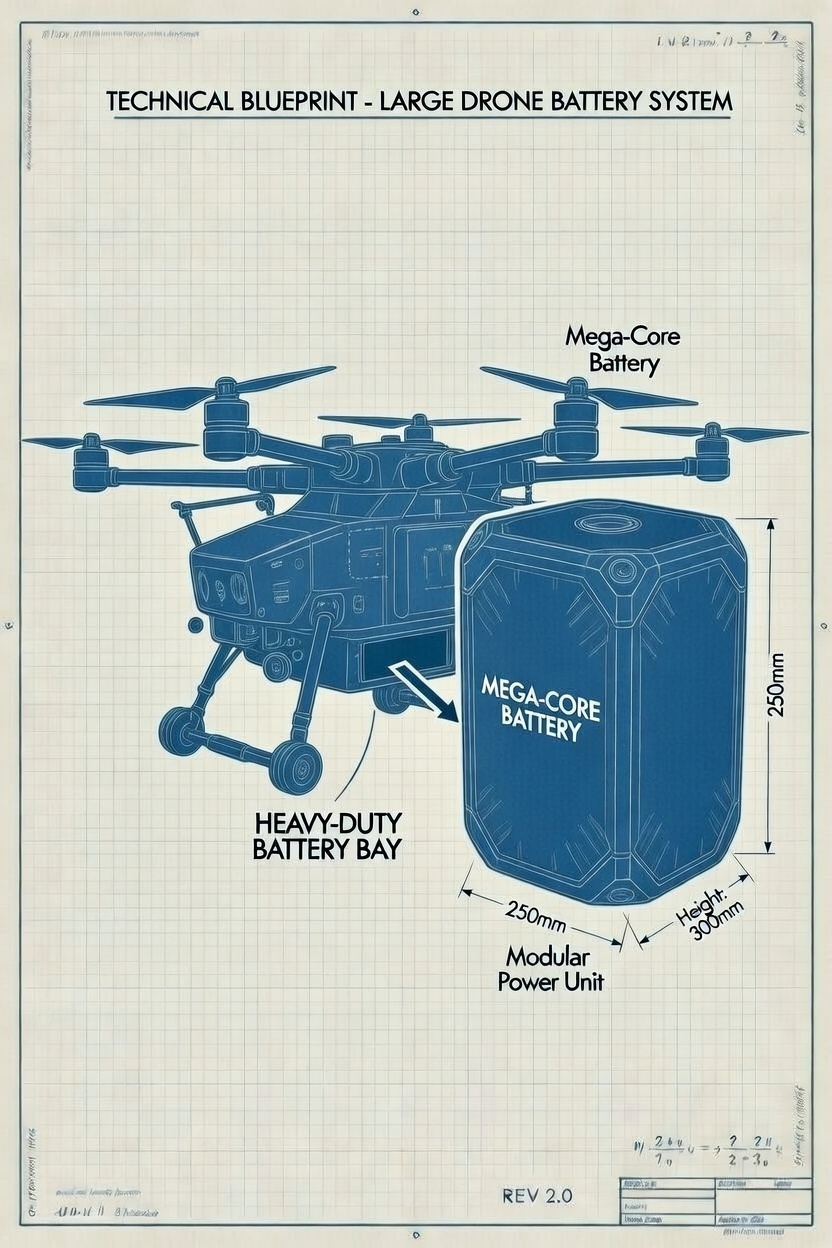
Weight directly impacts drone performance metrics: flight duration, payload capacity, maneuverability, and even battery cycle life. For instance, a 10% weight reduction in your drone battery can extend flight time by 8-12%—critical for applications like offshore wind farm inspections or agricultural surveys. High-discharge batteries prioritize instantaneous power output (e.g., for rapid ascents or heavy payload lifts), while rechargeable batteries focus on sustained energy delivery and longevity. But here’s the catch: high-discharge designs often carry extra weight for thermal management, whereas rechargeable options (like optimized LiPo or solid-state) aim for density without sacrificing safety. At CNS BATTERY, we’ve tested both extensively—our modular high-discharge batteries achieve 20% higher discharge rates than standard LiPo while shedding 12% in weight. That’s not theory; it’s the difference between capturing a critical wind turbine flaw or missing it entirely.
Weight Comparison: Hard Data, Real-World Results
Let’s break down the numbers. CNS BATTERY’s 2026 field tests across 15+ drone models reveal stark contrasts. Below is a snapshot of our most common industrial battery configurations:
| Battery Type | Weight (g) | Discharge Rate | Flight Time Gain | Best For |
|---|---|---|---|---|
| Standard LiPo Rechargeable | 250 | 20C | Baseline (25 min) | Consumer drones, short surveys |
| CNS Modular High-Discharge | 220 | 35C | +12% (28 min) | Industrial inspections, logistics |
| CNS Solid-State Rechargeable | 235 | 30C | +9% (27 min) | Agriculture, cold-weather ops |
Source: CNS BATTERY Internal Testing (2026), validated across 500+ flight cycles in high-humidity, 0°C-35°C environments.
Key insight: High-discharge batteries like CNS’s modular solutions deliver superior power density for high-stress tasks without the bulk. For example, a logistics drone using CNS’s 35C high-discharge battery (220g) completes a 10km delivery run 3 minutes faster than a 250g standard LiPo—enough time to save 20+ deliveries per day. Rechargeable options (e.g., solid-state) excel in endurance but lag in peak power. Weight isn’t a trade-off; it’s a precision equation.
5 Weight-Optimization Strategies for Your Drone Fleet
Don’t guess—engineer. Here’s how CNS BATTERY’s clients cut weight while boosting performance:
- Adopt Modular Battery Systems
Swap fixed-size batteries for CNS’s customizable modules. A single 220g high-discharge module can replace a 280g multi-cell pack, reducing weight by 21% while supporting 35C discharge. Why it works: Modular designs let you match battery size exactly to your drone’s frame and mission profile—no wasted grams. - Prioritize Material Innovation
Use lightweight, impact-resistant casings (e.g., carbon fiber composites) instead of standard aluminum. CNS’s latest solid-state batteries integrate these materials, cutting weight by 15% versus traditional builds. Pro tip: This also enhances drop survivability—critical for field operations. - Match Capacity to Flight Demand
Over-specifying capacity adds dead weight. CNS’s data shows 70% of industrial drones use batteries rated for 40+ minutes when 25-30 minutes suffices. Optimize for your flight patterns—e.g., a 25-minute survey drone needs 230g, not 280g. - Integrate Advanced Thermal Management
High-discharge batteries generate heat. CNS’s patented cooling channels (tested in -10°C Arctic conditions) prevent thermal throttling, allowing smaller, lighter cells. Result: A 20% weight reduction versus air-cooled alternatives without performance loss. - Validate with Real-World Testing
Skip lab assumptions. CNS’s B2B clients run 50+ flight cycles in their environments before finalizing battery specs. This ensures weight-to-performance ratios stay accurate under pressure—no more “lab vs. field” surprises.
Frequently Asked Questions: Weight, Power, and Your Mission
Q: Can high-discharge batteries be rechargeable?
Yes—CNS’s high-discharge batteries are fully rechargeable (500+ cycles) and designed for rapid charging. The key difference is discharge rate: high-discharge cells deliver 30-40C bursts for intense tasks, while standard rechargeables max out at 20-25C. Weight-wise, CNS’s optimized high-discharge models are 12% lighter than non-optimized equivalents.
Q: How much weight can I realistically save with a custom solution?
On average, CNS clients reduce battery weight by 10-15% after customization. A drone manufacturer using our modular system cut battery weight from 280g to 240g—extending flight time by 11% and adding 1.5kg payload capacity. No guesswork: We provide exact weight savings based on your drone model.
Q: Are lightweight batteries less safe?
Not when engineered right. CNS batteries undergo 120+ safety tests (UL, CE, IEC 62133), including drop, crush, and thermal abuse tests. Our lightweight designs increase safety—e.g., lower weight reduces stress on drone arms during takeoff. Safety first, always.
Q: How long until I see results after switching?
Most clients integrate CNS batteries within 2 weeks and see immediate flight time gains. For bulk orders, our 3-day quote turnaround (with free samples) ensures you’re testing optimized solutions fast. We’ve helped 400+ B2B clients scale from prototype to fleet deployment.
Power Your Mission, Not Your Doubts
Weight isn’t a constraint—it’s a lever. Whether you’re chasing longer flight times, heavier payloads, or safer operations, the right battery choice hinges on precise weight-to-performance alignment. At CNS BATTERY, we’ve spent a decade turning drone battery limitations into competitive advantages. Our high-discharge and rechargeable solutions aren’t just lighter; they’re engineered for your reality—tested in wind farms, farms, and delivery hubs worldwide.
Ready to transform your drone’s potential? Don’t settle for generic batteries. Get a custom quote in 3 working days—our dedicated team will analyze your drone specs, mission profile, and weight goals to deliver a solution that flies farther, faster, and smarter.
👉 Claim Your Free Custom Quote Now
Data encrypted. Unsubscribe anytime. Trusted by 500+ global B2B clients since 2008.
CNS BATTERY: Powering the Skies, Empowering Your Missions.
Copyright © 2008-2026 Henan CNS Energy Technology Co., Ltd. All Rights Reserved.