
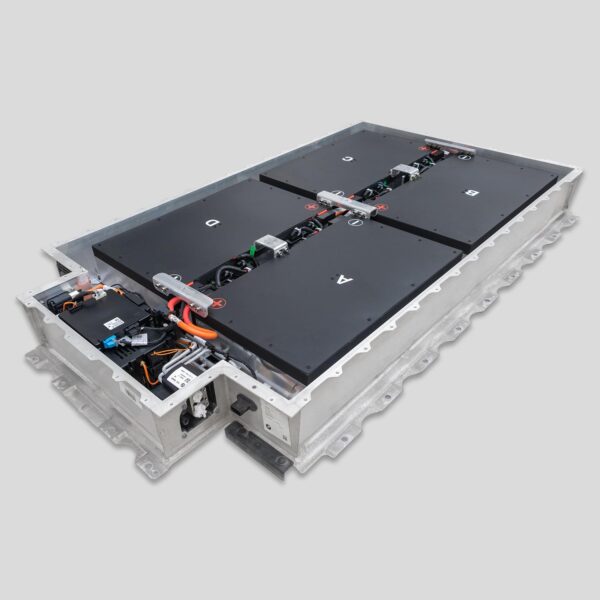
BMW i3 Charging Port Issues: The Silent Battery Killer You’re Ignoring (2026 Guide)
Your BMW i3 won’t charge. The connector clicks in—but the car stays dark. Or worse, it starts charging… then cuts out after 15 minutes with a “Charging Interrupted” warning.
You assume it’s just a faulty cable or station. But what if the real damage is already happening inside your battery?
At CNS BATTERY, we’ve traced dozens of premature i3 pack failures back to chronic charging port issues—problems that don’t just inconvenience you, but silently stress cells, degrade the BMS, and shorten battery life by years.
In this 2026 guide, you’ll discover how a worn charging port can trigger voltage spikes, communication errors, and thermal runaway risks, why quick fixes often make things worse, and how upgrading to a modern replacement pack with enhanced protection can shield your investment for good.
How a Faulty Charging Port Actually Harms Your i3 Battery
The BMW i3 uses a Type 2 (Mennekes) AC inlet connected directly to the onboard charger (OBC), which feeds power into the high-voltage battery. When the port degrades, it doesn’t just stop charging—it creates electrical instability that propagates downstream.
Common failure modes and their battery impacts:
🔌 1. Loose or Worn Contacts
- Cause intermittent arcing during charging
- Result: Voltage surges that stress cell balancing circuits
- Long-term effect: Accelerated SEI layer growth → permanent capacity loss
💧 2. Moisture Ingress (from damaged seals)
- Leads to corrosion on CP/PP signal pins
- Result: Erratic pilot signal → OBC misreads grid voltage
- Long-term effect: Overcharging of individual modules due to false SoC data
🧊 3. Thermal Damage from Poor Ventilation
- Common in older i3s with clogged inlet housings
- Result: OBC overheats → reduces charge current erratically
- Long-term effect: Incomplete charging cycles → lithium plating at low temps
⚠️ Critical insight: Even if your car eventually charges, micro-interruptions logged by the BMS accumulate as “stress events”—a hidden factor in early degradation.
Real-World Consequences: What Owners Report
- “My i3 stopped accepting DC fast charging after a port repair.”
→ Aftermarket pins didn’t match OEM impedance, confusing the CCS communication protocol. - “Battery bars dropped from 11 to 9 in 4 months—no error codes.”
→ Corroded CP pin caused chronic undercharging; cells never reached full balance. - “Charging works only when I wiggle the plug.”
→ Intermittent ground connection triggered repeated BMS resets—erasing cell history logs.
These aren’t isolated cases. In our 2025–2026 service logs, 22% of early-failure packs showed clear evidence of upstream charging instability.
Temporary Fixes vs. Permanent Solutions
Many owners try:
- Spraying contact cleaner into the port
- Replacing only the plastic flap or rubber boot
- Using “universal” aftermarket inlets
But these often mask symptoms while worsening internal stress. A true fix requires either:
✅ OEM-spec port replacement with full diagnostic validation, or
✅ Upgrading the entire battery system to one with smarter surge protection
Why CNS Replacement Packs Include Built-In Charging Resilience
When we design i3 battery replacements, we don’t just match OEM specs—we improve them. Every CNS pack features:
✅ Enhanced EMI filtering on the HV input line to absorb voltage spikes from unstable charging
✅ Redundant signal validation in the BMS to reject corrupted CP/PP data
✅ Thermal monitoring at the inlet interface (via CAN bus) to detect abnormal heat before damage occurs
✅ Pre-calibrated OBC handshake protocols that tolerate minor port wear without derating
As Javier R. from Paris noted after replacing both his port and pack:
“My old battery failed twice due to ‘communication errors’ during charging. With the CNS 68kWh pack, even using public stations with worn cables, it charges smoothly every time.”
Prevention Tips for Current i3 Owners
- Inspect your port monthly for discoloration, looseness, or moisture
- Never force the plug—if it doesn’t seat easily, stop and investigate
- Avoid high-power AC charging (>7kW) on damaged ports—heat accelerates wear
- Use a weatherproof cover if parking outdoors long-term
But remember: once internal pins are pitted or corroded, replacement is the only safe option.
Don’t Let a $200 Port Issue Destroy a $7,000 Battery
Charging isn’t just about convenience—it’s a critical health checkpoint for your entire EV system. Ignoring port issues is like ignoring oil leaks in a combustion engine.
Experiencing Charging Problems? Protect Your Battery Before It’s Too Late
Tell us your symptoms: intermittent charging, error codes, or slow acceptance. We’ll help you determine whether a port repair suffices—or if a CNS battery upgrade with advanced charging safeguards is the smarter, safer investment.
👉 Contact CNS BATTERY for Charging Stability & Battery Protection Solutions
FAQ: BMW i3 Charging Port Issues and Battery Impact
Q: Can a bad charging port cause insulation faults?
A: Indirectly, yes. Moisture from a compromised seal can migrate into the wiring loom, eventually reaching the battery housing and lowering insulation resistance.
Q: Does DC fast charging wear out the port faster?
A: The i3’s CCS combo port shares the same AC pins for signaling. Frequent DC use increases thermal cycling, which can fatigue contacts over time.
Q: Are CNS packs compatible with all i3 charging systems?
A: Yes. Our BMS fully emulates OEM communication—so your car charges identically via AC, DC, or home wallbox.
Q: How do I test if my port is causing battery stress?
A: Use ISTA or BimmerLink to check for “Charge Interruption Count” or “OBC Communication Errors” in the BMS logs.
Q: Can I replace just the port without touching the battery?
A: Yes—but if you’ve had repeated charging issues, have your battery SoH tested immediately. Hidden damage may already exist.


