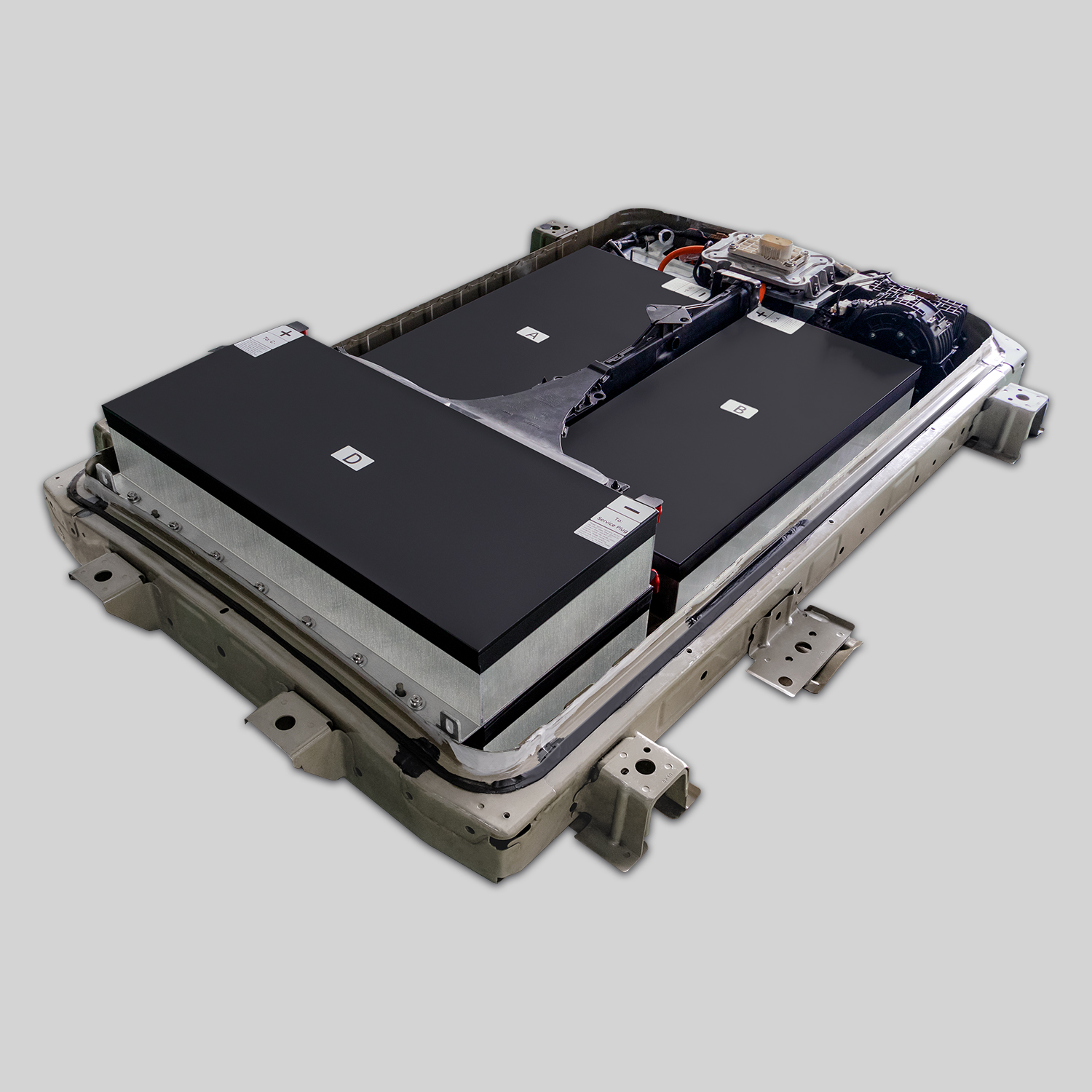
BMW i3 Battery Warranty: What Voids It and When You’re on Your Own
You bought your BMW i3 with the peace of mind that came from an 8-year or 100,000-mile high-voltage battery warranty. It was your safety net, promising protection against catastrophic failure. But now, as your range dwindles or a warning light flickers on the dashboard, a terrifying question arises: Am I actually covered?
Many owners assume the warranty is ironclad. They drive hard, charge fast, and ignore minor maintenance, believing BMW will foot the bill if the battery dies.
The harsh reality? BMW’s warranty is filled with exclusions that can leave you stranded with a $20,000 replacement bill despite being within the time and mileage limits. One overlooked service record, one unauthorized modification, or one instance of “user abuse” can instantly void your BMW i3 battery warranty.
At CNS BATTERY, we have helped hundreds of owners navigate denied claims. We know exactly where the fine print traps lie. This guide exposes the specific actions that void your coverage, explains why so many valid-looking claims get rejected, and reveals the smart, cost-effective solution when the factory walks away.
The “Whichever Comes First” Trap
Before diving into voids, understand the basic rule: The warranty expires at 8 years OR 100,000 miles, whichever comes first.
- High Mileage Drivers: If you hit 100,001 miles in year 6, you are uncovered, even with 2 years left on the clock.
- Low Mileage Owners: If your 8-year anniversary passes on January 1st, and the battery fails on January 2nd (even with only 40,000 miles), you are uncovered. There is no grace period.
But even if you are within these limits, the following actions can strip your coverage immediately.
5 Common Actions That Void Your Warranty
1. Missing or Incomplete Maintenance Records
This is the #1 reason for claim denials. The BMW i3 battery relies on a liquid cooling system (in 94Ah/120Ah models) to prevent overheating.
- The Requirement: BMW mandates specific coolant flushes and inspections at scheduled intervals.
- The Void: If you cannot produce stamped service records proving these were done on time, BMW will argue that neglect caused the battery failure. Even if you did the work yourself but didn’t document it professionally, your claim may be denied.
2. Improper Charging Habits (“User Abuse”)
BMW’s warranty covers defects, not damage caused by misuse.
- The Risk: Frequent DC Fast Charging (Level 3) to 100%, especially in extreme heat, stresses the cells. If diagnostic data shows a history of aggressive charging patterns that led to thermal degradation, BMW may label it “user abuse” and deny the claim.
- Deep Discharge: Regularly draining the battery to 0% and leaving it there for weeks can cause irreversible cell damage. This is often classified as neglect.
3. Unauthorized Modifications or Software Tuning
The i3 community loves tweaks, but they come at a cost.
- The Void: Any non-OEM software updates, “range extender” hacks, unauthorized battery heaters, or third-party electrical modifications can instantly void the entire high-voltage warranty.
- The Detection: BMW’s diagnostic tools can detect tampered software codes or non-standard voltage readings. Once flagged, the warranty is nullified.
4. Accident Damage Without Proper Certification
If your i3 was in a collision that impacted the underbody (where the battery sits):
- The Requirement: Repairs must be performed by certified technicians using OEM procedures.
- The Void: If an independent shop repaired the car without following strict high-voltage safety protocols, or if the battery wasn’t inspected post-accident, any subsequent failure can be blamed on the improper repair, voiding the warranty.
5. Environmental Neglect
While the battery is sealed, extreme neglect can breach this defense.
- The Scenario: Driving through deep floods, ignoring visible coolant leaks, or failing to address “Isolation Fault” warnings can lead to water ingress or thermal runaway. BMW will argue that continuing to drive after a warning constituted aggravation of damage, voiding coverage for the resulting failure.
The Cliff Edge: What Happens When You’re Denied?
So, you’ve checked the list. Maybe you missed a coolant flush, or you’re at 105,000 miles, or you tweaked your software. The dealer runs the test, checks the logs, and hands you a quote: $18,000 – $22,000 USD for an OEM replacement.
For a car worth less than that, this is a financial dead end. Many owners are forced to scrap perfectly good vehicles because the warranty cliff is too steep to climb.
But you have options outside the dealership system.
The CNS BATTERY Solution: Better Than the Warranty Promise
When your warranty is voided or expired, CNS BATTERY steps in with a solution that is superior to what the factory would have provided anyway. We don’t just replace; we upgrade.
Why Choose CNS BATTERY Over a Voided Warranty Claim?
- No Bureaucracy: No arguing over service logs or charging history. We diagnose, quote, and install quickly.
- Capacity Upgrades: The warranty only promises to restore you to 70% of your original capacity. CNS BATTERY can upgrade you to a 94 Ah or 120 Ah equivalent, doubling your range to 130+ miles. You get more than the warranty ever promised.
- Modern Technology: Our cells utilize newer Lithium-Ion chemistry with better thermal stability and longevity than the original factory units. They degrade slower and handle extreme temperatures better.
- Cost Efficiency: Our solutions typically range from $8,000 to $12,000 USD. This is up to 50% less than the out-of-warranty dealership price, and often cheaper than the co-pays or hidden fees associated with complex warranty repairs.
- Our Own Warranty: We provide a comprehensive warranty on our replacements. If a cell fails, we fix it. No fine print about “normal wear and tear” to trip you up later.
Real Story: From “Denied Claim” to “Double Range”
Meet Sarah, a nurse who bought her 2015 i3 new. At year 7, she had 102,000 miles. Her SOH dropped to 68%. She filed a warranty claim, confident she was covered. BMW denied it immediately due to the mileage excess. The dealer quoted her $18,500 for a replacement.
Devastated, she contacted CNS BATTERY. Instead of a like-for-like replacement, we installed a 120 Ah upgraded pack. For $10,500 USD, Sarah not only solved her battery failure but now enjoys 135 miles of range—far more than her car ever had when new. “The warranty denial was the best thing that happened,” she says. “I ended up with a superior car for half the price.”
Don’t Let a Voided Warranty Panic You
Whether your BMW i3 battery warranty is voided due to a technicality, expired by time/mileage, or denied due to “user behavior,” you are not out of options.
Don’t let an expired warranty or a denied claim force you into an expensive dealership trap. Take control of your EV’s future with a solution that offers more range, better technology, and unbeatable value.
Has your BMW i3 battery warranty been voided or denied?
Stop worrying about the fine print. Contact CNS BATTERY today for a free consultation. We’ll assess your situation, explain your options, and show you how our BMW i3 Series Battery upgrades can restore your range and confidence for a fraction of the dealership cost.
👉 Get Your Free Assessment & Upgrade Quote
Frequently Asked Questions (FAQ)
1. Does missing one oil change void my battery warranty?
No, but missing high-voltage specific maintenance (like coolant flushes) absolutely can. The battery cooling system is critical; lack of documented service there is the most common reason for denial.
2. Will installing a third-party app or tuner void my warranty?
Yes. Any unauthorized software modification that alters battery management parameters or voltage readings can void the high-voltage warranty. BMW’s diagnostics can detect these changes easily.
3. What if I’m over the mileage limit but under 8 years?
The warranty is void. The “8 years OR 100,000 miles” clause means exceeding either limit terminates coverage immediately.
4. Can I get a warranty claim if I used DC Fast Charging frequently?
It depends. Occasional fast charging is fine. However, if data shows excessive fast charging (e.g., daily 100% charges) that directly caused thermal degradation, BMW may deny the claim citing “user abuse.”
5. How much does an out-of-warranty replacement cost?
Dealerships typically charge $16,000–$22,000 USD for an OEM replacement. CNS BATTERY offers high-quality, upgraded replacements ranging from $8,000 to $12,000 USD, often with double the capacity of the original.
6. Can I upgrade my battery capacity if my warranty is denied?
Yes! In fact, this is the most popular choice. While the warranty only restores original capacity, CNS BATTERY allows you to upgrade from 60 Ah to 94 Ah or 120 Ah, significantly increasing your range beyond factory specifications.
7. Is it better to fight a denied claim or switch to an aftermarket solution?
If you are clearly out of warranty (e.g., over the mileage limit) or have undeniable evidence of neglect/modification, fighting is futile. In these cases, switching to CNS BATTERY is faster, cheaper, and results in a better-performing vehicle due to capacity upgrade options.