BMW i3 Battery Warranty: Claim Denial Reasons – Why Your $20,000 Hope Just Turned into a Nightmare
You are sitting in the service advisor’s office at the dealership. You’ve been waiting weeks for the diagnostic results on your failing BMW i3 battery. The range is gone, the warnings are constant, and you were certain the 8-year/100,000-mile warranty would cover this. You did everything right: you drove gently, charged at home, and kept up with maintenance.
The advisor slides a piece of paper across the desk. The headline reads: WARRANTY CLAIM DENIED.
Your stomach drops. “But why?” you ask. “It’s an 8-year-old car; isn’t battery failure expected?”
The answer lies in the fine print—a labyrinth of exclusions, thresholds, and technicalities designed to protect the manufacturer, not the owner. They cite “normal degradation,” “improper maintenance,” or “external damage.” Suddenly, you are staring at a $18,000 to $22,000 replacement bill for a car that might not be worth that much.
What are the most common reasons BMW denies i3 battery claims?
Is the famous “70% capacity threshold” a trap?
And if your claim has been rejected, is there a smarter, more affordable path to getting back on the road?
At CNS BATTERY, we have helped thousands of i3 owners navigate the aftermath of a denied warranty claim. We know the playbook dealerships use to reject claims. This guide exposes the top denial reasons, explains the harsh reality of the “70% rule,” and reveals why upgrading to a modern high-capacity system is often the only way to turn a dealership rejection into a driving victory.
The #1 Reason: The “Normal Degradation” Trap (The 70% Rule)
The single most common reason for a denied BMW i3 battery warranty claim is State of Health (SOH) above 70%.
How the Math Works Against You
BMW’s warranty typically guarantees that the battery will retain at least 70% of its original capacity for 8 years or 100,000 miles.
- The Scenario: Your original range was 80 miles. Today, you only get 55 miles. That’s a 31% loss. You feel stranded.
- The Dealership Test: They run a diagnostic. The result shows your battery is at 71% SOH.
- The Verdict: CLAIM DENIED. Because you are above the 70% threshold, BMW classifies your massive range loss as “normal wear and tear,” not a defect.
The Injustice: There is virtually no drivable difference between 69% and 71%, yet the warranty protects only those who have fallen off the cliff. If you are at 71%, you are left paying full price for a battery that is functionally dead for your needs.
Reason #2: Missing Maintenance Records (The Coolant Loophole)
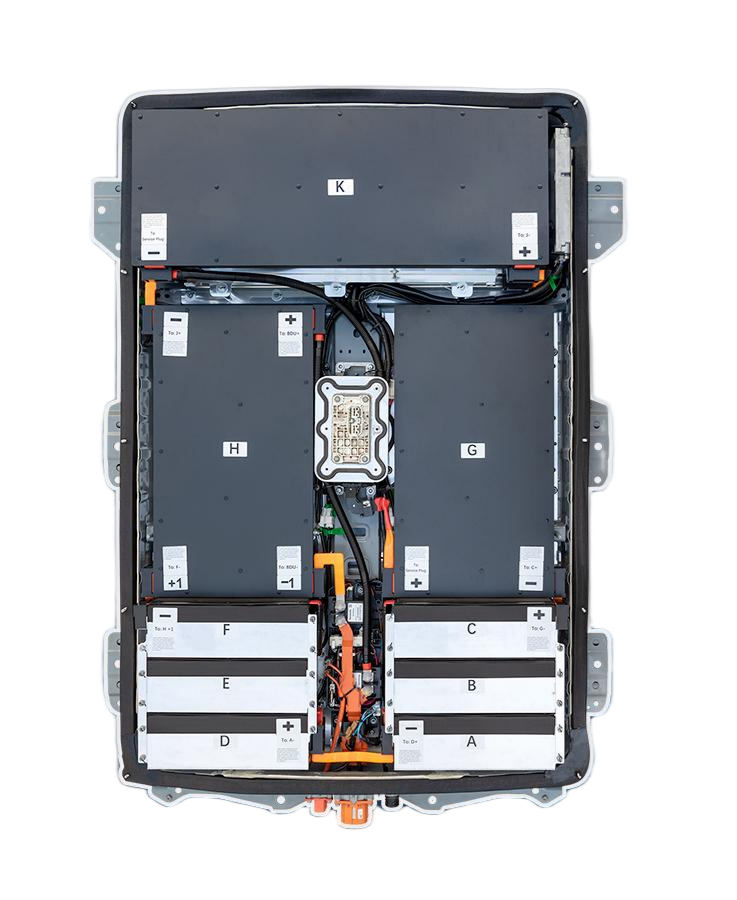
BMW i3 batteries rely on a liquid cooling system to manage temperature. The warranty terms often stipulate that owners must adhere to specific maintenance schedules, including high-voltage coolant changes (typically every 6-8 years depending on the model year and region).
The Catch
- The Oversight: Many owners (and even some independent shops) are unaware of the specific HV coolant service interval or assume EVs are “maintenance-free.”
- The Denial: If your battery fails due to overheating or thermal stress, and your records show the coolant was never changed, BMW will deny the claim, arguing that neglect caused the failure.
- The Cost: Even if the coolant change itself only costs $300, skipping it can void a $20,000 warranty claim.
Reason #3: External Damage and “Abuse” Clauses
The warranty covers defects in materials and workmanship, but explicitly excludes damage caused by external factors. Dealerships are increasingly using high-resolution undercarriage scans to find reasons to deny.
Common Exclusions
- Road Debris: A small stone chip that cracked the battery casing or damaged a cooling line.
- Corrosion: Severe rust on mounting points or connectors due to road salt exposure (common in rust-belt states).
- Charging Habits: While harder to prove, excessive use of DC Fast Charging (Level 3) that leads to thermal degradation can sometimes be flagged as “abuse” or “operation outside normal parameters,” especially if the battery shows signs of heat stress.
- Accident History: Any prior rear-end collision, even if minor, can be used to argue that the battery pack was compromised previously.
Reason #4: The “Remanufactured” Replacement Bait
Even if your claim is approved, you might not get what you expect.
- The Reality: BMW rarely installs brand-new batteries for warranty claims anymore. They install remanufactured units assembled from used modules.
- The Risk: These packs often have an SOH of exactly 70-75%. You trade your dying 71% battery for a slightly better 73% battery.
- The Short Warranty: The replacement battery usually comes with only a 2-year warranty, restarting the clock on a short-term fix rather than solving the problem long-term.
The CNS BATTERY Solution: Turn Denial into Upgrade
A warranty denial feels like the end of the road. But for savvy i3 owners, it’s actually the beginning of a smarter journey. Why wait for BMW to declare your battery “dead enough” to cover, when you can upgrade it yourself to something far superior?
At CNS BATTERY, we don’t care about arbitrary 70% thresholds. We care about giving you 130+ miles of real-world range immediately.
Why Upgrading Beats the Warranty Game
- No Threshold Games: We don’t care if you are at 71%, 80%, or 90%. If you want more range, we can help. No denials, no appeals.
- Superior Technology: Unlike the remanufactured packs dealers offer, our 120 Ah upgrades use brand-new 2026-era Grade-A cells. They are newer, safer, and more efficient than anything currently available through the dealer network.
- Double the Range: Instead of restoring your original ~60 miles (with a reman pack), we give you 130–200+ miles. You transform your i3 from a city commuter into a capable road-tripper.
- Speed: While dealer claims take weeks or months of back-and-forth, we can often install your upgrade in 1-2 days.
- Cost Efficiency:
- Dealer Warranty Claim: $0 (if approved after 2 months) OR $18,000+ (if denied).
- CNS BATTERY Upgrade: $8,000 – $14,000 USD. You pay a fraction of the OEM cost, get double the performance, and avoid the stress of denial.
- New Warranty: Our upgrades come with a comprehensive 3–5 Year Warranty. No loopholes, no “below 70%” clauses. Just coverage.
Real Story: From “Denied at 72%” to “180 Miles of Freedom”
Meet Sarah, a 2016 i3 owner. Her range dropped to 45 miles. She rushed to her local dealer before her 8-year mark. The diagnostic came back at 72% SOH. The claim was denied. “They told me I needed to lose another 2.1% to qualify,” Sarah recalls. “I had a useless car, but technically it was ‘fine’ according to them.”
Instead of waiting for her battery to die completely, she contacted CNS BATTERY. We installed a 160 Ah upgrade. “Now I have 190 miles of range,” Sarah says. “I didn’t need BMW’s permission to fix my car. I got double the range of a brand-new i3 for less than half the cost of their replacement. The denial was actually a blessing in disguise—it forced me to upgrade to something better.”
Don’t Wait for the Rejection Letter
The question of BMW i3 battery warranty claim denial reasons often leads to a frustrating answer: “You aren’t degraded enough for us to care, but you are too degraded to drive.” Don’t gamble your mobility on a technicality.
If your range is suffering, take action now. Whether you are just above the 70% line or already denied, there is a superior solution available that puts you back in control.
Has your BMW i3 battery warranty claim been denied or stalled?
Stop playing the numbers game. Contact CNS BATTERY today for a professional State of Health diagnostic. Discover how our BMW i3 Series Battery upgrades can bypass the warranty headache, double your range, and restore your confidence for a fraction of the dealership cost.
👉 Get Your Post-Denial Upgrade Quote
Frequently Asked Questions (FAQ)
1. What is the most common reason for BMW i3 battery warranty denial?
The most common reason is State of Health (SOH) above 70%. If your battery retains more than 70% of its original capacity, BMW considers any range loss to be “normal degradation” and denies the claim, even if the car is barely drivable.
2. Can missing a coolant change void my battery warranty?
Yes. Failure to perform scheduled high-voltage coolant maintenance can be cited as “neglect” or “improper maintenance,” giving BMW grounds to deny a claim related to thermal issues or cell degradation.
3. Does BMW replace failed batteries with new ones under warranty?
Rarely. Most warranty replacements are remanufactured units assembled from used modules. They typically restore capacity to around 70-75% and come with a limited 2-year warranty, rather than providing a brand-new pack with an 8-year warranty.
4. What should I do if my warranty claim is denied?
Do not accept the denial as the end. Get a second opinion on your battery’s actual usable range. Then, consider CNS BATTERY upgrades. We offer brand-new, high-capacity batteries for $8,000–$14,000 USD that provide double the range of a dealer replacement, often costing less than the out-of-pocket dealer fee.
5. Can external damage like rock chips cause a denial?
Yes. If diagnostics reveal physical damage to the battery casing, cooling lines, or connectors caused by road debris or accidents, the claim will be denied as “external damage” rather than a manufacturing defect.
6. Is it faster to upgrade with CNS BATTERY than to appeal a warranty denial?
Absolutely. Appealing a denial can take months of bureaucracy. A CNS BATTERY upgrade can typically be completed in 1-2 days, getting you back on the road almost immediately with a superior product.
7. Does CNS BATTERY offer a warranty if I’ve been denied by BMW?
Yes. Our upgrades include a comprehensive 3–5 Year Warranty covering parts and labor. Unlike the factory warranty, which has strict SOH thresholds, our warranty ensures your upgraded pack performs as promised, regardless of your previous battery’s history.