
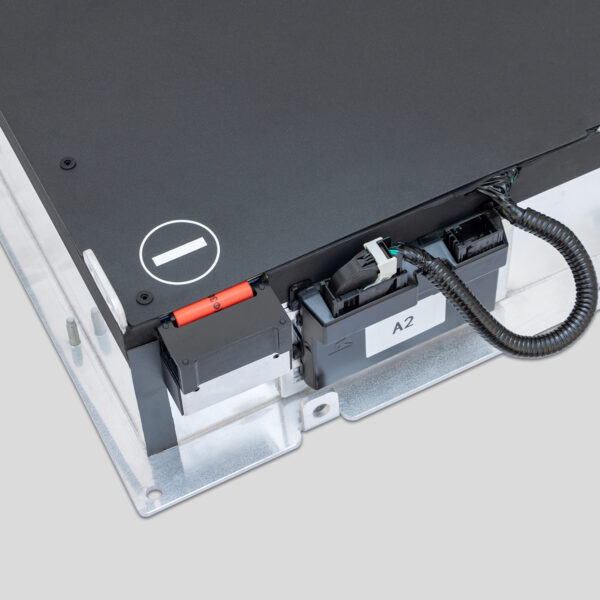
BMW i3 Battery Voltage Sensor Fault: Fixes – The $500 Repair That Could Cost You $20,000
You are driving your BMW i3 when the dashboard suddenly erupts in warnings. “Drivetrain Malfunction,” “Hybrid/Electric Vehicle Battery System Malfunction,” and the check engine light flash in unison. The car immediately enters “limp mode,” stripping away power until you can barely maintain 40 mph. You pull over, plug in your OBDII scanner, and retrieve a specific, terrifying code: P0B22 or similar voltage sensor faults.
What does this mean?
Is my battery pack dead?
Can I reset this code and keep driving, or am I looking at a catastrophic failure?
A voltage sensor fault is not a minor glitch; it is a critical alert indicating your car’s brain (the Battery Management System or BMS) has lost the ability to accurately read the voltage of a specific section of your high-voltage battery. Without this data, the car cannot safely manage charging or discharging. To prevent fire, explosion, or electrocution, it shuts down the drivetrain.
At CNS BATTERY, we have diagnosed and resolved hundreds of voltage sensor cases. We know that while this code often points to a faulty sensor or wiring harness, it is frequently the death rattle of a degrading battery module. This guide breaks down exactly what these faults mean, the steps to diagnose them safely, and why upgrading to a modern battery pack is often the most cost-effective and permanent solution for aging i3s.
Decoding the Fault: The “Blindfolded” Battery
To understand the fix, you must understand the failure. Your BMW i3 battery pack is divided into multiple modules, each monitored by specific voltage sensors. These sensors constantly report data to the BMS.
When you see a Voltage Sensor Fault, it means:
- Signal Loss: The BMS is receiving no signal from a specific sensor.
- Implausible Data: The sensor is sending data that doesn’t make sense (e.g., reporting 0V on a live circuit, or a voltage spike that exceeds physical limits).
- Circuit Fault: There is a break, short, or high resistance in the wiring harness connecting the sensor to the control unit.
The Consequence: The BMS is effectively “blind” to that section of the battery. It cannot balance cells, limit charging, or prevent over-discharge in that area. To protect the vehicle, it triggers a fail-safe mode, limiting power or disabling the drivetrain entirely.
Step-by-Step: How to Fix Voltage Sensor Faults
Fixing a voltage sensor fault requires a methodical approach. Do not simply clear the code and drive; it will return immediately if the hardware issue persists.
Phase 1: Immediate Safety Actions
- Stop Driving: If the car is in limp mode, do not force it. Pull over safely and turn off the vehicle.
- Do Not Charge: Plugging in a car with a known voltage sensor fault can lead to overcharging specific cells, causing thermal runaway.
- Professional Tow: Have the vehicle towed to a certified EV specialist. Driving with a blind BMS is a safety risk.
Phase 2: Visual Inspection (The Low-Hanging Fruit)
Before tearing anything apart, a technician will perform a thorough visual check of the high-voltage system (with the car OFF and key removed).
- Check Connectors: Locate the main battery connector and the internal sensing harness plugs. Look for corrosion, green oxidation, or loose pins.
- Inspect Wiring: Follow the orange high-voltage cables and the thinner sensing wires. Look for signs of rodent damage (chewed wires), chafing against the chassis, or melted insulation.
- The Fix: If you find corrosion, clean the contacts. If wires are chewed, they must be spliced and sealed professionally. Often, simply reseating a loose connector clears the code.
Phase 3: Multimeter Testing (The Technical Check)
If visual inspection reveals nothing, the circuit must be tested electrically. ⚠️ WARNING: High Voltage (400V) is present. Only certified technicians should perform this.
- Resistance Test: Disconnect the sensing harness. Measure the resistance across the sensor circuit terminals. An “Open Loop” (infinite resistance) indicates a broken wire or failed sensor.
- Voltage Test: Check if the reference voltage is reaching the sensor. If voltage is present at the source but not at the sensor, the harness is broken.
- The Fix: If the harness is faulty, it must be replaced. In some i3 models, the sensing wires are integrated into the battery module assembly, requiring module replacement.
Phase 4: The Hard Truth – Internal Module Failure
Often, a voltage sensor fault isn’t just a bad wire; it’s a sign that the battery module itself has failed internally.
- The Scenario: The voltage sensing traces inside the plastic casing of a battery module crack due to heat cycling or age. The sensor is physically attached to the module, so you cannot replace just the sensor.
- The Diagnosis: If the harness tests fine externally but the code persists, the fault lies inside the sealed battery pack.
- The Dilemma: Dealerships will often quote $18,000–$22,000 USD to replace the entire battery pack because they do not repair individual modules.
Why “Patch” Repairs Often Fail
Many owners try to fix voltage sensor faults by simply replacing the external wiring harness. While this works if the damage was external (e.g., rodent chew), it frequently fails to solve the problem long-term for two reasons:
- Internal Trace Cracks: If the break is inside the module, a new external harness changes nothing. The code returns immediately.
- Underlying Degradation: A sensor failure is often a symptom of a module that is overheating or swelling due to age. Replacing the wire doesn’t fix the dying cell group. That module will continue to degrade, likely causing a new fault code (like cell imbalance) within weeks.
The Reality: If your i3 is a 2014-2017 model with high mileage, a voltage sensor fault is frequently the first domino in a total battery failure.
The CNS BATTERY Solution: A Permanent Upgrade
If your diagnosis points to an internal module failure or if you are tired of gambling on expensive repairs that might not last, CNS BATTERY offers the definitive solution: a complete BMW i3 Series Battery upgrade.
Instead of sinking money into a failing 10-year-old system, replace it with a brand-new, modern high-capacity pack.
Why Upgrading Is Smarter Than Repairing
- Eliminate the Fault Forever: Our replacements come with brand-new voltage sensing harnesses and perfectly matched modules. No cracked traces, no corroded pins, no sensor codes.
- Modern Reliability: We use Grade-A cells with advanced monitoring systems that are far more robust than the original factory sensors.
- Double the Range: While fixing the fault, you upgrade from a failing 60 Ah or 94 Ah pack to a 120 Ah equivalent, giving you 130+ miles of range.
- Cost Efficiency:
- Diagnostic + Harness Repair: $500–$1,500 (might not fix it).
- Module Replacement: $3,000–$5,000 (labor intensive, risky).
- Dealership Full Pack: $20,000+.
- CNS BATTERY Upgrade: $8,000–$12,000 USD. You get a complete, warrantied solution with double the performance for half the dealer price.
Real Story: From “Sensor Nightmare” to “Flawless Performance”
Meet James, a 2015 i3 owner. His car threw a voltage sensor fault code. A local shop replaced the external sensing harness for $800. Two weeks later, the code returned. They then told him a battery module was faulty and quoted $4,500 to open the pack and swap the module, with no guarantee on the remaining old cells.
James contacted CNS BATTERY. We explained that opening an old pack to fix one sensor was a band-aid on a bullet wound. We installed a 120 Ah upgrade. “It was the best decision,” James says. “No more codes, no more anxiety. The new battery monitors itself perfectly, and I now have 135 miles of range. I stopped throwing money at a dying system and just upgraded.”
Don’t Let a Sensor Code Ground Your Car
A BMW i3 voltage sensor fault is a serious warning that your battery management system is compromised. While a simple wiring fix is possible, do not ignore the possibility of internal module failure.
Stop guessing and risking a total breakdown. Whether you need a simple harness repair or a full system replacement, expert diagnosis is key. And if the pack is aging, consider the upgrade that solves the fault and transforms your driving experience.
Is your BMW i3 showing a Voltage Sensor Fault?
Don’t wait for a total shutdown. Contact CNS BATTERY today for a professional high-voltage diagnostic. We will pinpoint whether it’s a simple wire or a failing module and show you how our BMW i3 Series Battery upgrades can fix the issue permanently while doubling your range.
👉 Get Your Sensor Fault Diagnostic & Fix Quote
Frequently Asked Questions (FAQ)
1. What does a voltage sensor fault mean on a BMW i3?
It indicates the car’s computer cannot read the voltage correctly from a specific part of the battery pack, often due to a broken wire, bad connection, or failed internal sensor. This triggers a safety shutdown.
2. Can I drive my i3 with a voltage sensor fault?
No. This code triggers a fail-safe mode that severely limits power or disables the drivetrain. Driving with this fault risks damaging the battery further or leaving you stranded. Have the vehicle towed to a specialist.
3. How much does it cost to fix a voltage sensor fault?
If it’s a simple external wiring harness issue, repairs may cost $500–$1,000. However, if the sensor is internal to a battery module (common), costs can rise to $3,000–$5,000 for module repair or $20,000+ for a dealership full-pack replacement. CNS BATTERY upgrades cost $8,000–$12,000 USD and include a whole new system.
4. Can I reset the voltage sensor code myself?
You can clear the code with a scanner, but it will return immediately if the hardware fault (broken wire or failed sensor) still exists. Clearing the code does not fix the underlying electrical problem.
5. Is a voltage sensor fault a sign my battery is dead?
Not necessarily “dead,” but it is a sign of a critical failure. If the cause is an internal module fault, the battery pack is compromised and unsafe to operate without repair. In older i3s, this often signals the beginning of the end for the original pack.
6. Will a CNS BATTERY upgrade fix voltage sensor faults?
Absolutely. Our upgrades replace the entire battery assembly, including all voltage sensors, wiring harnesses, and modules. You get a brand-new monitoring system with zero faults and perfect accuracy.
7. What causes voltage sensor circuits to fail?
Common causes include vibration cracking solder joints, corrosion from moisture intrusion, rodent damage to wiring, or thermal stress causing internal traces within the battery module to break.


